Rue
Ruta graveolens
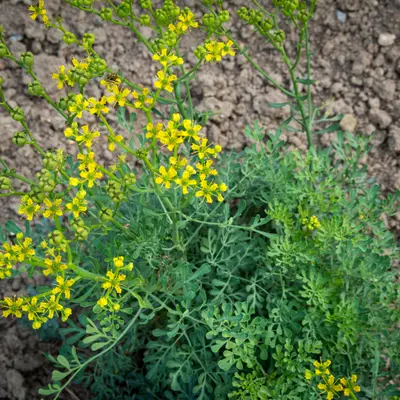
Bushy habit is ideal for short hedges or borders. Unique and attractive foliage makes a useful cut flower filler, lasting for up to three weeks in a vase. Pungent aroma. Limited culinary use due to strong bitter flavor. Medicinal: Warming herb primarily used as an antispasmodic. Perennial in Zones 4-9.
Harvest
100-125d
Days to harvest
Sun
Full sun to partial shade
Zones
4–10
USDA hardiness
Height
2-3 feet
Planting Timeline
Showing dates for Rue in USDA Zone 7
All Zone 7 herb →Zone Map
Click a state to update dates
Rue · Zones 4–10
Growing Details
Complete Growing Guide
Light: Full sun (6 or more hours of direct sunlight a day), Partial Shade (Direct sunlight only part of the day, 2-6 hours). Soil: Clay, Loam (Silt), Sand, Shallow Rocky. Soil pH: Acid (<6.0), Alkaline (>8.0), Neutral (6.0-8.0). Drainage: Good Drainage, Occasionally Dry. Height: 2 ft. 0 in. - 3 ft. 0 in.. Spread: 2 ft. 0 in. - 3 ft. 0 in.. Spacing: 12 inches-3 feet. Growth rate: Medium. Maintenance: Low. Propagation: Division, Seed, Stem Cutting. Regions: Coastal, Mountains, Piedmont.
Harvesting
Brown capsule splits in 5 parts to revel several dark seeds
Color: Brown/Copper. Type: Capsule. Length: < 1 inch. Width: < 1 inch.
Harvest time: Fall
Edibility: In some countries, the leaves are used sparingly in dishes or teas but have a bitter flavor.
Storage & Preservation
Freshly harvested rue leaves store best in a cool, humid environment between 32–40°F in a sealed plastic bag with a damp paper towel. Under these conditions, fresh rue will keep for up to two weeks. For longer preservation, drying is the most practical method—hang bundles in a warm, well-ventilated space out of direct sunlight until brittle, then strip leaves and store in airtight containers away from light. Freezing works adequately if you blanch stems briefly first, though texture suffers. Rue can also be infused into vinegars or oils for culinary and medicinal use. A gardener's note: rue leaves are photosensitive and can cause skin irritation when exposed to sunlight after handling, so harvest and process in shade or wear gloves, and store dried material in opaque containers to preserve potency.
History & Origin
Origin: Southeastern Europe and the Balkans
Advantages
- +Attracts: Butterflies, Pollinators
- +Edible: In some countries, the leaves are used sparingly in dishes or teas but have a bitter flavor.
- +Low maintenance
Considerations
- -Toxic (Leaves): Medium severity
- -Causes contact dermatitis
Companion Plants
Rue has a genuine reputation as a pest deterrent, and some of it holds up. Planted near roses, it's said to discourage Japanese beetles and aphids — the volatile oils in the foliage are off-putting to a range of insects. The same principle applies near brassicas like cabbage and broccoli: placing rue in or around those beds breaks up the solid monoculture blocks that let crop-specific pests spread unopposed. NC State Extension's IPM guidance specifically recommends mixing plant families to slow that kind of buildup, and rue's strong scent adds another layer of disruption. Carrots, onions, and garlic are straightforward neighbors — no meaningful pest overlap, no root competition worth worrying about at 18–24 inch spacing.
Marigolds work well in the same area for related reasons. Two pungent plants together tend to confuse generalist pests more than either one alone, and marigolds stay low enough that they won't shade out rue's preferred full sun. Fig trees are a traditional pairing with a long paper trail — rue is historically planted at the base of figs to deter fig-boring insects — and since figs grow large and rue tops out at 2–3 feet, there's no real competition for light or space.
The companions to avoid are pretty definitive. Basil, sage, and mint all appear to suffer near rue, likely from allelopathic compounds it releases through root exudates and decomposing leaf litter. Rue also produces furanocoumarins — the same compounds that make it photosensitizing on skin contact — so place it somewhere you won't be brushing past it repeatedly while tending close-in crops.
Plant Together
Roses
Rue repels aphids, Japanese beetles, and other pests that commonly attack roses
Fig Trees
Traditional pairing where rue deters ants and other insects from fig trees
Cabbage
Rue repels cabbage moths, flea beetles, and other brassica pests
Carrots
Rue helps deter carrot fly and other root vegetable pests
Broccoli
Repels cabbage worms, aphids, and flea beetles that damage brassicas
Onions
Both plants have strong scents that complement each other in pest deterrence
Garlic
Creates a powerful aromatic barrier against various garden pests when planted together
Marigolds
Both plants repel nematodes and various insects, creating enhanced pest protection
Keep Apart
Basil
Rue's strong allelopathic compounds can inhibit basil's growth and affect its essential oil production
Sage
Both plants compete for similar nutrients and rue may suppress sage's growth through chemical interactions
Mint
Rue can inhibit mint's vigorous growth and may affect the quality of mint's essential oils
Nutrition Facts
Per 100g serving. % Daily Value based on 2,000 calorie diet. Source: USDA FoodData Central (FDC #172232)
Pests & Disease Resistance
Common Pests
Aphids (spring infestations), spider mites in hot, dry conditions
Diseases
Root rot in poorly drained or overwatered soil; rarely affected by foliar diseases
Troubleshooting Rue
What you'll see, why it happens, and what to do about it.
Leaves curling or sticky, with clusters of small soft-bodied insects on new growth in spring
Likely Causes
- Aphid infestation — common in spring when new growth is soft and populations spike quickly
- Overfertilizing with nitrogen, which produces the lush tender growth aphids prefer
What to Do
- 1.Knock aphids off with a firm spray of water from a hose — do this in the morning so foliage dries by evening
- 2.Hold off on any nitrogen feeding; rue doesn't need much fertilizer and pushing soft growth makes the problem worse
- 3.Ladybugs and parasitic wasps will work through an aphid colony fast once they find it — avoid broad-spectrum sprays that kill them off first
Plant wilting despite moist soil, with brown mushy tissue at the crown or roots
Likely Causes
- Root rot from Pythium or Phytophthora spp. — almost always triggered by waterlogged or poorly drained soil
- Overwatering in heavy clay or compacted soil that doesn't shed water freely
What to Do
- 1.Dig the plant and cut away any blackened, soft roots with clean shears; dust cuts with powdered sulfur before replanting
- 2.Move rue to a raised bed or a spot with fast-draining, gritty soil — it handles drought well once established and prefers lean, dry conditions over rich moist ones
- 3.Pull back irrigation; mature rue in the ground often needs no supplemental water except during stretches of 2–3 weeks without rain
Frequently Asked Questions
How long does rue take to grow from seed?▼
Can you grow rue in containers or pots?▼
Is rue good for beginners?▼
What does rue taste like and can you cook with it?▼
When should I plant rue seeds?▼
Does rue need full sun to grow?▼
Zone-by-Zone Planting Calendar
| Zone | Indoor Start | Transplant | Direct Sow | Harvest |
|---|---|---|---|---|
| Zone 3 | April – May | June – July | — | July – October |
| Zone 4 | March – April | June – July | — | July – October |
| Zone 5 | March – April | May – June | — | June – October |
| Zone 6 | March – April | May – June | — | June – November |
| Zone 7 | February – March | April – June | — | June – November |
| Zone 8 | February – March | April – May | — | May – December |
| Zone 9 | January – February | March – April | — | April – December |
| Zone 10 | January – January | February – April | — | April – December |
Growing Guides from Wind River Greens
Sources & References
External authority sources used in compiling this guide.
- ExtensionNC State Extension
- BreederJohnny's Selected Seeds
- USDAUSDA FoodData Central
See the Methodology page for how this data is sourced, what's AI-assisted, and known limitations.