Cherokee Purple
Solanum lycopersicum
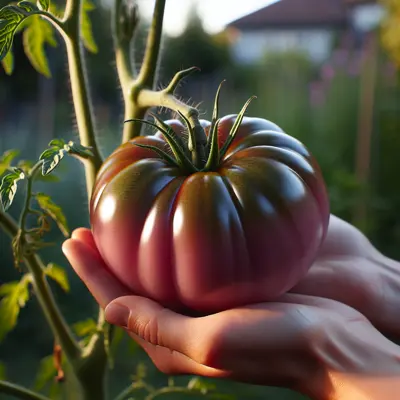
Famously rich flavor and texture make this a colorful favorite among heirloom enthusiasts. Medium-large, flattened globe, 8-12 oz. fruits. Color is dusky pink with dark shoulders. Multilocular interior ranges from purple to brown to green. Relatively short vines. Indeterminate.
Harvest
72d
Days to harvest
Sun
Full sun
Zones
10–11
USDA hardiness
Height
1-10 feet
Planting Timeline
Showing dates for Cherokee Purple in USDA Zone 7
All Zone 7 tomato →Zone Map
Click a state to update dates
Cherokee Purple · Zones 10–11
Growing Details
Complete Growing Guide
Light: Full sun (6 or more hours of direct sunlight a day). Soil: Clay, High Organic Matter, Loam (Silt), Sand. Soil pH: Acid (<6.0), Neutral (6.0-8.0). Drainage: Good Drainage, Moist. Height: 1 ft. 0 in. - 10 ft. 0 in.. Spread: 1 ft. 0 in. - 4 ft. 0 in.. Spacing: 3 feet-6 feet. Growth rate: Rapid. Maintenance: High. Propagation: Seed. Regions: Coastal, Mountains, Piedmont.
Harvesting
The fruits are smooth, shiny, glossy, and are classified as berries. The size, shape, and color will vary depending on the variety or cultivar. The color of the fruits may be red, yellow, orange, green, purple, or pink. The fruits may contain over 100 yellow to light brown seeds.
Color: Gold/Yellow, Green, Orange, Pink, Purple/Lavender, Red/Burgundy, Variegated. Type: Berry. Length: > 3 inches. Width: > 3 inches.
Garden value: Edible, Showy
Harvest time: Fall, Summer
Edibility: The fruits or berries of the tomato are edible. They may be eaten raw, cooked, dried, or processed. They are a rich source of Vitamin A, Vitamin C, folic acid, and antioxidants. Lycopene is an antioxidant that gives the tomato its rich red color. Many plants will drop fruit when ripe or the fruit will come off easily. Tomatoes will continue to ripen once picked. Store them at room temperature.
Storage & Preservation
Store freshly harvested Cherokee Purple tomatoes at room temperature, away from direct sunlight, in a single layer on a breathable surface like a cardboard box or wooden crate. Avoid refrigeration, which degrades their distinctive flavor and soft flesh. Ripe tomatoes keep for 3-5 days at room temperature; slightly underripe fruits last up to a week. Because of their notably low acidity, they're unsuitable for water bath canning and present food safety risks for pressure canning. Instead, freeze them whole or in pieces for winter cooking—the soft flesh thaws quickly and works well in sauces and soups. Drying is another viable option; slice thinly and dry in a low oven or dehydrator until leathery. Their thin skin makes them particularly prone to cracking during the drying process, so handle gently and monitor closely.
History & Origin
Origin: Peru
Advantages
- +Attracts: Bees, Pollinators, Predatory Insects
- +Edible: The fruits or berries of the tomato are edible. They may be eaten raw, cooked, dried, or processed. They are a rich source of Vitamin A, Vitamin C, folic acid, and antioxidants. Lycopene is an antioxidant that gives the tomato its rich red color. Many plants will drop fruit when ripe or the fruit will come off easily. Tomatoes will continue to ripen once picked. Store them at room temperature.
- +Fast-growing
Considerations
- -Toxic (Leaves, Stems): Medium severity
- -High maintenance
Companion Plants
Basil planted 12–18 inches away is a genuinely useful neighbor. The pest-confusion story has been told so many times it's hard to evaluate, but the practical case is straightforward: basil and Cherokee Purple have nearly identical water and heat requirements, so they slot into the same irrigation and fertility schedule without one getting shortchanged. French marigold (Tagetes patula) earns its spot at the bed edge for a more specific reason — its roots release alpha-terthienyl, a compound with documented nematode-suppressing activity in the surrounding soil. Because Cherokee Purple is an heirloom with no built-in nematode resistance (NC State Extension flags this for heirloom tomatoes generally), that root-level protection matters more here than it would on a resistant hybrid. Carrots and parsley can fill the low canopy without competing for the same root zone.
Fennel produces anethole and related root exudates that inhibit growth in most vegetable crops, and tomatoes respond badly to it — keep at least 3–4 feet of separation, or better yet, give fennel its own isolated bed. Black walnut releases juglone, which is phytotoxic to Solanum species; any Cherokee Purple planted within 50 feet of the drip line is likely to struggle or die outright. Brassicas aren't toxic neighbors, but they pull aphids in reliably, and those aphids don't stay put.
Plant Together
Basil
Repels aphids and whiteflies, may improve tomato flavor
Marigold
Deters nematodes and repels hornworms and other tomato pests
Carrots
Help break up soil for tomato roots, don't compete for nutrients
Parsley
Attracts beneficial insects like hoverflies that prey on tomato pests
Chives
Repels aphids and may help prevent fungal diseases
Nasturtiums
Act as trap crop for aphids and cucumber beetles, repel whiteflies
Oregano
Repels many insects and may enhance tomato growth and flavor
Lettuce
Provides living mulch, doesn't compete heavily for nutrients
Keep Apart
Black Walnut
Produces juglone which is toxic to tomatoes and causes wilting
Fennel
Inhibits growth of tomatoes through allelopathic compounds
Brassicas
Compete for similar nutrients and may stunt tomato growth
Corn
Both attract corn earworm/tomato fruitworm, increasing pest pressure
Nutrition Facts
Per 100g serving. % Daily Value based on 2,000 calorie diet. Source: USDA FoodData Central (FDC #321360)
Pests & Disease Resistance
Resistance
Limited disease resistance typical of heirlooms. Susceptible to late blight and cracking.
Common Pests
Tomato hornworm, aphids, whiteflies, flea beetles
Diseases
Late blight, early blight, fusarium wilt, blossom end rot
Troubleshooting Cherokee Purple
What you'll see, why it happens, and what to do about it.
Lower leaves developing dark bullseye spots or yellowing starting around day 40–50 after transplant
Likely Causes
- Early blight (Alternaria solani) — soil-borne fungus that splashes up during rain or irrigation
- Crowded canopy with poor airflow at 24-inch spacing or tighter
What to Do
- 1.Strip affected lower leaves immediately and bag them for the trash — not the compost
- 2.Mulch the bed with 3–4 inches of straw to stop soil splash
- 3.NC State Extension recommends rotating out of the nightshade family for 3–4 years minimum; for tomato diseases specifically, they note a 5–7 year rotation period may be needed
Entire plant wilting suddenly with no visible leaf spots or fungal growth, even when soil moisture is adequate
Likely Causes
- Fusarium wilt (Fusarium oxysporum f. sp. lycopersici) — soilborne fungus that colonizes vascular tissue
- Southern bacterial wilt (Ralstonia solanacearum) — also soilborne, spreads fast in warm, wet soil
What to Do
- 1.Dig up and destroy the affected plant including the roots — don't leave them in the bed
- 2.NC State Extension notes that Cherokee Purple, as an heirloom, lacks built-in resistance to soilborne diseases; grafting onto a resistant rootstock is one documented option (see NC State AG-675 by Rivard and Louws)
- 3.If the problem recurs, move to containers with bagged potting mix and keep that container soil from contacting native garden soil
Dark, sunken, leathery patch on the blossom end of fruit, appearing once fruit reaches golf-ball size
Likely Causes
- Blossom end rot — calcium deficiency in the developing fruit caused by uneven soil moisture or actual low calcium in the soil
- Inconsistent watering that stresses the plant's calcium uptake even when Ca is present
What to Do
- 1.Water deeply and consistently — Cherokee Purple needs high, steady moisture; keeping soil pH between 6.2 and 6.8 also maximizes calcium availability
- 2.Lay 3–4 inches of mulch to buffer moisture swings between rain events
- 3.Run a soil test before adding any calcium amendment — pushing pH above 6.8 with lime creates a different set of problems
Frequently Asked Questions
How long does Cherokee Purple tomato take to grow?▼
Can you grow Cherokee Purple tomatoes in containers?▼
What does Cherokee Purple tomato taste like?▼
Is Cherokee Purple good for beginners?▼
When should I plant Cherokee Purple tomatoes?▼
Why are my Cherokee Purple tomatoes cracking?▼
Zone-by-Zone Planting Calendar
| Zone | Indoor Start | Transplant | Direct Sow | Harvest |
|---|---|---|---|---|
| Zone 3 | April – April | June – July | — | September – October |
| Zone 4 | March – April | June – June | — | September – October |
| Zone 5 | March – March | May – June | — | August – October |
| Zone 6 | March – March | May – June | — | August – October |
| Zone 7 | February – March | April – May | — | July – September |
| Zone 8 | February – February | April – May | — | July – September |
| Zone 9 | January – January | March – April | — | June – August |
| Zone 10 | January – January | February – March | — | May – July |
| Zone 1 | May – May | July – August | — | September – August |
| Zone 2 | April – May | June – July | — | September – September |
| Zone 11 | January – January | January – February | — | April – June |
| Zone 12 | January – January | January – February | — | April – June |
| Zone 13 | January – January | January – February | — | April – June |
Growing Guides from Wind River Greens
Sources & References
External authority sources used in compiling this guide.
- BreederJohnny's Selected Seeds
- USDAUSDA FoodData Central
See the Methodology page for how this data is sourced, what's AI-assisted, and known limitations.