Purple Daikon Radish
Raphanus sativus 'Purple Daikon'
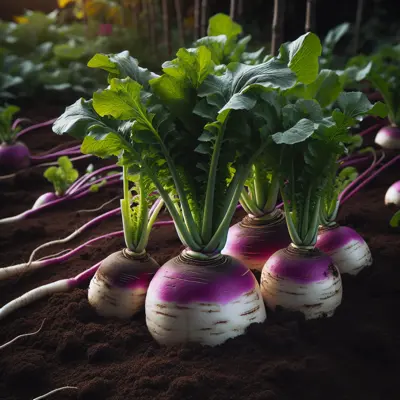
A stunning Asian variety that combines the mild, sweet flavor of traditional daikon with eye-catching purple and white coloring. These large radishes are perfect for both raw applications and cooking, offering gardeners something truly unique for their fall harvest.
Harvest
55-65d
Days to harvest
Sun
Full sun to partial shade
Zones
2–11
USDA hardiness
Height
0-3 feet
Planting Timeline
Showing dates for Purple Daikon Radish in USDA Zone 7
All Zone 7 root-vegetable →Zone Map
Click a state to update dates
Purple Daikon Radish · Zones 2–11
Growing Details
Succession Planting
Direct sow every 21 days starting March 1 through early May in zone 7, then stop once daytime highs are consistently clearing 80°F — heat sends daikon to bolt and you end up with pithy, bitter roots that aren't worth pulling. Pick back up in late August and sow through early October for a fall harvest that can stretch into November. The fall window is often the more reliable one: slower maturation in cooling soil tends to produce denser, crisper roots, and flea beetle pressure falls off noticeably after the first cold nights.
Each sowing takes 55-65 days to harvest, so count backward from your first expected hard frost to find your last safe sow date. In zone 7, that's typically around October 1 for a late-November pull.
Complete Growing Guide
Purple daikon radish thrives in cool weather, making timing crucial for success. In zones 3-6, direct sow seeds in late July to early August for a fall harvest before hard frost. Zones 7-9 gardeners can plant through September, while zone 10+ should wait until October when temperatures consistently drop below 75°F.
Prepare your planting bed by loosening soil to at least 12 inches deep—these radishes can grow 8-14 inches long and need room to develop properly. Work in 2-3 inches of compost or aged manure to improve drainage and provide steady nutrition. Purple daikon performs best in slightly acidic to neutral soil (pH 6.0-7.0).
Direct sow seeds ½ inch deep in rows spaced 18 inches apart. Unlike smaller radishes, give purple daikon plenty of room by spacing seeds 3-4 inches apart initially, then thin to 6 inches between plants once seedlings reach 2 inches tall. Never transplant radishes—disturbing the taproot leads to forked, misshapen roots.
Maintain consistent moisture throughout the growing season, providing about 1 inch of water weekly. Inconsistent watering causes splitting and woody texture. Apply a 2-inch layer of straw mulch around plants to retain moisture and suppress weeds, but keep mulch away from the stem to prevent pest issues.
Fertilize lightly at planting with a balanced 10-10-10 fertilizer, then side-dress with compost tea every 3 weeks. Avoid high-nitrogen fertilizers which promote leafy growth at the expense of root development. As roots begin to swell (around 30-40 days), gradually hill soil around the shoulders to prevent the purple coloring from fading due to sun exposure.
Watch for flea beetles on young seedlings—row covers provide excellent protection until plants reach 4 inches tall. Remove covers once established, as mature plants can tolerate light pest damage. The most critical mistake is planting too early in spring or late summer when temperatures exceed 80°F, which causes immediate bolting and bitter, woody roots.
Harvesting
Purple daikon radish is ready to harvest 55-65 days after sowing when roots reach 6-10 inches long and 2-3 inches in diameter at the shoulder. The distinctive purple and white coloring should be vibrant—faded colors indicate overmaturity. Harvest in the morning when roots are fully hydrated and crisp.
Gently brush soil away from the shoulder to check size, then grasp the leaves close to the crown and pull straight up with steady pressure. Well-grown roots should lift easily from loose soil. If resistance occurs, use a garden fork inserted 6 inches away from the root to loosen soil before pulling.
Harvest becomes critical before hard frost (temperatures below 25°F) as frozen radishes turn mushy. However, light frosts actually improve flavor by concentrating sugars. Test maturity by gently squeezing the root—it should feel firm and solid throughout. Soft spots or hollow areas indicate pest damage or overmaturity. Properly timed purple daikon will have bright white flesh with no woody core when sliced crosswise.
Storage & Preservation
Fresh purple daikon radish stores exceptionally well when properly handled. Remove greens immediately after harvest, leaving 1 inch of stem to prevent bleeding. Brush off soil but don't wash until ready to use. Store unwashed roots in perforated plastic bags in the refrigerator crisper drawer at 32-35°F with high humidity. Properly stored roots maintain quality for 2-3 months.
For longer preservation, purple daikon excels at fermentation—slice thin for quick kimchi or chunk for traditional Korean dongchimi. The natural sugars create excellent fermented vegetables within 5-7 days at room temperature. Pickling preserves both flavor and stunning color; use rice vinegar-based brines to maintain the purple hues. Blanched and frozen daikon works well in soups and stews, though texture becomes softer. Dehydrated slices make excellent additions to homemade soup mixes and rehydrate beautifully.
History & Origin
Purple daikon radish represents a beautiful color variation of the traditional white daikon (Raphanus sativus var. longipinnatus) that has been cultivated in East Asia for over 2,000 years. While standard white daikon originated in the Mediterranean and spread to Asia via trade routes, purple varieties developed through natural mutations and selective breeding in Japan and Korea during the Edo period (1603-1867).
Japanese farmers particularly prized purple daikon varieties for their striking appearance in traditional pickles and ceremonial dishes. The purple pigmentation comes from anthocyanins, the same compounds that color purple cabbage and red radishes. These heirloom varieties were nearly lost during World War II when food production focused on high-yield crops rather than specialty varieties.
Modern purple daikon varieties were revived in the 1980s through seed preservation efforts by Japanese agricultural universities and American heirloom seed companies. Today's purple daikon maintains the mild, sweet characteristics that made daikon a staple crop while offering the visual appeal that modern gardeners seek. The variety bridges traditional Asian cuisine with contemporary Western gardening interests.
Advantages
- +Exceptional cold tolerance allows harvest through light frosts while actually improving flavor
- +Stunning purple and white coloring creates eye-catching dishes and market appeal
- +Superior storage life of 2-3 months in proper conditions outperforms most root vegetables
- +Mild, sweet flavor appeals to gardeners who find small radishes too peppery
- +Large size provides substantial harvest from relatively few plants
- +Excellent disease resistance compared to other brassica family crops
- +Versatile culinary uses from fresh eating to fermentation and pickling
Considerations
- -Requires deep, loose soil preparation that can be challenging in clay or rocky conditions
- -Cannot be transplanted successfully, limiting garden planning flexibility
- -Bolts immediately in temperatures above 80°F, restricting planting windows
- -Purple coloring fades if shoulders are exposed to direct sunlight during growth
- -Takes up significant garden space for 55-65 days compared to quick-growing crops
Companion Plants
Carrots and daikon share a bed without competing because they're pulling from different depths — daikon cracks hardpan at 12-18 inches while carrots sit shallower. Peas fix nitrogen that benefits the heavy-feeding daikon roots, and chives squeezed in at row edges produce sulfur compounds that genuinely disorient aphids rather than just deterring them by proximity. Nasturtiums work as a trap crop, drawing aphids onto themselves and off the radishes. Hyssop is allelopathic to brassica-family plants and will suppress germination, so keep it out of the bed entirely. Turnips share the exact same pest pressure as daikon — flea beetles, cabbage root maggot — and growing them side by side just doubles the target.
Plant Together
Carrots
Different root depths prevent competition, radishes break up soil for carrots
Lettuce
Radishes mature quickly and break up soil for shallow lettuce roots
Spinach
Cool-season crops with similar growing requirements, radishes improve soil structure
Peas
Peas fix nitrogen in soil which benefits radish growth
Chives
Repel root maggots and flea beetles that commonly attack radishes
Nasturtiums
Trap crop for flea beetles and aphids, protecting radish leaves
Marigolds
Repel nematodes and other soil pests that damage radish roots
Cucumbers
Radishes repel cucumber beetles and squash bugs
Keep Apart
Hyssop
Inhibits growth of radishes and other brassica family plants
Turnips
Same family (brassica) leads to increased pest pressure and soil nutrient depletion
Grape Vines
Radishes can stunt grape growth and compete for soil nutrients
Nutrition Facts
Per 100g serving. % Daily Value based on 2,000 calorie diet. Source: USDA FoodData Central (FDC #169276)
Pests & Disease Resistance
Resistance
Good cold tolerance and disease resistance
Common Pests
Flea beetles, cabbage root maggot, aphids
Diseases
Clubroot, black rot, downy mildew
Troubleshooting Purple Daikon Radish
What you'll see, why it happens, and what to do about it.
Small, irregular holes peppering leaves on seedlings — most visible in the first 2-3 weeks after germination
Likely Causes
- Flea beetles (Phyllotreta spp.) — tiny, jumping beetles that feed heavily on young brassica foliage
- Dry, warm conditions that slow seedling growth while beetle populations peak
What to Do
- 1.Cover rows with floating row cover immediately at sowing — flea beetles locate plants by sight and smell, and exclusion beats any spray option
- 2.If you're past that point, dust leaves with kaolin clay; reapply after every rain
- 3.Seedlings that reach 4-5 true leaves usually outgrow the damage on their own, so the urgency is highest in weeks 1-3
Roots are stunted and deformed, with swollen club-shaped galls instead of a clean taproot — foliage wilts on warm afternoons even when soil moisture is fine
Likely Causes
- Clubroot (Plasmodiophora brassicae) — a soil-borne organism that can persist in acidic ground for up to 20 years
- Soil pH below 6.0, which favors spore germination and spread
What to Do
- 1.Pull and bag affected plants immediately — do not compost them
- 2.Apply ag lime to bring pH to 7.0 or slightly above; Plasmodiophora brassicae activity drops sharply above that threshold
- 3.Rotate the bed out of all brassica-family crops — radishes, turnips, cabbage, kale — for at least 4 years
Gray or purple-tinted downy fuzz on leaf undersides, with yellow patches on the upper surface — most common during cool, wet stretches in the 50-65°F range
Likely Causes
- Downy mildew (Peronospora parasitica) — a fungus-like oomycete that spreads fast when humidity stays high overnight
- Dense planting that traps moisture and keeps foliage wet for hours after rain
What to Do
- 1.Thin to the full 4-6 inch spacing — packed daikon rows hold moisture far longer than spaced ones
- 2.Water at the base in the morning so leaves dry before nightfall; overhead irrigation in the evening is the fastest way to trigger an outbreak
- 3.Strip and trash visibly infected leaves early; a light infection caught around day 30-40 usually won't kill the root, but letting it run will stall sizing at exactly the wrong time
Frequently Asked Questions
How long does purple daikon radish take to grow?▼
Can you grow purple daikon radish in containers?▼
What does purple daikon radish taste like?▼
When should I plant purple daikon radish?▼
Is purple daikon radish good for beginners?▼
Why is my purple daikon radish not forming roots?▼
Zone-by-Zone Planting Calendar
| Zone | Indoor Start | Transplant | Direct Sow | Harvest |
|---|---|---|---|---|
| Zone 3 | — | — | May – June | July – October |
| Zone 4 | — | — | April – June | June – October |
| Zone 5 | — | — | April – May | June – November |
| Zone 6 | — | — | April – May | June – November |
| Zone 7 | — | — | March – May | May – November |
| Zone 8 | — | — | March – April | May – December |
| Zone 9 | — | — | February – March | April – December |
| Zone 10 | — | — | January – March | March – December |
| Zone 1 | — | — | June – July | August – September |
| Zone 2 | — | — | May – July | July – September |
| Zone 11 | — | — | January – February | February – December |
| Zone 12 | — | — | January – February | February – December |
| Zone 13 | — | — | January – February | February – December |
Growing Guides from Wind River Greens
Sources & References
External authority sources used in compiling this guide.
See the Methodology page for how this data is sourced, what's AI-assisted, and known limitations.