Purple Top Walla Walla
Allium cepa 'Purple Top Walla Walla'
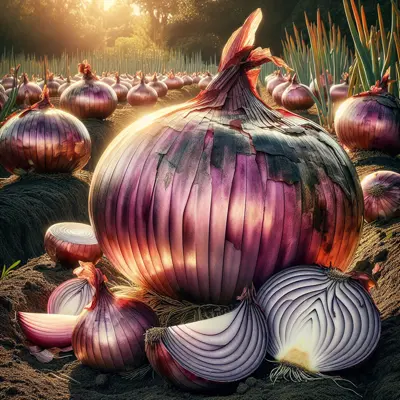
The sweet, mild onion that made Walla Walla, Washington famous. This beloved heirloom variety produces large, flattened bulbs with purple-tinged skin and crisp white flesh so sweet they can be eaten like apples. Perfect for those who want to grow their own version of this premium market onion.
Harvest
125-300d
Days to harvest
Sun
Full sun
Zones
5–10
USDA hardiness
Height
12-18 inches
Planting Timeline
Showing dates for Purple Top Walla Walla in USDA Zone 7
All Zone 7 allium →Zone Map
Click a state to update dates
Purple Top Walla Walla · Zones 5–10
Growing Details
Succession Planting
Direct sow Purple Top Walla Walla every 3–4 weeks from March through early May in zone 7, stopping once daytime highs are consistently above 75°F — onions started too late won't size up properly before summer heat shuts down bulb development. A fall sowing is worth trying: seed in late August, aiming for pencil-diameter seedlings before first frost, and you'll pull full-sized bulbs the following June or July. Don't approach this the way you would lettuce or radishes — stagger plantings to spread out your curing and storage work, not to hit a continuous harvest window. One well-timed large planting, cured right, keeps through winter.
Complete Growing Guide
Light: Full sun (6 or more hours of direct sunlight a day). Soil: High Organic Matter, Loam (Silt), Sand. Soil pH: Alkaline (>8.0), Neutral (6.0-8.0). Drainage: Good Drainage, Moist. Height: 1 ft. 0 in. - 1 ft. 6 in.. Spread: 0 ft. 6 in. - 1 ft. 0 in.. Spacing: Less than 12 inches, 12 inches-3 feet. Maintenance: Medium. Regions: Coastal, Mountains, Piedmont.
Harvesting
Flowers wither and convert to bulblets
Type: Capsule.
Harvest time: Summer
Edibility: The bulb and tops are edible raw or cooked. However, the plant also has poisonous characteristics as noted in the "Poisonous to Humans" section of this record. Toxicity can depend on the age of the person or animal, the age of the plant, the part of the plant ingested, how much is ingested, whether the person or animal has sensitivities or allergies, whether it's eaten raw or cooked, and so forth. Consult with a medical professional for further details.
Storage & Preservation
Fresh Purple Top Walla Walla onions require immediate curing after harvest. Spread them in a single layer in a warm, dry, well-ventilated area for 2-3 weeks until necks are completely dry and papery. Unlike storage onions, Walla Wallas have high water content and low sulfur, giving them only 1-3 months storage life even under ideal conditions.
Store cured bulbs in mesh bags or ventilated boxes at 32-35°F with low humidity, checking regularly and using any with soft spots immediately. For longer preservation, slice and freeze them for up to 8 months, or caramelize and freeze in portions. They also pickle beautifully – their mild, sweet flavor makes excellent quick pickles or pickled onion rings. Dehydrating works well too, though you'll lose some of the characteristic sweetness that makes this variety special.
History & Origin
Origin: Central Asia and central Persia
Considerations
- -Toxic: Low severity
Companion Plants
Carrots run 6–10 inches deeper than onion bulbs, so they're not competing for the same soil zone, and the mingled scents of the two crops genuinely confuse carrot fly (Psila rosae) and onion thrips — not a guarantee, but worth the zero extra effort. Marigolds (Tagetes spp.) earn a spot at the bed edge by suppressing soil nematodes through alpha-terthienyl released from their roots. Beans and peas are the ones to pull off the list: they fix nitrogen at levels that shunt onion energy into tops rather than bulb sizing, and their root exudates appear to slow Allium development even before the nitrogen imbalance kicks in. Sage competes aggressively for the same surface moisture and doesn't offer anything in return.
Plant Together
Carrots
Onions repel carrot fly while carrots help break up soil for onion bulbs
Tomatoes
Onions deter aphids, spider mites, and hornworms from tomato plants
Brassicas (Cabbage, Broccoli)
Onions repel cabbage worms, aphids, and flea beetles
Lettuce
Onions provide natural pest deterrent while lettuce doesn't compete for space
Peppers
Onions help repel aphids and other soft-bodied insects that damage peppers
Strawberries
Onions deter slugs, aphids, and other pests that commonly attack strawberry plants
Roses
Onions help repel aphids, thrips, and may reduce black spot disease
Marigolds
Both plants repel nematodes and various garden pests when grown together
Keep Apart
Beans
Onions can inhibit nitrogen fixation in legumes and stunt their growth
Peas
Allelopathic compounds from onions interfere with pea plant development
Asparagus
Onions can inhibit asparagus growth and reduce spear production
Sage
Both plants compete for similar nutrients and can inhibit each other's growth
Nutrition Facts
Per 100g serving. % Daily Value based on 2,000 calorie diet. Source: USDA FoodData Central (FDC #170000)
Pests & Disease Resistance
Resistance
Moderate resistance to pink root, susceptible to downy mildew and thrips damage
Common Pests
Onion thrips, onion maggot, cutworms
Diseases
Downy mildew, purple blotch, neck rot, pink root
Troubleshooting Purple Top Walla Walla
What you'll see, why it happens, and what to do about it.
Silvery streaking or stippling on leaves, tips browning and curling, visible around midsummer
Likely Causes
- Onion thrips (Thrips tabaci) — they rasp the leaf surface and suck sap; populations explode in hot, dry weather
- Crowded planting that limits airflow and makes it easier for thrips to hide in leaf axils
What to Do
- 1.Spray with insecticidal soap or spinosad early morning when thrips are active, hitting the base of leaves where they congregate
- 2.Keep spacing at least 4–6 inches — don't cheat it — so air moves through the bed
- 3.Remove and trash heavily infested outer leaves; don't compost them
Pale gray-purple fuzzy growth on leaf surfaces, leaves collapsing inward, usually in cool wet spells
Likely Causes
- Downy mildew (Peronospora destructor) — spreads fast in temps between 45–60°F with humidity above 85%
- Overhead irrigation or prolonged leaf wetness from rain
What to Do
- 1.Switch to drip irrigation if you're overhead watering; wet foliage is the primary driver here
- 2.Apply a copper-based fungicide at first sign of symptoms, following label rates — copper won't cure infected tissue but slows spread to healthy leaves
- 3.Pull and destroy badly infected plants; the disease overwinters in debris and bulbs
Bulbs rotting from the neck down at harvest or in storage, with a soft gray-brown collapse
Likely Causes
- Neck rot (Botrytis allii) — enters through the neck tissue if tops aren't cured properly after pulling
- Harvesting too early before tops have started to fall naturally, leaving necks moist and open
What to Do
- 1.Wait until at least 50–75% of tops have fallen over on their own before pulling; don't force them down
- 2.Cure bulbs in a warm, dry spot with good airflow for 2–4 weeks before moving to storage — a screen or slatted rack works better than a solid surface
- 3.Cull any bulb with a soft neck immediately; one rotting bulb in a crate will take neighbors with it
Frequently Asked Questions
How long does Purple Top Walla Walla onion take to grow?▼
Can you grow Purple Top Walla Walla onions in containers?▼
What does Purple Top Walla Walla onion taste like?▼
When should I plant Purple Top Walla Walla onion seeds?▼
Are Purple Top Walla Walla onions good for beginners?▼
How do Purple Top Walla Walla onions compare to regular sweet onions?▼
Zone-by-Zone Planting Calendar
| Zone | Indoor Start | Transplant | Direct Sow | Harvest |
|---|---|---|---|---|
| Zone 1 | — | — | June – July | December – September |
| Zone 2 | — | — | May – July | December – September |
| Zone 11 | — | — | January – February | July – December |
| Zone 12 | — | — | January – February | July – December |
| Zone 13 | — | — | January – February | July – December |
| Zone 3 | — | — | May – June | December – October |
| Zone 4 | — | — | April – June | November – October |
| Zone 5 | — | — | April – May | November – November |
| Zone 6 | — | — | April – May | November – November |
| Zone 7 | — | — | March – May | October – November |
| Zone 8 | — | — | March – April | October – December |
| Zone 9 | — | — | February – March | September – December |
| Zone 10 | — | — | January – March | August – December |
Growing Guides from Wind River Greens
Sources & References
External authority sources used in compiling this guide.
See the Methodology page for how this data is sourced, what's AI-assisted, and known limitations.