Green Mist
Ammi visnaga
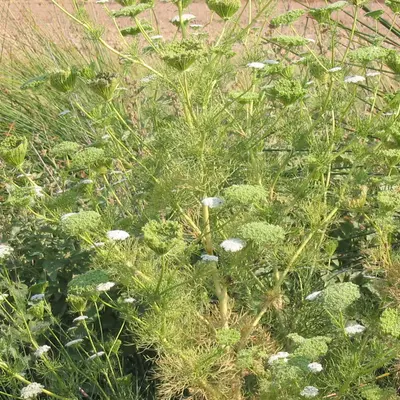
A greener, fuller ammi for cutting. Complements any color scheme. Stems are long and sturdy with dense flower heads 3-5" across. Foliage is full with blue-green, finely dissected leaves and has a feathery appearance. Also known as false Queen Anne's lace, lace flower, false bishop's weed, toothpickweed, and bishop's weed. Attracts and supports beneficial insects such as lacewings, lady beetles, minute pirate bugs, syrphid flies, and parasitic wasps.
Harvest
85-95d
Days to harvest
Sun
Full sun
Zones
1–11
USDA hardiness
Height
3-4 feet
Planting Timeline
Showing dates for Green Mist in USDA Zone 7
All Zone 7 flower →Zone Map
Click a state to update dates
Green Mist · Zones 1–11
Growing Details
Succession Planting
Green Mist takes 85–95 days from transplant to first cut, so staggering individual sowings won't give you the quick turnaround you'd get with lettuce — but you can offset two indoor-start rounds to stretch the cutting window. In zone 7, start the first round indoors in late February, transplant in April, then start a second round in late March for a May transplant. Two blocks hitting peak harvest 3–4 weeks apart makes a real difference if you're cutting for CSA bouquets or farmers markets.
Don't push transplants past early May. Green Mist is a warm-season annual, but plants that go into ground once soil temps climb past 75°F tend to rush through bloom and throw smaller, looser umbels. If you've missed the transplant window, direct sowing works April through early June — but germination runs 10–21 days and comes in unevenly, so keep the seedbed consistently moist and don't write off a flat that still looks sparse at day 14.
Complete Growing Guide
Green Mist thrives in full sun with at least 6-8 hours of direct light daily. Choose a site with well-drained soil; ammi tolerates a range of soil types but resents heavy, waterlogged ground that invites crown rot. Work in 2-3 inches of finished compost before sowing, and avoid heavy nitrogen feeds, which produce weak, floppy stems and delay flowering.
For the longest stems and earliest blooms, start seed indoors 8-10 weeks before your last frost date. Surface-sow into cell trays or soil blocks—seeds need light to germinate—press gently, and keep at 60-65°F. Cooler temperatures actually improve germination, which takes 10-21 days. Many growers refrigerate seeded trays for a week before moving them to warmth, mimicking the cold conditioning ammi prefers. In zones 7 and warmer, fall sowing or direct sowing in early spring as soon as soil can be worked produces the strongest plants.
Transplant out 2-3 weeks before your last frost—Green Mist is a hardy annual and a light frost will not harm it. Space plants 9-12 inches apart in blocks rather than rows; close spacing encourages straighter, longer stems. Drop a layer of horizontal netting (Hortonova or similar) at planting time and let the plants grow up through it. Skipping support is the single most common mistake with ammi—heavy flower heads will lodge in the first summer storm without it.
Water consistently with about an inch per week, ideally via drip to keep foliage dry and reduce powdery mildew pressure. A single side-dressing of balanced organic fertilizer when plants are 8-10 inches tall is plenty; over-fertilizing is far worse than under-fertilizing. Mulch lightly to keep roots cool, especially in zones 7+ where summer heat shortens the harvest window.
Pinch plants once when they reach 8-12 inches tall, removing the top 3-4 inches just above a leaf pair. This sacrifices the largest central bloom but produces 5-8 long, branched stems instead of one stocky one—a worthwhile trade for cutting. To maximize yield, harvest aggressively and consistently; the more you cut, the more side branches the plant produces. In hot climates, succession-sow every 3-4 weeks through spring for continuous bloom, as ammi tends to bolt and finish quickly once temperatures climb above 85°F. Wear gloves when handling foliage in sunny conditions—like its parsley-family relatives, ammi sap can cause phytophotodermatitis on sensitive skin.
Harvesting
Harvest Green Mist when 80% of the tiny florets on a head have opened but before any have started shedding pollen heavily. The flower head should feel firm and slightly springy, with a clean lime-green color and no browning at the edges. Cutting too early—when heads are still tight and pale—results in stems that wilt and never fully open in the vase. Cut in the cool of early morning when stems are fully turgid, using sharp, clean snips and taking stems all the way back to a lateral branching point or to the base of the plant. Long stems (18-30 inches) command premium bouquet value. Strip lower foliage immediately and plunge cut stems into clean, cool water with flower food. Wear long sleeves and gloves while harvesting on bright days, as the sap can sensitize skin to UV light. Cutting hard and often will keep plants producing for 4-6 weeks.
Storage & Preservation
Properly harvested Green Mist holds 7-10 days in the vase with clean water changed every 2-3 days and a floral preservative. For commercial storage, hold stems at 36-38°F with high humidity (85-90%) for up to a week before sale. Keep away from ripening fruit, which releases ethylene and shortens vase life dramatically.
Green Mist also dries beautifully. Cut stems when heads are fully open but still vibrant green, bundle loosely with rubber bands (which contract as stems shrink), and hang upside down in a dark, dry, well-ventilated room for 2-3 weeks. Dried heads hold their soft green tone for months and work wonderfully in wreaths and everlasting arrangements. Silica gel drying preserves color even better for premium dried work. Avoid pressing—the three-dimensional umbel structure crushes flat and loses character.
History & Origin
Green Mist belongs to Ammi visnaga, a species native to the Mediterranean basin, North Africa, and the Middle East, where it has grown wild for millennia. The common name 'toothpickweed' traces to ancient Egypt and later Arab Andalusia, where the dried, stiff flower rays were trimmed and used as toothpicks—a tradition that gave rise to the species name visnaga, from the Arabic 'biznaga.' The plant has a long medicinal history as well; compounds isolated from its seeds led to the development of the modern asthma drug khellin and, indirectly, the cardiovascular medication amiodarone.
While Ammi majus (bishop's flower) has long been grown ornamentally, visnaga selections like Green Mist were popularized more recently by the specialty cut-flower movement of the 1990s and 2000s. Growers sought a sturdier, fuller, longer-lasting alternative to the floppier majus, and Green Mist emerged as a standout for its dense domed heads and that distinctive chartreuse-green tone that designers prize as a foliage-flower hybrid in bouquets.
Advantages
- +Densely packed 3-5 inch domed heads in a designer-favorite chartreuse-green that pairs with any color palette
- +Exceptional vase life of 7-10 days, noticeably longer than Ammi majus
- +Sturdy, self-supporting stems hold up better than other ammi varieties in summer storms (with netting)
- +Powerful beneficial insectary plant—attracts lacewings, hoverflies, and parasitic wasps that suppress aphids and caterpillars
- +Hardy annual that tolerates light frost, allowing early transplanting and extended harvest windows
- +Dries beautifully while retaining green color, doubling its usefulness for cut-flower growers
- +Easy from seed and forgiving of cool spring conditions
Considerations
- -Sap can cause phytophotodermatitis (sun-triggered skin burns) in sensitive individuals—gloves and long sleeves recommended
- -Bolts and finishes quickly once temperatures climb above 85°F, requiring succession sowing in hot climates
- -Heads will lodge without horizontal netting support, especially after rain
- -Self-seeds prolifically and can naturalize aggressively in mild climates if heads are left to mature
- -Poor performer in heavy clay or waterlogged soils—prone to crown rot
Companion Plants
Marigolds and calendula pull real weight next to Green Mist. Both emit scent compounds that disrupt the host-finding behavior of aphids — one of the few pests that reliably colonizes Ammi visnaga. A row of French marigolds (Tagetes patula) planted 6–8 inches in front of your Green Mist block will see meaningfully fewer aphid clusters than an unplanted edge. Calendula goes a step further by drawing in parasitic wasps (Braconidae and Ichneumonidae families) that parasitize caterpillars before they work through your umbels.
Sweet alyssum and nasturtiums work at ground level rather than through scent. They pull hoverflies and predatory ground beetles into the base of the planting — both hunt aphids and leafhoppers where the stems meet soil. In our zone 7 Georgia garden, nasturtiums at the edges of a Green Mist block also act as a sacrificial trap crop: leafhoppers hit them first, which gives you a few days' warning before pressure builds on the Ammi itself.
Sunflowers are the companion to keep well away — and the reason is chemical, not competitive. Sunflower roots and decomposing leaves release heliannuols, a class of allelopathic compounds documented to suppress germination and stunt neighboring plants. Keep them at least 3–4 feet from any Green Mist bed, and if sunflowers grew in a bed the previous season, turn in a full 2–3 inches of fresh compost before direct-sowing Ammi into it.
Plant Together
Marigolds
Repel aphids, whiteflies, and nematodes while attracting beneficial insects
Lavender
Deters pests with strong fragrance and attracts pollinators
Nasturtiums
Act as trap crop for aphids and cucumber beetles
Sweet Alyssum
Attracts beneficial insects like lacewings and parasitic wasps
Cosmos
Attracts beneficial insects and provides light shade without competition
Chives
Repel aphids and thrips while improving soil health
Calendula
Attracts beneficial insects and may reduce soil-borne diseases
Zinnia
Attracts butterflies and beneficial predatory insects
Keep Apart
Black Walnut
Produces juglone toxin that inhibits growth of many flowering plants
Eucalyptus
Releases allelopathic compounds that suppress nearby plant growth
Sunflowers
Compete heavily for nutrients and water, may release growth inhibitors
Pests & Disease Resistance
Common Pests
Aphids, leafhoppers, occasional caterpillars
Diseases
Powdery mildew, crown rot in wet soils, occasional aster yellows
Troubleshooting Green Mist
What you'll see, why it happens, and what to do about it.
White powdery coating on leaves and stems, usually showing up mid-summer when nights cool slightly but humidity stays high
Likely Causes
- Powdery mildew (Erysiphe or Golovinomyces spp.) — thrives in that specific combo of warm days and cool, humid nights
- Crowded planting at less than 9 inches that restricts airflow through the canopy
What to Do
- 1.Thin or remove the most crowded stems first — airflow does more than any spray
- 2.Apply a diluted baking soda solution (1 tablespoon per gallon of water) or a sulfur-based fungicide at first sign; don't wait until it spreads
- 3.Next season, space transplants at the full 12 inches and avoid overhead irrigation in the evening
Plants wilting, yellowing, and collapsing at the base despite adequate water — crown looks dark or mushy at soil level
Likely Causes
- Crown rot, most often caused by Sclerotium rolfsii or Phytophthora spp. in waterlogged or poorly drained soil
- Overwatering combined with heavy clay soil that holds moisture past the 1-inch-per-week threshold
What to Do
- 1.Pull and discard affected plants — don't compost them, the pathogen overwinters in debris
- 2.Amend beds with coarse compost or perlite before replanting; Green Mist roots don't want to sit in standing water even briefly
- 3.Raise beds by at least 4 inches if your ground stays wet after heavy rain
Frequently Asked Questions
How long does Green Mist ammi take to grow?▼
Is Green Mist good for beginners?▼
What's the difference between Green Mist and Queen Anne's lace?▼
Can you grow Green Mist in containers?▼
Does Green Mist come back every year?▼
When should I plant Green Mist?▼
Zone-by-Zone Planting Calendar
| Zone | Indoor Start | Transplant | Direct Sow | Harvest |
|---|---|---|---|---|
| Zone 3 | April – May | June – July | June – August | — |
| Zone 4 | March – April | June – June | June – July | — |
| Zone 5 | March – April | May – June | May – July | — |
| Zone 6 | March – April | May – June | May – July | — |
| Zone 7 | February – March | April – May | April – June | — |
| Zone 8 | February – March | April – May | April – June | — |
| Zone 9 | January – February | March – April | March – May | — |
| Zone 10 | January – January | February – March | February – April | — |
| Zone 1 | May – June | July – August | July – September | — |
| Zone 2 | April – May | June – July | June – August | — |
| Zone 11 | January – January | January – February | January – March | — |
| Zone 12 | January – January | January – February | January – March | — |
| Zone 13 | January – January | January – February | January – March | — |
Growing Guides from Wind River Greens
Sources & References
External authority sources used in compiling this guide.
- BreederJohnny's Selected Seeds
See the Methodology page for how this data is sourced, what's AI-assisted, and known limitations.