Benning's Green Tint Pattypan
Cucurbita pepo 'Benning's Green Tint Pattypan'
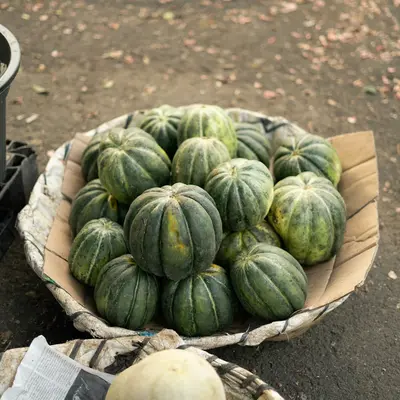
A charming heirloom summer squash dating back to the 1800s, featuring distinctive scalloped edges and pale green skin that turns creamy white as it matures. This productive bush variety produces tender, buttery-flavored fruits that are perfect for stuffing when small or slicing when larger. The unique flying saucer shape and delicate flavor make it a conversation starter in any garden.
Harvest
50-60d
Days to harvest
Sun
Full sun
Zones
3–11
USDA hardiness
Height
1-3 feet
Planting Timeline
Showing dates for Benning's Green Tint Pattypan in USDA Zone 7
All Zone 7 squash →Zone Map
Click a state to update dates
Benning's Green Tint Pattypan · Zones 3–11
Growing Details
Succession Planting
Direct sow every 2–3 weeks from late April through early June in zone 7, and stop by mid-June — plants started after that hit peak production during August's worst heat, which stresses fruit set and coincides with the heaviest squash bug pressure of the season. Two or three hills per succession is plenty; a single healthy planting will outpace most households for weeks before it starts declining.
A fall planting is worth attempting in Georgia. Count back 55 days from your first frost — typically mid-October in zone 7 — and that puts your sow date at late July to early August. That window is tight, so direct sow on time and don't wait for "better conditions" that aren't coming.
Complete Growing Guide
This heirloom cultivar thrives in warm soil (70°F+) and reaches full productivity within 50-60 days, making it ideal for successive plantings every two weeks for continuous harvest. Unlike larger winter squash, Benning's Green Tint Pattypan prefers consistent moisture and moderate fertility—excess nitrogen encourages leafy growth that can shade developing fruits and reduce yields. The compact bush habit (1-3 feet) requires good air circulation to prevent powdery mildew, which this variety is moderately susceptible to in humid conditions; space plants 24-30 inches apart and water at soil level. Harvest fruits when they're 2-4 inches wide for maximum tenderness and to encourage prolific flowering; leaving mature squash on the plant signals the plant to reduce production. Watch for squash bugs and cucumber beetles early in the season, as this variety's tender young growth is particularly attractive to pests.
Light: Full sun (6 or more hours of direct sunlight a day). Soil: High Organic Matter, Loam (Silt). Soil pH: Neutral (6.0-8.0). Drainage: Good Drainage, Moist. Height: 1 ft. 0 in. - 3 ft. 0 in.. Spread: 2 ft. 0 in. - 25 ft. 0 in.. Spacing: 12 inches-3 feet. Growth rate: Rapid. Maintenance: High. Propagation: Seed. Regions: Coastal, Mountains, Piedmont.
Harvesting
Harvest Benning's Green Tint Pattypan when the skin transitions from pale green to creamy white and the fruit reaches 3-4 inches across, at which point the flesh remains most tender and buttery. The skin should yield slightly to gentle thumb pressure but still feel firm enough to resist puncturing. For optimal flavor and continuous production, pick fruits every 2-3 days rather than waiting for full maturity, as regular harvesting encourages the bush to produce more blooms throughout the season. A crucial timing tip: harvest in early morning when temperatures are cool, as this preserves the delicate texture and prevents the flesh from becoming fibrous or tough.
A type of berry called a pepo that has a hard rind. Fruits may be long or round, large or small, smooth or warty– some have edible flesh and some are too hard or insipid to eat, though the seeds of all are edible. Has a harder, thicker stem compared to other species.
Color: Black, Cream/Tan, Gold/Yellow, Green, Orange, Pink, Red/Burgundy, Variegated, White. Type: Berry. Length: > 3 inches. Width: > 3 inches.
Garden value: Edible, Showy
Harvest time: Fall
Storage & Preservation
Fresh Benning's Green Tint Pattypan stores best at room temperature for 3-5 days or refrigerated in a perforated plastic bag for up to one week. Store in the crisper drawer at 50-55°F with moderate humidity – avoid temperatures below 45°F, which cause chilling injury and accelerated decay.
For longer storage, slice fruits into 1/2-inch rounds, blanch for 3 minutes, then freeze on baking sheets before transferring to freezer bags. Frozen pattypan maintains quality for 8-10 months. Small fruits (2-3 inches) pickle excellently using standard cucumber pickle recipes, maintaining their unique shape and developing a delightfully crisp texture. The mild flavor also makes them excellent for dehydrating into chips – slice thin and dehydrate at 135°F for 8-12 hours until crisp.
History & Origin
Documentation of "Benning's Green Tint Pattypan" is limited, though it belongs to the well-established pattypan squash lineage that emerged in America during the 19th century. The variety name references Benning Seed Company, a prominent Washington D.C. seedhouse active from the 1800s through much of the 20th century, suggesting the company either developed or popularized this cultivar. Pattypan squashes themselves represent an American heirloom group within Cucurbita pepo, characterized by their distinctive scalloped, disc-like fruits. While the specific breeding details and introduction date remain undocumented in readily available horticultural records, "Benning's Green Tint Pattypan" represents the continuation of this heritage squash tradition rather than a modern creation, maintaining the flavor and form prized by gardeners for generations.
Origin: North America
Advantages
- +Beautiful heirloom variety with distinctive scalloped edges makes striking garden display.
- +Mild, sweet, buttery flavor superior to many modern summer squash cultivars.
- +Fast-maturing 50-60 day variety allows multiple harvests in shorter growing seasons.
- +Productive bush plant ideal for small spaces and container gardening.
- +Perfect stuffing size when young, versatile for various culinary preparations.
Considerations
- -Highly susceptible to squash bugs, cucumber beetles, and squash vine borers.
- -Vulnerable to powdery mildew, bacterial wilt, and downy mildew diseases.
- -Pale green skin makes ripe fruits harder to spot for timely harvest.
- -Requires consistent pest management to prevent crop loss and disease spread.
Companion Plants
Nasturtiums and marigolds work at the bed edges by luring aphids away from the squash and pulling in predatory wasps — just don't tuck them so close that they compete for the 36–48 inches each pattypan hill needs to sprawl. The Three Sisters logic fits here too: corn provides a vertical layer without shading out the squash, beans fix nitrogen that these heavy feeders will burn through by midsummer, and the pattypan's broad leaves smother weeds at ground level so you're not hand-pulling grass every week. In our zone 7 Georgia garden, catnip and oregano nearby seem to reduce squash bug pressure — not eliminate it, but reduce it, which by late July is worth something. Potatoes are the one thing to keep out entirely; they share soilborne pathogens with squash, and if one crop goes down, the other usually follows.
Plant Together
Nasturtiums
Acts as trap crop for squash bugs and cucumber beetles, repels aphids
Marigolds
Repels cucumber beetles, squash bugs, and nematodes with natural compounds
Radishes
Deters squash vine borers and cucumber beetles, breaks up soil
Corn
Provides natural trellis support and shade, part of Three Sisters planting
Beans
Fixes nitrogen in soil, completes Three Sisters companion trio
Catnip
Repels squash bugs, cucumber beetles, and ants effectively
Oregano
Repels cucumber beetles and provides general pest deterrent properties
Sunflowers
Attracts beneficial insects and provides wind protection for squash vines
Keep Apart
Potatoes
Competes for nutrients and space, may increase disease susceptibility
Brassicas
Heavy feeders that compete for nutrients, may stunt squash growth
Fennel
Inhibits growth through allelopathic compounds, stunts most vegetable plants
Nutrition Facts
Per 100g serving. % Daily Value based on 2,000 calorie diet. Source: USDA FoodData Central (FDC #168040)
Pests & Disease Resistance
Resistance
Typical heirloom disease susceptibility, generally hardy
Common Pests
Squash bugs, cucumber beetles, squash vine borers
Diseases
Powdery mildew, bacterial wilt, downy mildew
Troubleshooting Benning's Green Tint Pattypan
What you'll see, why it happens, and what to do about it.
Wilting plant that doesn't recover overnight, even with adequate water — sometimes the whole vine collapses fast
Likely Causes
- Bacterial wilt (Erwinia tracheiphila), transmitted by cucumber beetles feeding on the foliage
- Squash vine borer (Melittia cucurbitae) larvae tunneling inside the main stem
What to Do
- 1.Cut a wilted stem near the base and touch the cut ends together — if you pull them apart and see thin, stringy threads, that's bacterial wilt; there's no cure, pull and trash the plant immediately
- 2.For vine borer, slit the stem lengthwise near the entry hole (look for frass that looks like wet sawdust), extract the larva, and mound damp soil over the wound — the vine may still root and recover
- 3.To get ahead of both problems next season, use row cover from transplant until flowering starts, and rotate out of cucurbits for at least 3 years per NC State Extension IPM guidance
White powdery coating on upper leaf surfaces, usually showing up mid-summer after the plants have been producing a few weeks
Likely Causes
- Powdery mildew — a fungal disease; warm days, cool nights, and low airflow are the trigger, not wet foliage
- Crowded planting inside the recommended 36–48 inch spacing, which kills airflow
What to Do
- 1.Strip and trash the worst-affected leaves; don't compost them
- 2.Apply a potassium bicarbonate spray or diluted neem oil to slow spread — neither will erase existing infection but they'll buy you a few more weeks of harvest
- 3.Next planting, hold the full 48-inch spacing and skip evening overhead irrigation
Chewed leaf edges and stippled, scarred foliage on young plants, with yellowish beetles visible on the leaves
Likely Causes
- Cucumber beetles — striped (Acalymma vittatum) or spotted (Diabrotica undecimpunctata); the UGA Pest Management calendar flags these as a top-10 summer pest to scout from May onward
- Eggs overwintering in old cucurbit debris left in the bed from the previous season
What to Do
- 1.Cover transplants or newly germinated seedlings with row cover or wire-and-cloth cone protectors until they're well established — NC State Extension specifically recommends this approach for home plantings
- 2.At the cotyledon stage, a foliar insecticide application can knock back feeding if pressure is heavy; consult the current NC Agricultural Chemicals Manual for rates
- 3.Clear all spent plant material from the bed at season's end and turn the soil to disrupt overwintering eggs
Frequently Asked Questions
How long does Benning's Green Tint Pattypan take to grow from seed?▼
Can you grow Benning's Green Tint Pattypan in containers?▼
What does Benning's Green Tint Pattypan taste like?▼
When should I plant Benning's Green Tint Pattypan seeds?▼
Is Benning's Green Tint Pattypan good for beginner gardeners?▼
How do you know when Benning's Green Tint Pattypan is ready to pick?▼
Zone-by-Zone Planting Calendar
| Zone | Indoor Start | Transplant | Direct Sow | Harvest |
|---|---|---|---|---|
| Zone 3 | — | — | June – July | August – October |
| Zone 4 | — | — | June – July | August – October |
| Zone 5 | — | — | May – June | August – September |
| Zone 6 | — | — | May – June | July – September |
| Zone 7 | — | — | April – June | July – August |
| Zone 8 | — | — | April – May | June – August |
| Zone 9 | — | — | March – April | May – July |
| Zone 10 | — | — | February – April | May – June |
| Zone 1 | — | — | July – August | September – August |
| Zone 2 | — | — | June – August | September – September |
| Zone 11 | — | — | January – March | April – May |
| Zone 12 | — | — | January – March | April – May |
| Zone 13 | — | — | January – March | April – May |
Growing Guides from Wind River Greens
Sources & References
External authority sources used in compiling this guide.
See the Methodology page for how this data is sourced, what's AI-assisted, and known limitations.