Chestnut (Chinese)
Castanea mollissima
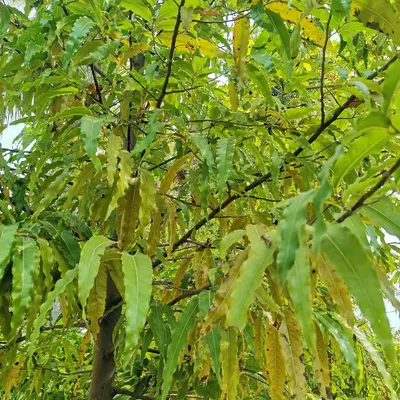
The Chinese chestnut offers hope for restoring chestnut production in North America with its natural resistance to chestnut blight that devastated American chestnuts. These fast-growing trees produce sweet, starchy nuts perfect for roasting and have become increasingly popular among homesteaders and permaculture enthusiasts. The trees are also valued for their beautiful fall color and relatively compact size compared to their American cousins.
Harvest
120-150d
Days to harvest
Sun
Full sun to partial shade
Zones
4–8
USDA hardiness
Height
40-60 feet
Planting Timeline
Showing dates for Chestnut (Chinese) in USDA Zone 7
All Zone 7 nut-tree →Zone Map
Click a state to update dates
Chestnut (Chinese) · Zones 4–8
Growing Details
Complete Growing Guide
Light: Full sun (6 or more hours of direct sunlight a day), Partial Shade (Direct sunlight only part of the day, 2-6 hours). Soil: Clay, Loam (Silt), Sand. Soil pH: Acid (<6.0), Neutral (6.0-8.0). Drainage: Good Drainage, Moist, Occasionally Dry. Height: 40 ft. 0 in. - 60 ft. 0 in.. Spread: 40 ft. 0 in. - 60 ft. 0 in.. Growth rate: Rapid. Maintenance: Medium. Propagation: Root Cutting, Seed, Stem Cutting.
Harvesting
The oval, round shaped nut ranges from 1 to 3 inches in length. The nut is crisp, meaty and sweet, though not as sweet as American chestnuts. It is good for fresh-eating, roasting, boiling and baking. Ripens in mid or lat September through October. Edible chestnuts are encased in spiny dehiscent burs (2 to 3 inches in diameter), usually 2 to 3 nuts per bur.
Color: Brown/Copper. Type: Nut. Length: 1-3 inches. Width: 1-3 inches.
Garden value: Edible
Harvest time: Fall
Edibility: Seeds can be baked and consumed.
Storage & Preservation
Store freshly harvested Chinese chestnuts in a cool, humid environment between 32-41°F with 85-95% humidity to maintain moisture and prevent shell hardening. A perforated plastic bag in the refrigerator's crisper drawer works well for household quantities. Fresh chestnuts keep for 3-4 weeks under these conditions, though quality gradually declines as they lose sweetness and texture.
For longer preservation, freezing is effective: blanch and peel nuts, then freeze in airtight containers for up to eight months. Dried chestnuts retain their nutty character well; dry at 140-160°F until brittle, then store in sealed containers away from humidity. You can also roast and freeze roasted nuts for convenient use in soups and stuffings. Chinese chestnuts are less prone to mold than European varieties, making them more forgiving during storage, though you should still discard any with visible damage or off-odors.
History & Origin
Origin: East Asia, China to North Korea
Advantages
- +Edible: Seeds can be baked and consumed.
- +Fast-growing
Companion Plants
Nitrogen-fixing clover planted as a groundcover beneath Chinese chestnut builds soil fertility at exactly the pace a long-lived tree needs — slowly, over decades, without a nitrogen spike that pushes excessive vegetative growth. Comfrey earns a spot for a different reason: its taproot goes down 6 feet or more, pulling up calcium and potassium that surface mulch alone won't supply; cut the leaves back 3 or 4 times a season and let them rot in place. Black walnut is the one to keep at a strict distance — NC State Extension documents juglone damage to chestnut roots, and 80 feet is the minimum buffer you want. Around here in zone 7 Georgia, hazel is a practical understory pairing: it tolerates the same 5.0–6.5 pH range, produces its own nut crop while your chestnut is still juveniling through years 3–6, and doesn't compete for the same deep water that an established Castanea mollissima is drawing on.
Plant Together
Nitrogen-fixing legumes (Clover)
Fixes nitrogen in soil, improving fertility for the chestnut tree
Comfrey
Deep roots mine nutrients and provide mulch, accumulates potassium
Oak trees
Share similar soil preferences and create beneficial forest ecosystem
Wild garlic
Natural pest deterrent and may help prevent fungal diseases
Elderberry
Attracts beneficial insects and birds, compatible growth habits
Hazel
Compatible nut tree with similar soil and light requirements
Ferns
Thrives in partial shade under canopy, helps retain soil moisture
Wild strawberries
Good ground cover that attracts pollinators and beneficial insects
Keep Apart
Black walnut
Produces juglone which is toxic to many plants including chestnuts
Apple trees
May compete for similar nutrients and both susceptible to similar fungal diseases
Eucalyptus
Allelopathic compounds inhibit growth of nearby plants
Pine trees
Acidifies soil excessively and competes aggressively for water and nutrients
Nutrition Facts
Per 100g serving. % Daily Value based on 2,000 calorie diet. Source: USDA FoodData Central (FDC #170575)
Pests & Disease Resistance
Resistance
Excellent resistance to chestnut blight, good general disease resistance
Common Pests
Chestnut weevil, gall wasps, Asian chestnut gall wasp
Diseases
Root rot (in poorly drained soils), occasional fungal issues
Troubleshooting Chestnut (Chinese)
What you'll see, why it happens, and what to do about it.
Nuts are hollow or have a small grub inside when cracked open at harvest
Likely Causes
- Chestnut weevil (Curculio elephas or C. sayi) — female lays eggs inside developing nuts in late summer
- Asian chestnut gall wasp (Dryocosmus kuriphilus) weakening the tree and reducing nut fill
What to Do
- 1.At harvest, float nuts in a bucket of water for 5 minutes — weevil-infested nuts float, discard them
- 2.Heat-treat sound nuts at 120°F for 20 minutes to kill any eggs or larvae before storage
- 3.Rake and destroy all fallen nuts and husks promptly — weevil larvae overwinter in the soil directly beneath the tree
Tree shows wilting, yellowing canopy, and decline starting from the root zone up, especially in a low or clay-heavy spot
Likely Causes
- Phytophthora root rot — Chinese chestnut is more tolerant than American chestnut, but standing water will still kill it
- Planting in poorly drained or compacted clay soil that stays wet after rain
What to Do
- 1.If the tree is young (under 3 years), dig it out and replant on a raised berm or slope with at least 12 inches of improved drainage
- 2.Don't irrigate within 3 feet of the trunk; keep the drip line area mulched but not piled against the bark
- 3.Pull back mulch and check the root flare — if it's buried more than 1-2 inches, uncover it
Frequently Asked Questions
How long does it take for Chinese chestnut trees to produce nuts?▼
Is Chinese chestnut a good choice for beginner growers?▼
What does Chinese chestnut taste like compared to other nuts?▼
Can you grow Chinese chestnut trees in containers?▼
How much sunlight do Chinese chestnut trees need?▼
What pests should I watch for when growing Chinese chestnuts?▼
Zone-by-Zone Planting Calendar
Growing Guides from Wind River Greens
Sources & References
External authority sources used in compiling this guide.
- ExtensionNC State Extension
- USDAUSDA FoodData Central
See the Methodology page for how this data is sourced, what's AI-assisted, and known limitations.