Black Mission Fig
Ficus carica 'Black Mission'
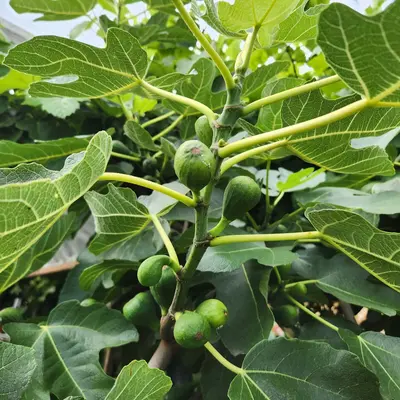
The quintessential California fig that's been beloved for over 200 years, brought by Spanish missionaries. Black Mission produces two crops per year of deep purple, intensely sweet figs with strawberry-red flesh. This vigorous, easy-to-grow variety is incredibly productive and more cold-hardy than most fig varieties.
Sun
Full sun to partial shade
Zones
7–10
USDA hardiness
Height
10-30 feet
Planting Timeline
Showing dates for Black Mission Fig in USDA Zone 7
All Zone 7 fruit-tree →Zone Map
Click a state to update dates
Black Mission Fig · Zones 7–10
Growing Details
Complete Growing Guide
Black Mission figs produce two distinct crops annually—an early breba crop in late spring and the main crop in late summer through fall—so prune in late winter to encourage branching before the first flush. This cultivar thrives in full sun with well-draining soil and tolerates some cold, making it suitable for zones 8-10, though it may die back in harsh winters and regenerate from the roots. While generally disease-resistant, Black Mission is susceptible to fig rust in humid climates and root rot if overwatered; water deeply but infrequently once established. The vigorous growth habit means it can become leggy without structural pruning, so remove lower branches to maintain an open framework and improve air circulation. A practical tip: thin developing fruit in early summer to direct energy toward fewer, larger figs of exceptional quality rather than allowing the tree to exhaust itself producing excessive smaller fruit.
Light: Full sun (6 or more hours of direct sunlight a day), Partial Shade (Direct sunlight only part of the day, 2-6 hours). Soil: High Organic Matter. Soil pH: Acid (<6.0), Neutral (6.0-8.0). Drainage: Good Drainage, Moist. Height: 10 ft. 0 in. - 30 ft. 0 in.. Spread: 10 ft. 0 in. - 30 ft. 0 in.. Spacing: 6-feet-12 feet, 12-24 feet. Growth rate: Rapid. Maintenance: Medium. Propagation: Layering, Stem Cutting. Regions: Coastal, Piedmont.
Harvesting
Black Mission figs reach peak ripeness when their deep purple skin darkens to nearly black and the fruit yields slightly to gentle pressure, typically measuring two to three inches long. Since this variety produces two crops annually—a smaller breba crop in early summer and the main crop in late summer through fall—harvest timing differs for each. Pick figs when they hang slightly downward and a small drop of nectar appears at the base, indicating maximum sugar concentration. Continuous harvesting every two to three days encourages further production, though allowing some fruit to fully soften on the tree enhances the jammy texture and honey-sweetness characteristic of this cultivar.
The infructescence is a ripened receptacle (syconium), not an ovary, that forms in late summer or fall on new wood. Sometimes a small second spring fruiting on new wood occurs. It is 2-4 in. long and may be a number of colors depending on the cultivar. Fruits develop without the need for pollination.
Color: Black, Brown/Copper, Green, Purple/Lavender. Length: 1-3 inches. Width: 1-3 inches.
Garden value: Edible, Showy
Harvest time: Fall, Summer
Edibility: Fruits are highly edible fresh, cooked, used in preserves, or dried.
Storage & Preservation
Fresh Black Mission figs have an extremely short shelf life – just 2-3 days at room temperature and up to a week refrigerated. Store ripe figs in a single layer on a paper towel-lined tray in the refrigerator, never in plastic bags which trap moisture and cause rapid deterioration.
For longer storage, Black Mission figs excel at drying due to their high sugar content and thick flesh. Cut in half and dehydrate at 135°F for 12-24 hours, or air-dry in a sunny, well-ventilated area. Properly dried figs keep for months in airtight containers.
Fresh figs freeze beautifully whole – simply wash, dry, and place on baking sheets before transferring to freezer bags. They'll become soft when thawed but are perfect for smoothies, baking, or jam-making. This variety's intense sweetness also makes exceptional preserves and fig butter that capture the complex berry notes.
History & Origin
The Black Mission fig arrived in California with Spanish missionaries during the colonial period, becoming established at Mission San Diego de Alcalá and other mission settlements in the late 1700s. The variety likely originated from Mediterranean fig cultivars brought from Spain, though its exact parentage and initial selection location remain poorly documented in horticultural records. The name "Black Mission" reflects both its dark fruit color and its association with the California mission system rather than a specific breeder or institution. This heritage variety became naturalized throughout California over the following two centuries, earning its reputation through widespread cultivation rather than formal breeding programs.
Origin: Mediterranean to Central Asia
Advantages
- +Produces two crops annually of intensely sweet, honey-rich figs
- +Deep purple skin with strawberry-red flesh makes them visually striking
- +More cold-hardy than most fig varieties, surviving harsher climates
- +Vigorous and incredibly productive even for novice growers
- +200+ year heritage ensures proven performance in California gardens
Considerations
- -Susceptible to fig rust and leaf blight in humid conditions
- -Fig beetles and birds aggressively target the sweet fruit
- -Requires well-draining soil to prevent root rot in wet areas
- -Scale insects can infest branches if not monitored regularly
Companion Plants
Lavender, rosemary, and thyme planted within 5–6 feet of the trunk pull in predatory wasps and pollinators without competing hard for water — all three run dry-side and won't fight a fig for soil moisture the way a thirsty annual would. Comfrey earns a spot nearby for a different reason: its roots go down 6 feet or more, pulling up calcium and potassium that shallow-rooted plants can't reach, and the leaves chop down into a free drip-line mulch. Mint needs to go in a buried container or it'll swallow the surrounding 3 square feet by midsummer. Black walnut is the one to plant nowhere near a fig — juglone accumulates in the soil under the canopy and Ficus carica is documented as sensitive to it, with root damage showing up well before you'd trace the cause.
Plant Together
Lavender
Repels ants and aphids while attracting beneficial pollinators
Rosemary
Deters pests like fig beetles and moths with strong aromatic oils
Thyme
Ground cover that suppresses weeds and repels fig-damaging insects
Comfrey
Deep taproot brings nutrients to surface, excellent mulch when cut
Nasturtiums
Trap crop for aphids and cucumber beetles, edible flowers
Marigolds
Repel nematodes and various flying pests that damage figs
Chives
Deter aphids and may improve fruit flavor through root interactions
Mint
Repels ants and rodents that may damage figs, but contain in pots
Keep Apart
Black Walnut
Produces juglone toxin that can stunt fig growth and cause leaf yellowing
Pine Trees
Acidify soil significantly, which figs dislike as they prefer neutral to slightly alkaline pH
Fennel
Allelopathic compounds inhibit growth of most nearby plants including fruit trees
Nutrition Facts
Per 100g serving. % Daily Value based on 2,000 calorie diet. Source: USDA FoodData Central (FDC #173021)
Pests & Disease Resistance
Resistance
Generally disease resistant, good tolerance to fig rust
Common Pests
Fig beetles, birds, nematodes, scale insects
Diseases
Fig rust, leaf blight, root rot in wet conditions
Troubleshooting Black Mission Fig
What you'll see, why it happens, and what to do about it.
Orange or rust-colored powdery spots on the undersides of leaves, with yellowing on top, appearing mid to late summer
Likely Causes
- Fig rust (Cerotelium fici) — a fungal disease that spreads in warm, humid conditions above 70°F
- Overhead watering or prolonged leaf wetness
What to Do
- 1.Remove and bag affected leaves — don't compost them
- 2.Switch to drip irrigation or water at the base to keep foliage dry
- 3.Apply a copper-based fungicide at the first sign of infection and repeat every 10–14 days through humid stretches
Fruit splitting open on the tree before harvest, often after a dry spell followed by rain
Likely Causes
- Irregular watering — the tree takes up water too fast after drought stress, expanding the fruit faster than the skin can stretch
- Boron deficiency, which can weaken cell walls in fruit
What to Do
- 1.Mulch 3–4 inches deep around the drip line to even out soil moisture
- 2.Water consistently — about 1 inch per week during fruiting — rather than letting the soil dry completely between waterings
- 3.If splitting is chronic, get a soil test; boron is correctable with a single foliar application if deficiency is confirmed
Whole figs disappearing or half-eaten fruit still on the tree, with no visible insect damage on the leaves
Likely Causes
- Birds — mockingbirds and starlings are the usual culprits and will clean a tree fast
- Fig beetles (Cotinis mutabilis) — large green beetles that bore into ripe fruit
What to Do
- 1.Net the tree when fruit starts to color up — a 1-inch mesh bird netting draped over the canopy is the most reliable fix
- 2.Pick fruit as soon as it softens; don't let ripe figs sit on the tree
- 3.For fig beetles, hand-pick adults in the early morning when they're sluggish and drop them in soapy water
Stunted growth, yellowing leaves, and poor fruit set on a tree that otherwise looks adequately watered and fed
Likely Causes
- Root-knot nematodes (Meloidogyne spp.) — microscopic soil pests that form galls on roots and block nutrient uptake
- Root rot from Phytophthora or Armillaria in poorly drained soil
What to Do
- 1.Dig up a small root sample and look for knobby galls — if present, nematodes are likely the issue; work in aged compost to build competitive soil biology over two to three seasons
- 2.If the soil stays wet after rain for more than 48 hours, raise the planting area or install a French drain nearby before the problem compounds
- 3.Don't site Black Mission where Armillaria (oak root fungus) has killed previous plantings; the mycelium persists in old roots and there's no soil treatment that reliably clears it
Frequently Asked Questions
How long does it take for Black Mission fig trees to produce fruit?▼
Can you grow Black Mission figs in containers?▼
What does Black Mission fig taste like compared to other varieties?▼
When should I plant Black Mission fig trees?▼
Are Black Mission figs good for beginners?▼
How cold hardy are Black Mission fig trees?▼
Zone-by-Zone Planting Calendar
Growing Guides from Wind River Greens
Sources & References
External authority sources used in compiling this guide.
- ExtensionNC State Extension
- USDAUSDA FoodData Central
See the Methodology page for how this data is sourced, what's AI-assisted, and known limitations.