Black Knight
Scabiosa atropurpurea
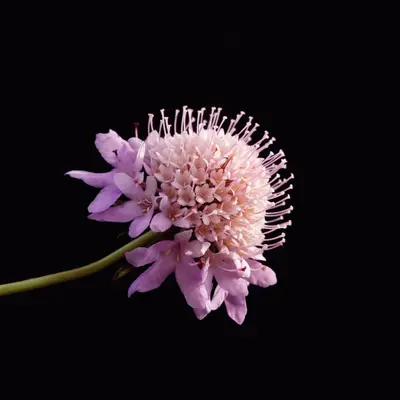
Almost black, 1 1/2-2 1/2" blooms stand tall on strong, slender stems. A dramatic addition to any bouquet or garden. Also known as mourningbride.
Harvest
90-100d
Days to harvest
Sun
Full sun
Zones
4–11
USDA hardiness
Height
2-3 feet
Planting Timeline
Showing dates for Black Knight in USDA Zone 7
All Zone 7 flower →Zone Map
Click a state to update dates
Black Knight · Zones 4–11
Growing Details
Succession Planting
Black Knight keeps producing blooms as long as you deadhead regularly, but output drops hard once daytime highs push past 85-90°F and it's not worth resowing mid-season in most climates. For a longer cutting window, do two sowings: start the first batch indoors in late February, transplant out in April after last frost, then direct-sow a second round in late April or early May to push blooms into early fall. That second planting will carry you through while the first fades out.
In zone 7, stop direct sowing by mid-June — seeds sown later will germinate fine but the plants won't reach the 90-100 day mark before summer heat shuts them down. In zone 9 or warmer, Black Knight is better treated as a cool-season annual: sow in September for winter and spring blooms rather than fighting the summer.
Complete Growing Guide
Almost black, 1 1/2-2 1/2" blooms stand tall on strong, slender stems. A dramatic addition to any bouquet or garden. Also known as mourningbride. According to Johnny's Selected Seeds, Black Knight is 90 - 100 days to maturity, annual, open pollinated. Notable features: Cold Tolerant, Use for Cut Flowers and Bouquets, Attracts Beneficial Insects.
Light: Full sun (6 or more hours of direct sunlight a day). Soil: High Organic Matter, Loam (Silt), Sand. Soil pH: Alkaline (>8.0), Neutral (6.0-8.0). Drainage: Good Drainage. Height: 2 ft. 0 in. - 3 ft. 0 in.. Spread: 0 ft. 9 in. - 1 ft. 0 in.. Spacing: Less than 12 inches. Growth rate: Medium. Maintenance: Low. Propagation: Seed. Regions: Coastal, Mountains, Piedmont.
Harvesting
Black Knight reaches harvest at 90 - 100 days from sowing per Johnny's Selected Seeds. Expect 1 1/2-2 1/2" at peak. As an annual, harvest continues until frost ends the season.
Bloom time: Fall, Spring, Summer
Storage & Preservation
For fresh blooms, store "Black Knight" flowers in a cool location (65-72°F) away from direct sunlight and ripening fruit. Keep stems in water with a floral preservative in a vase on a cool counter or in the refrigerator at 35-40°F for extended freshness. Shelf life is typically 7-10 days in water. Preservation methods include air-drying by hanging stems upside-down in a dark, well-ventilated space (10-14 days), pressing flowers between heavy books or paper for decorative crafts (2-3 weeks), and silica gel drying for pressed arrangements (3-5 days) to maintain the dramatic dark color.
History & Origin
Black Knight is open-pollinated, meaning seed saved from healthy plants will produce true-to-type offspring. Listed in the Johnny's Selected Seeds catalog.
Origin: Southern Europe, Western Asia and Northern Africa
Advantages
- +Almost black blooms create dramatic visual impact in cut flower arrangements
- +Strong slender stems provide excellent vase life and arrangement stability
- +Relatively easy to grow with 90-100 day timeline from seed to harvest
- +Tall growth habit produces flowers ideal for wedding bouquets and formal displays
Considerations
- -Dark petals may appear drab in low light indoor arrangements
- -Scabiosa seeds require scarification or stratification for reliable germination rates
- -Blooms attract aphids and spider mites requiring regular pest management
- -Extended growing period limits succession planting in shorter growing seasons
Companion Plants
Marigolds and Sweet Alyssum both earn their spot through pest mechanics, not just aesthetics. French marigolds (Tagetes patula) emit thiophene compounds from their roots that suppress root-knot nematodes, and their scent disrupts aphids scanning for a place to land on nearby stems. Sweet Alyssum tucked at the base of the scabiosa pulls in parasitic wasps and hoverflies — both of which prey on aphids — because its tiny, open flowers are accessible to insects with short mouthparts. Lavender and Catmint work as buffer plantings: pollinators visiting those flowers will work your Black Knight blooms in the same pass, and the aromatic oils appear to slow thrips moving through the bed.
Fennel is allelopathic and will stunt or kill many annuals planted within a foot or two of it — scabiosa included. Keep them on opposite ends of the garden. Black Walnut releases juglone through its root system and decomposing leaf litter, and that compound is broadly toxic to a wide range of flowering plants; if one's on your property, any bed within its drip line is a poor choice for Black Knight. Eucalyptus causes the same type of soil-borne biochemical inhibition, so treat it with the same distance.
Plant Together
Marigolds
Repel aphids and other pests while attracting beneficial insects
Lavender
Similar growing conditions and repels moths and flies
Catmint
Deters ants and aphids while attracting pollinators
Sweet Alyssum
Ground cover that attracts beneficial insects and predatory wasps
Zinnias
Attract beneficial insects and provide complementary colors
Nasturtiums
Act as trap crop for aphids and cucumber beetles
Salvia
Similar care requirements and attracts hummingbirds and butterflies
Cosmos
Attract beneficial insects and provide structural contrast
Keep Apart
Black Walnut
Produces juglone toxin that inhibits growth of many flowering plants
Eucalyptus
Releases allelopathic compounds that suppress nearby plant growth
Fennel
Inhibits growth of most garden plants through allelopathic effects
Troubleshooting Black Knight
What you'll see, why it happens, and what to do about it.
Seedlings collapse at soil level, stems pinched-looking and dark at the base
Likely Causes
- Damping off (Pythium or Rhizoctonia spp.) — fungal rot triggered by overwatering and poor airflow around seedlings
- Starting mix that stays wet too long, especially in trays with no bottom drainage
What to Do
- 1.Toss the affected seedlings — they won't recover — and let surviving cells dry out more between waterings
- 2.Run a small fan near your seed trays to keep air moving; 20-30 minutes twice a day makes a real difference
- 3.Next round, use a sterile, fast-draining starting mix and bottom-water rather than overhead watering
Powdery white coating on leaves, usually appearing mid-summer when nights cool off
Likely Causes
- Powdery mildew (Erysiphe spp.) — spores spread through air, not rain splash; worse when plants are crowded
- Spacing tighter than 18 inches, blocking airflow between stems
What to Do
- 1.Strip the worst-affected leaves and dispose of them in the trash, not the compost pile
- 2.Spray remaining foliage with a diluted potassium bicarbonate solution (1 tablespoon per gallon of water) every 7-10 days
- 3.Next season, hold spacing to at least 18 inches and avoid late-evening watering that keeps foliage wet overnight
Leaves stippled with tiny pale dots, undersides showing fine webbing
Likely Causes
- Two-spotted spider mite (Tetranychus urticae) — thrives in hot, dry conditions above 85°F
- Drought-stressed plants are hit hardest; under-watered scabiosa is significantly more vulnerable
What to Do
- 1.Blast the undersides of leaves with a firm jet of water every 2-3 days to knock mite populations back
- 2.Apply insecticidal soap or neem oil to leaf undersides in the evening — direct sun will burn treated foliage
- 3.Keep soil consistently moist at the 6-inch depth; mite pressure drops noticeably on plants that aren't stressed
Plant produces leaves well but few or no flower buds by day 70-80
Likely Causes
- Too much nitrogen — excess fertilizer pushes vegetative growth at the expense of blooming
- Insufficient sunlight; Black Knight needs a genuine 6+ hours of direct sun daily, not dappled shade
- Spent blooms left on the plant signal it to slow bud production instead of continuing to set new flowers
What to Do
- 1.Stop any nitrogen-heavy feeding; if you must fertilize, switch to a low-nitrogen formula like a 5-10-10
- 2.Deadhead every 3-5 days by cutting spent stems back to the next lateral bud or leaf node
- 3.If the planting spot gets less than 6 hours of direct sun, mark it for relocation next season
Frequently Asked Questions
How long do Black Knight flowers last in a vase?▼
Is Black Knight a good choice for beginner gardeners?▼
Can you grow Black Knight in containers?▼
When should I plant Black Knight flower seeds?▼
Why is Black Knight also called mourningbride?▼
How far apart should I space Black Knight plants?▼
Zone-by-Zone Planting Calendar
| Zone | Indoor Start | Transplant | Direct Sow | Harvest |
|---|---|---|---|---|
| Zone 3 | April – May | June – July | June – August | — |
| Zone 4 | March – April | June – June | June – July | — |
| Zone 5 | March – April | May – June | May – July | — |
| Zone 6 | March – April | May – June | May – July | — |
| Zone 7 | February – March | April – May | April – June | — |
| Zone 8 | February – March | April – May | April – June | — |
| Zone 9 | January – February | March – April | March – May | — |
| Zone 10 | January – January | February – March | February – April | — |
| Zone 1 | May – June | July – August | July – September | — |
| Zone 2 | April – May | June – July | June – August | — |
| Zone 11 | January – January | January – February | January – March | — |
| Zone 12 | January – January | January – February | January – March | — |
| Zone 13 | January – January | January – February | January – March | — |
Growing Guides from Wind River Greens
Sources & References
External authority sources used in compiling this guide.
- ExtensionNC State Extension
- BreederJohnny's Selected Seeds
See the Methodology page for how this data is sourced, what's AI-assisted, and known limitations.