Japanese Shiso Green
Perilla frutescens var. crispa
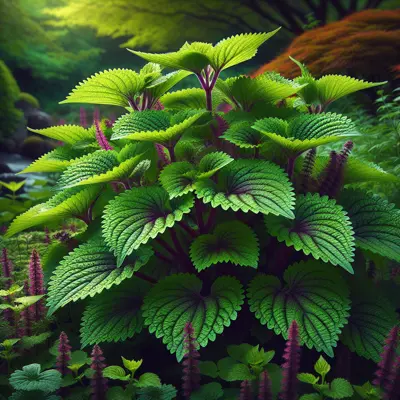
An essential Asian herb with distinctive serrated leaves that provide a unique flavor combining mint, basil, and anise notes with a slight cinnamon finish. Widely used in Japanese, Korean, and Vietnamese cuisines, this fast-growing annual is prized for wrapping sushi, pickling, and adding aromatic complexity to Asian dishes. Both the leaves and flower spikes are edible and highly flavorful.
Harvest
60-85d
Days to harvest
Sun
Full sun to partial shade
Zones
10–11
USDA hardiness
Height
1-3 feet
Planting Timeline
Showing dates for Japanese Shiso Green in USDA Zone 10
All Zone 10 herb →Zone Map
Click a state to update dates
Japanese Shiso Green · Zones 10–11
Growing Details
Complete Growing Guide
This fast-growing annual thrives in warm conditions and reaches harvestable size within 60-85 days, making succession planting every 2-3 weeks ideal for continuous supply through summer. Japanese Shiso Green prefers rich, well-draining soil and full sun to partial shade, though afternoon shade prevents bolting in hot climates—a key tendency for this cultivar that can trigger early flowering and reduce leaf quality. Space plants 12-18 inches apart to ensure adequate air circulation, which minimizes fungal issues common in humid growing conditions. Watch for Japanese beetles and spider mites, which are particularly attracted to shiso's aromatic foliage. Pinching flower buds as they emerge extends the leaf-harvesting window significantly, directing energy toward tender foliage rather than seed production. For best results, avoid overwatering and allow soil to dry slightly between waterings, as this herb dislikes soggy conditions despite its preference for consistent moisture.
Light: Full sun (6 or more hours of direct sunlight a day), Partial Shade (Direct sunlight only part of the day, 2-6 hours). Soil: High Organic Matter. Drainage: Good Drainage, Occasionally Wet. Height: 1 ft. 0 in. - 3 ft. 0 in.. Spread: 0 ft. 3 in. - 1 ft. 6 in.. Spacing: Less than 12 inches. Growth rate: Rapid. Maintenance: High. Propagation: Seed. Regions: Coastal, Mountains, Piedmont.
Harvesting
Japanese Shiso Green reaches peak harvest readiness when leaves display a rich, deep green color and reach 3-4 inches in length with a slightly waxy texture that feels supple but firm to the touch. Begin harvesting by pinching off leaves from the top of the plant when it reaches 12-18 inches tall, which encourages bushier growth and continuous production throughout the season rather than a single harvest. For optimal flavor intensity, pick leaves in the morning after dew dries but before intense afternoon heat, as this timing preserves the aromatic oils that make shiso's complex mint-basil-anise profile most pronounced. Removing flower spikes as they form redirects energy into leaf production and extends the harvest window through fall.
.06 inch reticulate nutlet gray-brown
Color: Brown/Copper, Gray/Silver. Length: < 1 inch. Width: < 1 inch.
Edibility: Leaves as a salad herb, flavoring
Storage & Preservation
Fresh Japanese shiso leaves are extremely perishable and best used within 2-3 days of harvest. Store them like fresh basil—wrap gently in barely damp paper towels and place in a plastic bag in the refrigerator, or stand cut stems in water and cover with a plastic bag. Never wash leaves until ready to use, as excess moisture causes rapid deterioration.
For preservation, freezing works excellently for cooked applications. Layer clean, dry leaves between parchment paper and freeze in airtight containers for up to 6 months. Unlike basil, shiso maintains much of its flavor when dried—hang small bundles in a warm, dark, well-ventilated area for 1-2 weeks. Crumble dried leaves and store in airtight jars. You can also make traditional Korean perilla oil by grinding fresh leaves with oil and salt, which keeps refrigerated for several weeks and intensifies the flavor beautifully.
History & Origin
Perilla frutescens var. crispa, commonly known as Japanese Shiso Green, descends from perilla varieties cultivated throughout East Asia for centuries, with documented use in Japanese cuisine dating back centuries. While specific breeding records or named breeders for this particular cultivar remain undocumented in readily available horticultural archives, the variety represents a refinement of traditional shiso selections favored in Japan for their superior leaf texture and aromatic qualities. The "Green" designation distinguishes it from red perilla varieties (var. purpurascens), reflecting Japanese cultivation preferences for green-leaved types in culinary applications. Modern seed companies have perpetuated and distributed this variety as part of the broader heritage of Asian herb gardening, though its exact introduction date and originating seed house are not definitively recorded in mainstream sources.
Origin: Himalayas to Southeast Asia
Advantages
- +Unique complex flavor profile elevates Asian dishes beyond standard culinary herbs.
- +Fast-growing annual reaches harvest-ready size in just 60-85 days.
- +Both leaves and decorative flower spikes provide dual culinary value.
- +Easy to grow makes it ideal for beginner and experienced gardeners.
- +Distinctive serrated leaves add visual appeal to garden and plate.
Considerations
- -Susceptible to Japanese beetles and flea beetles requiring regular pest management.
- -Thrives poorly in very humid conditions due to downy mildew risk.
- -Annual plant requires replanting each season unlike perennial herb alternatives.
- -Bacterial leaf spot disease can rapidly damage foliage in wet climates.
Companion Plants
Shiso slots in well next to tomatoes, peppers, and eggplant — not because of any dramatic pest-repelling magic, but because the growing conditions line up: warm soil, consistent moisture, full sun. You're not fighting the bed. The aromatic oils in Perilla frutescens do appear to interfere with aphid and whitefly host-finding behavior, which is a modest but real benefit when those pests are already cycling through your nightshades. Marigolds (Tagetes spp.) nearby pull in parasitic wasps, and lettuce works as a low underplanting — a mature 2–3 foot shiso plant throws enough shade to keep lettuce from bolting a week or two longer than it otherwise would.
Fennel (Foeniculum vulgare) is the neighbor to avoid. It produces allelopathic root compounds that suppress most nearby plants, and shiso is no exception — keep at least 24 inches between them or just put fennel in its own corner entirely. Mint is a different problem: it doesn't chemically interfere, it just runs. Uncontained mint will choke out anything within 18 inches inside a single season. Black walnut (Juglans nigra) releases juglone through its root zone, and shiso planted anywhere near the canopy drip line is likely to show stunted, yellowing growth with no other obvious cause.
Plant Together
Tomatoes
Shiso repels pests that commonly attack tomatoes, including hornworms and aphids
Peppers
Mutual pest deterrence; shiso's strong scent helps protect peppers from insects
Eggplant
Shiso deters flea beetles and other pests that damage eggplant foliage
Cucumber
Shiso helps repel cucumber beetles and improves overall garden biodiversity
Beans
Beans fix nitrogen in soil, benefiting shiso growth, while shiso repels bean beetles
Marigolds
Both plants repel nematodes and various garden pests through natural compounds
Nasturtiums
Acts as trap crop for aphids and cucumber beetles, protecting shiso
Lettuce
Shiso provides light shade for lettuce while deterring pests like aphids
Keep Apart
Black Walnut
Produces juglone toxin that inhibits growth of most herbs including shiso
Mint
Aggressive spreading nature competes for space and nutrients with shiso
Fennel
Allelopathic properties inhibit growth of nearby plants including herbs like shiso
Nutrition Facts
Per 100g serving. % Daily Value based on 2,000 calorie diet. Source: USDA FoodData Central (FDC #172232)
Pests & Disease Resistance
Resistance
Generally disease resistant, self-sows readily
Common Pests
Japanese beetles, aphids, flea beetles
Diseases
Bacterial leaf spot, downy mildew in very humid conditions
Troubleshooting Japanese Shiso Green
What you'll see, why it happens, and what to do about it.
Small, irregular holes punched through leaves, sometimes leaving a shotgun-pattern of pits — most visible on young foliage
Likely Causes
- Flea beetles (Phyllotreta spp.) — tiny, jumping beetles that feed heavily on seedlings and young transplants
- Plants under heat or drought stress are hit harder
What to Do
- 1.Cover transplants with floating row cover immediately after setting out; flea beetle pressure is worst in the first 3–4 weeks
- 2.Keep soil consistently moist — stressed plants take longer to outgrow the damage
- 3.If pressure is severe, apply spinosad (OMRI-listed) in the early morning when beetles are active
Leaves puckering or curling, with a sticky residue on upper surfaces and small soft-bodied insects clustered on stem tips and leaf undersides
Likely Causes
- Aphids (commonly green peach aphid, Myzus persicae) — they colonize fast once established
- Overcrowded planting or excess nitrogen pushing lush, soft new growth that aphids prefer
What to Do
- 1.Knock colonies off with a firm spray of water; do this in the morning so leaves dry by evening
- 2.If colonies persist, spray insecticidal soap directly on the insects — coverage on the undersides of leaves matters more than volume
- 3.Pull back on nitrogen fertilization mid-season; heavy feeding drives the soft growth Myzus persicae targets first
Angular water-soaked spots on leaves that turn brown and papery, sometimes with a yellow halo, spreading from older leaves upward
Likely Causes
- Bacterial leaf spot — favored by warm temperatures, overhead watering, and poor airflow between plants
- Crowded spacing under 12 inches that traps humidity against the foliage
What to Do
- 1.Switch to drip or soaker hose — keeping water off the foliage cuts transmission sharply, since the bacteria spread via water splash
- 2.Strip affected leaves and put them in the trash, not the compost pile
- 3.Space plants at least 12–18 inches apart; NC State Extension's disease management guidance specifically calls out crop diversity and spacing as the first line of defense against bacterial spread
Frequently Asked Questions
How long does Japanese shiso green take to grow?▼
Can you grow Japanese shiso green in containers?▼
What does Japanese shiso green taste like?▼
Is Japanese shiso green good for beginners?▼
When should I plant Japanese shiso green seeds?▼
Does Japanese shiso green come back every year?▼
Zone-by-Zone Planting Calendar
Growing Guides from Wind River Greens
Sources & References
External authority sources used in compiling this guide.
See the Methodology page for how this data is sourced, what's AI-assisted, and known limitations.