Bartlett Pear
Pyrus communis 'Bartlett'
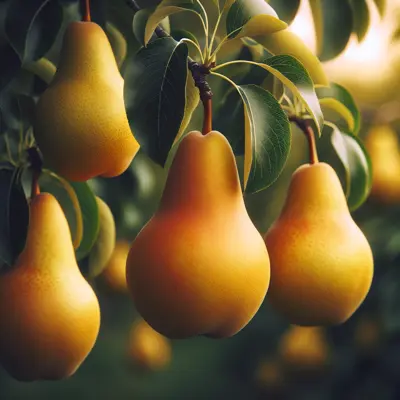
America's most popular pear variety, known for its classic bell shape and incredibly juicy, buttery flesh that melts in your mouth. Also called Williams pear in Europe, Bartlett transforms from green to golden yellow when ripe and fills the air with an intoxicating sweet fragrance. This reliable producer has been the standard for fresh eating and canning for over 200 years.
Harvest
130-160d
Days to harvest
Sun
Full sun
Zones
4–8
USDA hardiness
Height
40-50 feet
Planting Timeline
Showing dates for Bartlett Pear in USDA Zone 7
All Zone 7 fruit-tree →Zone Map
Click a state to update dates
Bartlett Pear · Zones 4–8
Growing Details
Complete Growing Guide
Light: Full sun (6 or more hours of direct sunlight a day). Soil: Clay, Loam (Silt), Sand. Soil pH: Neutral (6.0-8.0). Drainage: Good Drainage, Occasionally Dry. Height: 40 ft. 0 in. - 50 ft. 0 in.. Spread: 25 ft. 0 in. - 35 ft. 0 in.. Spacing: 12-24 feet. Maintenance: High. Propagation: Grafting, Stem Cutting. Regions: Coastal, Mountains, Piedmont.
Harvesting
Variable fruit sizes, shapes, and colors. Teardrop shapes are most commonly known.
Color: Brown/Copper, Gold/Yellow, Green, Red/Burgundy. Type: Pome. Length: > 3 inches. Width: > 3 inches.
Garden value: Edible, Fragrant
Harvest time: Fall, Summer
Edibility: Fruits edible raw, cooked, or dried. Sweet and fragrant.
Storage & Preservation
Harvest Bartlett pears when they reach full size but while still firm and green; they'll continue ripening off the tree. Store freshly picked fruit in a cool, dark place at 32–40°F with 90–95% humidity—a refrigerator crisper drawer works well, or a root cellar lined with newspaper. Properly stored pears keep for 2–4 weeks, though flavor peaks after a few days at room temperature once they've softened slightly. For preservation, canning is ideal given their firm flesh and natural sweetness; they hold their shape beautifully in light syrup. Freezing works too, though texture softens; peel, halve, and pack in sugar syrup or dry. The buttery flesh also dries exceptionally well—slice thinly and dry at low heat for chewy snacks. Because Bartletts ripen unevenly across the harvest window, stagger your picking and storage to enjoy fresh fruit over several weeks.
History & Origin
Origin: Europe to N. Iraq
Advantages
- +Attracts: Bees, Butterflies, Pollinators, Songbirds
- +Edible: Fruits edible raw, cooked, or dried. Sweet and fragrant.
Considerations
- -High maintenance
Companion Plants
Comfrey is probably the most useful plant you can put under a Bartlett pear. Its taproot goes down 6 feet or more, pulling up potassium and calcium that sit below where the pear's feeder roots operate. Cut the leaves and lay them on the soil surface and you've got a slow nutrient release that costs nothing. Chives and garlic around the drip line are worth doing too — their sulfur compounds deter aphids, which can build into serious populations on new growth by mid-June if you're not paying attention. Clover in the understory fixes nitrogen and draws in ground-level pollinators during bloom, when Bartlett needs consistent pollination to set a full crop.
Black walnut is a hard no. Juglone toxicity from walnut roots has been documented to cause stunted growth and dieback in pear trees, and the affected zone can extend well past what you'd expect from the canopy edge. Juniper is a separate problem: it's an alternate host for pear-juniper rust (Gymnosporangium sabinae), a fungus that produces orange gelatinous spore masses on juniper in spring and then sends airborne spores straight to your pear's developing fruit and leaves. Those two don't belong anywhere near a Bartlett.
Plant Together
Chives
Repels aphids and other pests while attracting beneficial insects
Comfrey
Deep roots bring nutrients to surface, leaves make excellent mulch
Nasturtiums
Trap crop for aphids and cucumber beetles, deters codling moths
Marigolds
Repel nematodes and various pests while attracting beneficial insects
Clover
Fixes nitrogen in soil and provides living mulch to retain moisture
Lavender
Attracts pollinators and repels moths and other flying pests
Dill
Attracts beneficial wasps and predatory insects that control pear pests
Garlic
Natural fungicide properties help prevent fire blight and other diseases
Keep Apart
Black Walnut
Produces juglone which is toxic to pear trees and inhibits growth
Juniper
Alternate host for cedar-apple rust which can spread to pear trees
Fennel
Allelopathic effects inhibit growth of fruit trees and most garden plants
Nutrition Facts
Per 100g serving. % Daily Value based on 2,000 calorie diet. Source: USDA FoodData Central (FDC #169118)
Pests & Disease Resistance
Resistance
Susceptible to fire blight and pear scab
Common Pests
Codling moth, pear psylla, aphids, scale insects
Diseases
Fire blight, pear scab, leaf spot, brown rot
Troubleshooting Bartlett Pear
What you'll see, why it happens, and what to do about it.
New shoots wilting and turning brown or black in a characteristic shepherd's-crook curl, appearing in spring shortly after bloom
Likely Causes
- Fire blight (Erwinia amylovora) — a bacterial disease that enters through blossoms and fresh wounds during warm, wet spring weather
- Overhead irrigation or rain during bloom that spreads bacteria to open flowers
What to Do
- 1.Prune out infected wood at least 8-12 inches below the visible damage and disinfect your pruners with 70% isopropyl alcohol between every cut
- 2.Dispose of the cuttings in the trash — not the compost pile, not on the ground nearby
- 3.Next season, apply a copper-based bactericide at first pink bud stage and again at full bloom per NC State Extension's fire blight management guidelines
Small, dark, scabby lesions on fruit skin and leaves, appearing from late spring onward — fruit may crack or become misshapen as it grows
Likely Causes
- Pear scab (Venturia pirina) — a fungal disease that overwinters in fallen leaves and infected twigs, spreading via spores during cool, wet periods
- Poor airflow from a dense canopy or standard trees planted closer than 20 feet apart
What to Do
- 1.Rake and remove all fallen leaves in autumn — those leaves are the primary inoculum source for the following spring, so don't skip this step
- 2.Apply a sulfur or myclobutanil fungicide starting at green tip in early spring and continue on a 10-14 day interval through petal fall
- 3.Prune the canopy annually to open up the center of the tree — a standard Bartlett at 40-50 feet can get very dense if left to itself
Frequently Asked Questions
How long does Bartlett pear take to produce fruit?▼
Can you grow Bartlett pears in containers?▼
What pear varieties pollinate Bartlett pears?▼
When should I plant Bartlett pear trees?▼
Why are my Bartlett pears gritty and tasteless?▼
Are Bartlett pears good for beginners?▼
Zone-by-Zone Planting Calendar
Growing Guides from Wind River Greens
Sources & References
External authority sources used in compiling this guide.
- ExtensionNC State Extension
- USDAUSDA FoodData Central
See the Methodology page for how this data is sourced, what's AI-assisted, and known limitations.