Golden Beet
Zinnia elegans
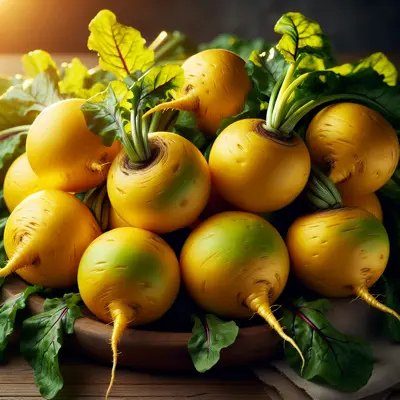
Golden Beet is a vibrant heirloom root vegetable with brilliant yellow-gold skin and pale yellow flesh. Maturing in 75-90 days, it's prized for its distinctly sweet and mild flavor—far less earthy than red beets—with a tender, delicate texture. The golden hue alone sets it apart visually in the garden and kitchen. Golden Beets excel in fresh applications where their subtle sweetness shines: roasted as a side, thinly shaved into salads, or pickled. They're an excellent choice for gardeners seeking an easier-to-grow beet with broader culinary appeal and elegant presentation.
Harvest
75-90d
Days to harvest
Sun
Full sun
Zones
2–11
USDA hardiness
Height
0-3 feet
Planting Timeline
Showing dates for Golden Beet in USDA Zone 7
All Zone 7 root-vegetable →Zone Map
Click a state to update dates
Golden Beet · Zones 2–11
Growing Details
Succession Planting
Direct sow golden beets every 3 weeks starting around March 1 in zone 7, continuing through late April before soil temperatures push above 85°F and germination rates drop off. A second window opens in late July through early August for a fall harvest — beets that mature in October or November after a light frost tend to be sweeter than summer beets, so this planting is worth doing if you have the bed space.
Each succession gives you roughly a 2–3 week harvest window before roots start getting woody, so staggering by 21 days keeps a steady supply rather than a glut. Thin to 3–4 inches within a week of germination — crowded beets fork and stay small regardless of soil quality.
Complete Growing Guide
Light: Full sun (6 or more hours of direct sunlight a day). Soil: High Organic Matter, Loam (Silt). Soil pH: Acid (<6.0), Alkaline (>8.0), Neutral (6.0-8.0). Drainage: Good Drainage, Occasionally Dry. Height: 0 ft. 6 in. - 3 ft. 0 in.. Spread: 0 ft. 8 in. - 1 ft. 0 in.. Spacing: 12 inches-3 feet. Growth rate: Rapid. Maintenance: Medium. Propagation: Seed. Regions: Coastal, Mountains, Piedmont.
Harvesting
Type: Achene.
Storage & Preservation
Store unwashed golden beets in perforated plastic bags in your refrigerator's crisper drawer at 32-40°F with high humidity. They'll maintain peak quality for 3-4 months when stored properly – significantly longer than red varieties. Keep the trimmed greens separate and use within 3-4 days.
For long-term preservation, blanch whole small beets for 25-30 minutes, slip off skins, then freeze in containers for up to 8 months. Golden beets pickle beautifully and maintain their sunny color – slice thin and use a standard brine recipe. They also dehydrate well when cooked and sliced, creating sweet chips that store for months. Unlike red beets, golden varieties won't bleed color during preservation, making them ideal for mixed vegetable preparations.
History & Origin
Origin: Mexico
Advantages
- +Attracts: Bees, Butterflies, Hummingbirds, Pollinators
- +Fast-growing
Companion Plants
Onions and garlic are the companions worth planting closest to golden beets. Both release sulfur compounds that interfere with aphid host-location — a real benefit since aphids hit beet foliage hard in spring — and their upright, shallow roots don't crowd the developing taproot below. Lettuce works well for the same spatial reason: it feeds at 6–12 inches down while beets push deeper, so a row of lettuce along the bed edge fills space that would otherwise go to weeds without any meaningful root competition.
Bush beans fit neatly into a beet planting — they fix a modest amount of nitrogen at the nodule level, stay compact enough not to shade the beets out, and their harvest timing doesn't conflict. Pole beans are worth keeping well away from the root vegetable beds entirely. They shade aggressively, and their root exudates at scale are thought to interfere with beet development in a way bush beans don't — the difference in growth habit matters more than just the trellis footprint.
Fennel should be kept at least 18–24 inches from beets; its roots produce allelopathic compounds that suppress germination and slow establishment in most neighboring vegetables. Field mustard is a problem for a different reason: it competes directly for the same calcium and boron that beets need for clean root development, and it carries flea beetles through its own growing season, feeding the pest population right next to your crop. Radishes are a smarter use of that space — direct sow them in the same bed and pull them at 25–30 days, well before the beet roots start sizing up.
Plant Together
Lettuce
Shallow roots don't compete with beet taproot, provides living mulch
Onions
Repel beet leaf miners and other pests that damage beet foliage
Garlic
Deters aphids, flea beetles, and fungal diseases affecting beets
Cabbage
Both benefit from similar soil conditions and growing requirements
Swiss Chard
Same family as beets, compatible growth habits and nutrient needs
Bush Beans
Fix nitrogen in soil which beets can utilize for leaf development
Radishes
Break up compacted soil helping beet root expansion, mature quickly
Carrots
Different root depths minimize competition, both tolerate similar conditions
Keep Apart
Pole Beans
Stunts beet growth and reduces root development quality
Field Mustard
Inhibits beet germination and early growth through allelopathic compounds
Fennel
Releases growth-inhibiting chemicals that reduce beet yield and vigor
Nutrition Facts
Per 100g serving. % Daily Value based on 2,000 calorie diet. Source: USDA FoodData Central (FDC #2685576)
Pests & Disease Resistance
Resistance
Good general disease resistance
Common Pests
Leaf miners, aphids, flea beetles
Diseases
Cercospora leaf spot, downy mildew, root rot
Troubleshooting Golden Beet
What you'll see, why it happens, and what to do about it.
Pale, tan or brown circular spots on leaves with a darker border, appearing mid-season
Likely Causes
- Cercospora leaf spot (Cercospora beticola) — fungal, spreads fastest in warm, humid conditions above 65°F
- Overhead watering that keeps foliage wet for extended periods
What to Do
- 1.Remove and trash (not compost) affected leaves as soon as you spot them
- 2.Switch to drip irrigation or water at the base; wet foliage is what this disease needs to spread
- 3.Rotate beets out of the same bed for at least 2 seasons — Cercospora beticola overwinters in soil debris
Grayish-purple fuzz on the undersides of leaves, with yellowing on the upper surface
Likely Causes
- Downy mildew — appears when nights are cool (below 65°F) and humidity is high
- Poor air circulation from tight spacing under 3 inches
What to Do
- 1.Thin plants to at least 3–4 inches apart to open up airflow
- 2.Avoid late-afternoon watering; foliage that stays wet overnight is most vulnerable
- 3.Pull severely infected plants entirely — downy mildew spreads fast once it's established in a bed
Seedlings or young roots turning soft and dark at the base, plants wilting and collapsing
Likely Causes
- Root rot caused by Pythium or Phytophthora species — both thrive in waterlogged, poorly drained soil
- Compacted beds that hold standing water after rain or irrigation
What to Do
- 1.Work compost into the bed before planting to loosen compacted soil; raise the bed 4–6 inches if drainage is a recurring problem
- 2.Stick to about 1 inch of water per week — golden beets don't want more than that
- 3.Affected plants won't recover; pull them and let the area dry out before replanting
Tiny, irregular holes punched through young leaves, seedlings look ragged within days of germination
Likely Causes
- Flea beetles — small, shiny, fast-jumping beetles that feed heavily on seedlings in warm weather
- Leaf miners — larvae tunnel through leaf tissue, leaving pale, winding trails visible when you hold the leaf to light
What to Do
- 1.Cover newly seeded rows with row cover (Agribon AG-19 or similar) immediately after sowing — flea beetles find seedlings fast
- 2.For leaf miners, pinch off and trash affected leaves; the larvae inside die once the leaf is gone
- 3.Plants past the 4-leaf stage can usually outgrow moderate flea beetle pressure without serious yield loss
Frequently Asked Questions
How long do golden beets take to grow from seed?▼
Can you grow golden beets in containers?▼
What's the difference between golden beets and red beets?▼
Are golden beets good for beginner gardeners?▼
When should I plant golden beets for fall harvest?▼
Do golden beets need full sun to grow well?▼
Zone-by-Zone Planting Calendar
| Zone | Indoor Start | Transplant | Direct Sow | Harvest |
|---|---|---|---|---|
| Zone 1 | — | — | June – July | August – September |
| Zone 2 | — | — | May – July | August – September |
| Zone 11 | — | — | January – February | March – December |
| Zone 12 | — | — | January – February | March – December |
| Zone 13 | — | — | January – February | March – December |
| Zone 3 | — | — | May – June | July – October |
| Zone 4 | — | — | April – June | July – October |
| Zone 5 | — | — | April – May | July – November |
| Zone 6 | — | — | April – May | June – November |
| Zone 7 | — | — | March – May | June – November |
| Zone 8 | — | — | March – April | May – December |
| Zone 9 | — | — | February – March | April – December |
| Zone 10 | — | — | January – March | April – December |
Growing Guides from Wind River Greens
Sources & References
External authority sources used in compiling this guide.
See the Methodology page for how this data is sourced, what's AI-assisted, and known limitations.