Sequin
Gomphrena haageana
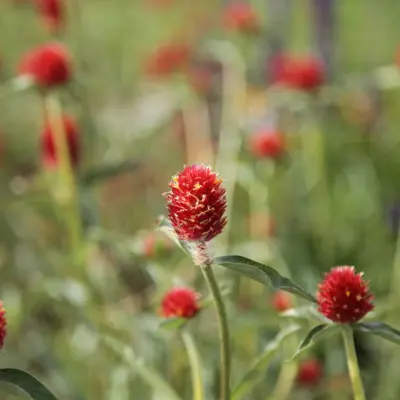
Unique color in gomphrena developed by Johnny's Breeding Team. Rose bracts surround a creamy, glowing center - creating a luminous, dusky-rose bloom. Opalescent color shifts in the petals make us think of sparkling sequins. When comparing the bloom colors of Sequin (G. haageana) and Raspberry Cream (G. globosa), Sequin's flower color is lighter and warmer. Sequin's uniform plant is consistent with other G. haageana types: open plants branch from the base and contain few leaves; stems are tall and slender; and blooms are 1 1/2" in diameter. A perfect accent flower for tying together cool or warm color palettes. As a dried flower, Sequin's color holds well; petals lighten only slightly, and the bloom center deepens into light rose. PVP pending.
Harvest
85-100d
Days to harvest
Sun
Full sun
Zones
1–11
USDA hardiness
Height
24-30 inches
Planting Timeline
Showing dates for Sequin in USDA Zone 7
All Zone 7 flower →Zone Map
Click a state to update dates
Sequin · Zones 1–11
Growing Details
Succession Planting
Sequin blooms continuously once it gets going, so a single well-timed planting usually covers the whole season. Start seeds indoors 6–8 weeks before your last frost date, transplant after frost risk is gone in April or May, and plants at 12–18 inch spacing will push stems from midsummer through first frost without any staggering. If you specifically want a staggered cut-flower harvest — say, for weekly markets — two indoor sowings about 3 weeks apart is enough. A third sowing rarely pays off; late-started plants catch up fast once soil temps hit 65°F.
Complete Growing Guide
Unique color in gomphrena developed by Johnny's Breeding Team. Rose bracts surround a creamy, glowing center - creating a luminous, dusky-rose bloom. Opalescent color shifts in the petals make us think of sparkling sequins. When comparing the bloom colors of Sequin (G. haageana) and Raspberry Cream (G. globosa), Sequin's flower color is lighter and warmer. Sequin's uniform plant is consistent with other G. haageana types: open plants branch from the base and contain few leaves; stems are tall and slender; and blooms are 1 1/2" in diameter. A perfect accent flower for tying together cool or warm color palettes. As a dried flower, Sequin's color holds well; petals lighten only slightly, and the bloom center deepens into light rose. PVP pending. According to Johnny's Selected Seeds, Sequin is 85 - 100 days to maturity, annual, open pollinated. Notable features: Developed by Johnny's, Use for Cut Flowers and Bouquets, Ideal for Drying and Crafts.
Light: Vegetable, Herb and Mostly Native Pollinator Garden Cabarrus County Poolside Garden. Drainage: Good Drainage, Occasionally Dry. Height: gom-FREE-nah glo-BOH-sa. Spread: gom-FREE-nah glo-BOH-sa. Growth rate: Medium. Maintenance: Low. Propagation: Seed. Regions: Coastal, Mountains, Piedmont.
Harvesting
Sequin reaches harvest at 85 - 100 days from sowing per Johnny's Selected Seeds. Expect 1 1/2" at peak. As an annual, harvest continues until frost ends the season.
This is an ornamental variety — not grown for harvest. Enjoy in the garden landscape.
Storage & Preservation
For fresh Sequin flowers, store stems in cool water at room temperature (65-70°F) away from direct sunlight and ripening fruit. Stems typically last 7-10 days in a vase with fresh water changed every 2-3 days. For preservation, air-dry bundles hanging upside-down in a warm, dark, well-ventilated space for 2-3 weeks—Sequin's color holds exceptionally well when dried. Alternatively, silica gel drying preserves color and structure in 5-7 days for arrangement or craft use. Press flowers between parchment paper under weight for 2-4 weeks for flattened botanical specimens.
History & Origin
Sequin is open-pollinated, meaning seed saved from healthy plants will produce true-to-type offspring. Listed in the Johnny's Selected Seeds catalog.
Mexico to Brazil
Advantages
- +Unique rose-cream color with opalescent shimmer distinguishes Sequin from other gomphrena varieties
- +Excellent dried flower that maintains color and deepens beautifully when dried
- +Versatile accent flower that complements both cool and warm color palettes
- +Easy to grow with consistent, uniform plant habit and reliable performance
- +Tall, slender stems ideal for cutting and floral arrangements
Considerations
- -Open plant habit with few leaves may appear sparse or leggy in garden
- -Requires 85-100 days to flower, making it slower than some competing varieties
- -Limited foliage coverage means plants need companion plantings for full garden effect
Companion Plants
Marigolds (especially Tagetes patula) earn a spot nearby — their root secretions suppress soil nematodes, and the color contrast in a cut-flower bed is a practical bonus. Sweet alyssum draws in parasitic wasps that knock back aphid populations, and it stays low enough (6–8 inches) that it won't shade Sequin's base. Nasturtiums pull aphids away as a trap crop. Sunflowers are the problem neighbor: their canopy blocks the 6+ hours of direct sun Sequin needs, and their root exudates have mild allelopathic properties that can stress nearby annuals.
Plant Together
Marigold
Repels nematodes and aphids while attracting beneficial insects
Sweet Alyssum
Attracts beneficial predatory insects and provides ground cover
Nasturtium
Acts as trap crop for aphids and cucumber beetles
Zinnia
Attracts pollinators and beneficial predatory insects
Cosmos
Attracts beneficial insects and provides vertical interest without competition
Lavender
Repels moths, fleas, and mosquitoes with natural oils
Petunias
Repel aphids, tomato hornworms, and squash bugs
Keep Apart
Sunflower
Allelopathic compounds inhibit growth of nearby smaller flowers
Black Walnut
Produces juglone which is toxic to most flowering plants
Eucalyptus
Releases allelopathic chemicals that suppress growth of nearby plants
Troubleshooting Sequin
What you'll see, why it happens, and what to do about it.
Seedlings collapse at soil level, stems look pinched or water-soaked just below the surface
Likely Causes
- Damping off — typically Pythium or Rhizoctonia fungi thriving in cold, waterlogged seed-starting mix
- Overwatering before seedlings have their first true leaves
What to Do
- 1.Toss the affected tray — there's no recovering damped-off seedlings
- 2.Start fresh in a sterile seed-starting mix, water from the bottom only, and keep the mix at 70–75°F
- 3.Run a small fan nearby for 30 minutes a day to improve air circulation around the tray
Leaves develop pale, stippled patches that look almost dusty or silvery, especially in hot, dry stretches
Likely Causes
- Spider mites (Tetranychus urticae) — they thrive when temperatures push above 90°F and humidity drops
- Plants going weeks without any overhead rinse, letting dust and mite colonies build undisturbed
What to Do
- 1.Spray the undersides of leaves hard with water from a hose nozzle on three consecutive mornings
- 2.If mites persist after a week, apply insecticidal soap or neem oil at the label rate — repeat every 5–7 days for two more cycles
- 3.Don't water overhead in the evening; you'll trade a mite problem for a fungal one
Plants stay small and pale green, flowering is sparse even 70+ days after transplant
Likely Causes
- Nitrogen excess — too much fertilizer pushes leafy growth and suppresses flowering in Gomphrena
- Too much shade; Sequin needs 6+ hours of direct sun to bloom well
- Planting into soil below 60°F, which stunts root development before the plant can establish
What to Do
- 1.Cut back or eliminate any high-nitrogen fertilizer — Gomphrena blooms better lean
- 2.Move containers to a full-sun spot, or note the bed for next year and put a shade-tolerant crop there instead
- 3.If soil temps are still cold early in the season, wait — plants often catch up once soil settles above 65°F
Flower heads develop a grayish fuzzy coating and begin to rot after several rainy days in a row
Likely Causes
- Botrytis blight (Botrytis cinerea) — gray mold that moves fast on flowers in cool, humid conditions
- Crowded spacing that traps moisture between plants and slows drying after rain
What to Do
- 1.Remove and bag affected flower heads immediately — don't compost them
- 2.Prune surrounding stems to open up airflow; at 12–18 inch spacing plants shouldn't be touching each other
- 3.Switch to drip or soaker hose irrigation at the base once plants are blooming — overhead sprinklers wet the heads and invite this
Frequently Asked Questions
How long do Sequin gomphrena flowers last in a vase?▼
Is Sequin gomphrena a good choice for beginning gardeners?▼
When should I plant Sequin gomphrena seeds?▼
Can Sequin gomphrena be grown in containers?▼
What makes Sequin gomphrena unique compared to other varieties?▼
How tall does Sequin gomphrena grow?▼
Zone-by-Zone Planting Calendar
| Zone | Indoor Start | Transplant | Direct Sow | Harvest |
|---|---|---|---|---|
| Zone 1 | May – June | July – August | July – September | — |
| Zone 2 | April – May | June – July | June – August | — |
| Zone 11 | January – January | January – February | January – March | — |
| Zone 12 | January – January | January – February | January – March | — |
| Zone 13 | January – January | January – February | January – March | — |
| Zone 3 | April – May | June – July | June – August | — |
| Zone 4 | March – April | June – June | June – July | — |
| Zone 5 | March – April | May – June | May – July | — |
| Zone 6 | March – April | May – June | May – July | — |
| Zone 7 | February – March | April – May | April – June | — |
| Zone 8 | February – March | April – May | April – June | — |
| Zone 9 | January – February | March – April | March – May | — |
| Zone 10 | January – January | February – March | February – April | — |
Growing Guides from Wind River Greens
Sources & References
External authority sources used in compiling this guide.
- BreederJohnny's Selected Seeds
See the Methodology page for how this data is sourced, what's AI-assisted, and known limitations.