Azumi XL White
Callistephus chinensis
Wikimedia Commons via Callistephus
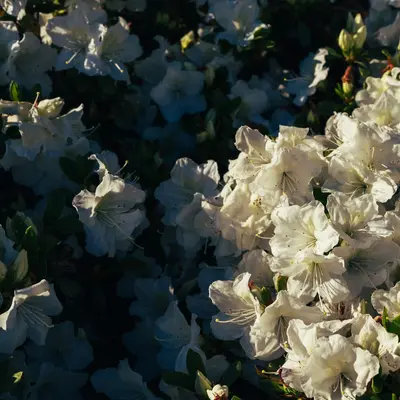
The Azumi series offers 2-3 1/2" pom-pom style blooms in rich jewel tones on sturdy, vigorous plants. Recommended for growing as a spray-type cut flower. Plants yield one cut per plant; each cut is a large spray of stems and flowers. The primary flower will be larger, surrounded by multiple slightly smaller blooms. Alternately, single stems can be harvested, although stem length will be shorter than when harvested as a one-cut spray type. White blooms open with a creamy center maturing to bright white. Fusarium tolerant.
Harvest
105-120d
Days to harvest
Sun
Full sun to partial shade
Zones
2–11
USDA hardiness
Height
1-3 feet
Planting Timeline
Showing dates for Azumi XL White in USDA Zone 7
All Zone 7 flower →Zone Map
Click a state to update dates
Azumi XL White · Zones 2–11
Growing Details
Succession Planting
Start seeds indoors 6-8 weeks before last frost — in zone 7, that's late February or early March, with transplants going out in April once nights hold above 40°F. For a continuous cut-flower supply through late summer, sow a second tray in mid-March and direct-sow a third round in early May, spacing these 3-4 weeks apart to get overlapping bloom windows across the 105-120 day maturity range. Stop direct sowing by early June — plants started after that in zone 7 will hit peak summer heat before they can set buds, and China asters stall badly above 85°F during bud development.
Complete Growing Guide
The Azumi series offers 2-3 1/2" pom-pom style blooms in rich jewel tones on sturdy, vigorous plants. Recommended for growing as a spray-type cut flower. Plants yield one cut per plant; each cut is a large spray of stems and flowers. The primary flower will be larger, surrounded by multiple slightly smaller blooms. Alternately, single stems can be harvested, although stem length will be shorter than when harvested as a one-cut spray type. White blooms open with a creamy center maturing to bright white. Fusarium tolerant. According to Johnny's Selected Seeds, Azumi XL White is 105 - 120 days to maturity, annual, open pollinated. Notable features: Use for Cut Flowers and Bouquets.
Light: Full sun (6 or more hours of direct sunlight a day), Partial Shade (Direct sunlight only part of the day, 2-6 hours). Soil: Clay, High Organic Matter, Loam (Silt), Sand. Soil pH: Acid (<6.0), Neutral (6.0-8.0). Drainage: Good Drainage, Moist. Height: 1 ft. 0 in. - 3 ft. 0 in.. Spread: 1 ft. 0 in. - 1 ft. 6 in.. Spacing: Less than 12 inches. Growth rate: Rapid. Maintenance: Medium. Regions: Coastal, Mountains, Piedmont.
Harvesting
Azumi XL White reaches harvest at 105 - 120 days from sowing per Johnny's Selected Seeds. Expect 2-3 1/2" at peak. As an annual, harvest continues until frost ends the season.
The fruit is a rough-textured, glandular, purple-mottled cypsela that turns gray with age.
Storage & Preservation
Fresh Azumi XL White blooms last 7-10 days in a clean vase with fresh flower food and room-temperature water changed every 2-3 days. Store cut flowers in a cool room (65-70°F) away from ripening fruit and direct sunlight. For longer-term preservation, air-dry full blooms by hanging them upside-down in a warm, dark, well-ventilated space for 2-3 weeks—they'll retain shape and subtle white coloring beautifully. Silica gel drying produces faster results (3-5 days) with superior color retention. You can also press individual petals between parchment paper under heavy weight for 1-2 weeks for craft projects or botanical pressing. Frozen blooms aren't recommended as they lose structural integrity upon thawing.
History & Origin
Azumi XL White is open-pollinated, meaning seed saved from healthy plants will produce true-to-type offspring. Listed in the Johnny's Selected Seeds catalog.
Origin: China and Southern Russia
Advantages
- +Produces abundant pom-pom blooms with attractive creamy-to-white color progression
- +Fusarium tolerant variety reduces disease management concerns for growers
- +Vigorous plants yield one large spray cut with multiple surrounding blooms
- +Flexible harvesting allows single stems or full sprays based on needs
- +Relatively easy to grow with straightforward cultivation requirements
Considerations
- -Extended 105-120 day timeline requires longer production cycle than some alternatives
- -Single cut per plant limits total yield compared to branching varieties
- -Creamy center may not appeal to customers preferring pure white flowers
- -Requires sturdy support structure for pom-pom blooms and spray-type growth habit
Companion Plants
Marigolds (Tagetes patula specifically) earn a spot here because their root secretions suppress soil nematodes and their scent disrupts the host-finding behavior of whiteflies — the same pest that showed up in the troubleshooting section above. Sweet alyssum stays low enough at 3-4 inches to avoid shading the asters, and it pulls in parasitic wasps and Syrphid hoverflies that clean up soft-bodied pests before they become a problem. In our zone 7 Georgia gardens, cosmos fills the cutting bed while Azumi XL White is still in its long 105-120 day run to bloom. Sunflowers are the one to avoid — they release allelopathic compounds through their roots that stunt neighbors, and black walnut does the same through juglone, more severely.
Plant Together
Marigolds
Repel aphids, whiteflies, and nematodes while attracting beneficial insects
Sweet Alyssum
Attracts beneficial insects like lacewings and provides ground cover
Nasturtiums
Act as trap crops for aphids and cucumber beetles, drawing pests away
Lavender
Repels moths, fleas, and mosquitoes while attracting pollinators
Petunias
Repel aphids, tomato hornworms, and other garden pests naturally
Zinnia
Attracts butterflies and beneficial predatory insects while providing color contrast
Catmint
Deters ants, aphids, and rodents while attracting beneficial pollinators
Cosmos
Attracts beneficial insects and provides structural support in mixed plantings
Keep Apart
Black Walnut
Produces juglone toxin that inhibits growth and can kill sensitive flowering plants
Eucalyptus
Releases allelopathic compounds that suppress growth of nearby plants
Sunflowers
Compete aggressively for nutrients and water, can stunt growth of smaller flowers
Pests & Disease Resistance
Common Pests
Spider mites, whiteflies
Diseases
Fusarium-tolerant (resistant)
Troubleshooting Azumi XL White
What you'll see, why it happens, and what to do about it.
Fine webbing on leaf undersides, leaves looking dusty or bronzed, usually starting mid-summer
Likely Causes
- Two-spotted spider mite (Tetranychus urticae) — thrives when temps push above 90°F and humidity drops
- Drought stress making plants more susceptible
What to Do
- 1.Blast the undersides of leaves with a hard stream of water every 2-3 days to knock mite populations down
- 2.Apply insecticidal soap or neem oil in the evening so it doesn't burn foliage in full sun
- 3.Keep soil consistently moist — stressed plants attract mites faster than healthy ones
Tiny white moths rising off foliage when disturbed, leaves with sticky residue or sooty mold
Likely Causes
- Silverleaf whitefly (Bemisia tabaci) or greenhouse whitefly (Trialeurodes vaporariorum)
- Dense planting that traps heat and limits airflow
What to Do
- 1.Hang yellow sticky traps 6-8 inches above the canopy to monitor and reduce adult populations
- 2.Spray spinosad or insecticidal soap directly on leaf undersides where nymphs feed — repeat every 5-7 days
- 3.Thin out crowded stems and make sure plants are spaced the full 18-24 inches apart
Wilting that doesn't recover with water, brown discoloration inside the stem when you cut it at the base
Likely Causes
- Pythium root rot from overwatering or poorly drained soil — note this variety carries Fusarium tolerance, not immunity to all root pathogens
- Aster leafhopper (Macrosteles quadrilineatus) damage earlier in the season opening entry points for secondary infection
What to Do
- 1.Pull and bag any plant showing internal stem browning — don't compost it
- 2.Amend beds with compost before next season to improve drainage; switch to morning drip irrigation to keep crowns dry overnight
- 3.Cut your losses early — a plant wilting at day 60 with internal browning won't recover and will sit there hosting pathogens
Distorted, yellowed, or stunted new growth; flowers greenish or misshapen at bloom
Likely Causes
- Aster yellows phytoplasma — the aster leafhopper (Macrosteles quadrilineatus) inoculates the plant, and symptoms show 2-4 weeks later
- Broad mite (Polyphagotarsonemus latus) feeding on meristematic tissue
What to Do
- 1.Remove and destroy affected plants immediately — there's no cure once a plant is infected with aster yellows
- 2.For suspected broad mite damage, apply a sulfur-based miticide; broad mites are too small to see without magnification, so treat based on symptom pattern
- 3.Use floating row cover (Agribon AG-15 or similar) over young transplants to block leafhopper access during the first 4-6 weeks after transplanting
Frequently Asked Questions
How many days from seed to flower for Azumi XL White?▼
Is Azumi XL White good for beginner gardeners?▼
Can you grow Azumi XL White in containers?▼
What makes Azumi XL White different from other white dahlias?▼
When should I plant Azumi XL White seeds?▼
How long do Azumi XL White blooms last in a vase?▼
Zone-by-Zone Planting Calendar
| Zone | Indoor Start | Transplant | Direct Sow | Harvest |
|---|---|---|---|---|
| Zone 1 | May – June | July – August | July – September | — |
| Zone 2 | April – May | June – July | June – August | — |
| Zone 11 | January – January | January – February | January – March | — |
| Zone 12 | January – January | January – February | January – March | — |
| Zone 13 | January – January | January – February | January – March | — |
| Zone 3 | April – May | June – July | June – August | — |
| Zone 4 | March – April | June – June | June – July | — |
| Zone 5 | March – April | May – June | May – July | — |
| Zone 6 | March – April | May – June | May – July | — |
| Zone 7 | February – March | April – May | April – June | — |
| Zone 8 | February – March | April – May | April – June | — |
| Zone 9 | January – February | March – April | March – May | — |
| Zone 10 | January – January | February – March | February – April | — |
Growing Guides from Wind River Greens
Sources & References
External authority sources used in compiling this guide.
- BreederJohnny's Selected Seeds
See the Methodology page for how this data is sourced, what's AI-assisted, and known limitations.