Scarlet Oak
Quercus coccinea
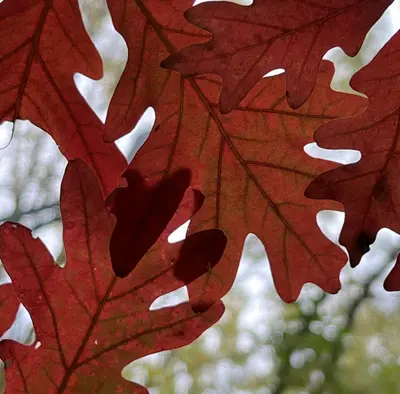
A stunning native oak prized for its brilliant scarlet fall foliage that rivals any maple for autumn color. This medium-sized oak grows faster than most oak species while maintaining the classic oak strength and longevity. Its deeply lobed leaves create beautiful filtered shade in summer before transforming into a spectacular red display that lasts for weeks.
Sun
Full sun to partial shade
Zones
4–9
USDA hardiness
Height
50-80 feet
Planting Timeline
Showing dates for Scarlet Oak in USDA Zone 7
All Zone 7 shade-tree →Zone Map
Click a state to update dates
Scarlet Oak · Zones 4–9
Growing Details
Complete Growing Guide
Light: Full sun (6 or more hours of direct sunlight a day), Partial Shade (Direct sunlight only part of the day, 2-6 hours). Soil: Clay, Loam (Silt), Sand. Soil pH: Acid (<6.0). Drainage: Good Drainage, Occasionally Dry. Height: 50 ft. 0 in. - 80 ft. 0 in.. Spread: 45 ft. 0 in. - 60 ft. 0 in.. Spacing: 24-60 feet. Growth rate: Rapid. Maintenance: Low. Propagation: Seed. Regions: Mountains, Piedmont.
Harvesting
The fruit is a 1/2- to 1-inch-long acorn that occurs singly or in pairs and is half covered by a deep bowl-like cap. The exposed acorn often has concentric, circular rings. The cap scales are shiny. Bitter in taste and require 2 seasons to mature. It starts producing at age 20.
Color: Brown/Copper. Type: Nut. Length: < 1 inch. Width: < 1 inch.
Harvest time: Fall
Edibility: Acorns can be eaten once to tannins have been leached or boiled out.
Storage & Preservation
As an ornamental shade tree, scarlet oak doesn't require post-harvest food storage. However, if you're propagating from collected acorns:
Store fresh acorns in moist sand or peat moss at 32-40°F (refrigerator temperature) for winter stratification. Keep them consistently moist but never waterlogged. Check monthly for mold; if white mold appears, wipe acorns with a damp cloth and refresh the medium. Acorns cannot be dried and stored like some tree seeds—they lose viability within 2-4 weeks of drying out. For long-term seed preservation, this simply isn't viable.
If propagating, it's far more reliable to collect fresh acorns each fall and process them immediately, or to purchase nursery-grown trees. Some gardeners successfully store fresh acorns in a basement or unheated garage (40-50°F) surrounded by slightly moist sand through winter, checking regularly for germination. Once sprouting begins in early spring, transplant immediately to prevent root damage from extended cold storage.
History & Origin
Origin: Northern Central & Eastern U.S.A
Advantages
- +Attracts: Butterflies, Moths, Pollinators, Small Mammals, Songbirds
- +Edible: Acorns can be eaten once to tannins have been leached or boiled out.
- +Fast-growing
- +Low maintenance
Considerations
- -Toxic (Leaves, Seeds): Low severity
Companion Plants
Wild Ginger and ferns make the most sense directly under a Scarlet Oak — both are shallow-rooted, shade-tolerant, and won't fight the oak's deeper feeder roots once it matures. Azaleas and Rhododendrons thrive in the same pH range (5.0–6.5) the oak demands, so in the Georgia piedmont that acidic soil is already on your side; you're not amending twice for two different plants. Skip Black Walnut anywhere in the vicinity — it produces juglone, a root-zone toxin that's documented to harm a wide range of species, and Scarlet Oak is not immune. Lawn grass is the subtler problem: it competes for water during dry stretches, and the mowing and foot traffic it invites compacts soil directly over the root zone, which stresses the tree slowly across years rather than all at once.
Plant Together
Wild Ginger
Thrives in acidic soil conditions created by oak leaf litter, provides natural groundcover
Ferns
Tolerates shade and acidic conditions, complements oak's natural woodland ecosystem
Azaleas
Acid-loving shrub that thrives under oak canopy, benefits from natural mulch of fallen leaves
Rhododendrons
Prefers acidic soil and partial shade provided by oak, creates layered woodland garden
Hostas
Shade-tolerant perennial that benefits from oak's filtered light and leaf mulch
Coral Bells
Adapts well to acidic soil and dappled shade beneath oak canopy
Wild Columbine
Native woodland plant that naturalizes well in oak's acidic, shaded environment
Winterberry Holly
Acid-tolerant shrub that provides winter interest and wildlife food alongside oak
Keep Apart
Black Walnut
Releases juglone toxin that can stress oak trees and compete for similar growing space
Sugar Maple
Competes directly for sunlight and nutrients, creates dense canopy competition
Lawn Grass
Competes with shallow oak roots for water and nutrients, suffers in acidic leaf litter
Pests & Disease Resistance
Resistance
Good resistance to most oak diseases
Common Pests
Gypsy moth, oak leaf roller, scale insects
Diseases
Oak wilt, anthracnose, leaf spot
Troubleshooting Scarlet Oak
What you'll see, why it happens, and what to do about it.
Leaves wilting, browning, and dying branch by branch — sometimes an entire side of the canopy — during summer
Likely Causes
- Oak wilt (Bretziella fagacearum) — a fungal vascular disease that spreads through root grafts between neighboring oaks and via sap beetles carrying spores to fresh wounds
- Improper pruning timing — cutting during April through July when sap beetles are most active dramatically raises infection risk
What to Do
- 1.Prune only during late fall or winter (November through February) when beetle activity is minimal
- 2.If oak wilt is confirmed, a certified arborist can trench-sever root grafts within 50–100 feet of the infected tree to slow spread
- 3.Remove and chip or burn any infected wood immediately — don't stack it near healthy oaks
Tan or brown irregular dead patches on leaves in spring, especially on young leaves right after budbreak
Likely Causes
- Anthracnose (Discula quercina) — a fungal disease that thrives in the cool, wet springs common in the Southeast
- Late frost damage followed by wet conditions, which are often mistaken for anthracnose
What to Do
- 1.Wait it out — healthy, established Scarlet Oaks almost always push a second flush of leaves and recover without intervention
- 2.Rake and bag (don't compost) fallen infected leaves each autumn to cut the spore load going into next spring
- 3.If a young tree under 5 years is repeatedly defoliated, a single preventive copper-based fungicide spray at budbreak the following spring can help
Leaves skeletonized or chewed down to the midrib, especially in mid-summer, sometimes affecting large portions of the canopy
Likely Causes
- Oak leaf roller (Archips semiferanus) — caterpillars that web and roll leaves in late spring, feeding inside the roll
- Gypsy moth (Lymantria dispar) larvae — larger caterpillars that can strip entire canopies when populations spike, more common toward the northern end of zone 7
What to Do
- 1.For light infestations on young trees, hand-pick rolled leaves and drop them in a bucket of soapy water
- 2.Apply Bacillus thuringiensis var. kurstaki (Bt-k) when caterpillars are still small — under 1 inch — for effective, low-impact control
- 3.A single defoliation rarely kills a mature Scarlet Oak; water deeply (1–2 inches per week) after defoliation to support the second leaf flush
Frequently Asked Questions
How long does it take for scarlet oak to develop full fall color?▼
Can scarlet oak grow in clay soil?▼
What's the difference between scarlet oak and pin oak?▼
Is scarlet oak a good tree for beginners to plant?▼
When is the best time to plant scarlet oak?▼
How much space does scarlet oak need?▼
Zone-by-Zone Planting Calendar
Growing Guides from Wind River Greens
Sources & References
External authority sources used in compiling this guide.
- ExtensionNC State Extension
See the Methodology page for how this data is sourced, what's AI-assisted, and known limitations.