Birdhouse Gourd
Lagenaria siceraria
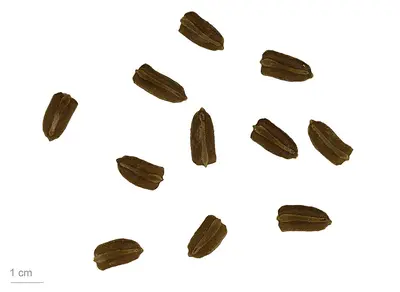
Birdhouse Gourd is a charming heirloom vine variety that produces distinctive gourd-shaped fruits resembling small birdhouses, typically ready in 125 days. The hard-shelled gourds mature with ornamental light tan or cream-colored skin, ideal for drying and decoration. Young immature fruits can be eaten as summer squash, though the plant is primarily grown as an ornamental rather than for food production. Vigorous vines require full sun and rich, well-drained soil, making them excellent for trellising or sprawling along garden beds.
Harvest
125d
Days to harvest
Sun
Full sun
Zones
2–11
USDA hardiness
Height
9-18 inches
Planting Timeline
Showing dates for Birdhouse Gourd in USDA Zone 7
All Zone 7 vine →Zone Map
Click a state to update dates
Birdhouse Gourd · Zones 2–11
Growing Details
Complete Growing Guide
With a 125-day maturity window, Birdhouse Gourd demands early sowing—start seeds indoors 3-4 weeks before your last frost to ensure adequate time for fruit development and proper curing before fall. These vines thrive in full sun with well-draining soil rich in organic matter, requiring consistent moisture during flowering and fruit set but drier conditions as harvest approaches. Unlike ornamental gourds, Birdhouse varieties are less prone to powdery mildew if given good air circulation, though spider mites can trouble stressed plants in hot, dry spells. The cultivar's tendency to produce uniform, pendulous fruit makes vertical trellising essential—train vines upward and support developing gourds in slings to achieve the characteristic rounded shape with narrow neck. Allow fruits to cure on the vine until the rind fully browns and hardens, which concentrates the cell walls for maximum durability in finished crafts.
Light: Full sun (6 or more hours of direct sunlight a day). Soil: Clay, High Organic Matter, Loam (Silt), Sand. Soil pH: Acid (<6.0), Alkaline (>8.0), Neutral (6.0-8.0). Drainage: Good Drainage, Moist. Height: 0 ft. 9 in. - 1 ft. 6 in.. Spread: 10 ft. 0 in. - 16 ft. 0 in.. Spacing: 3 feet-6 feet. Growth rate: Rapid. Maintenance: Medium. Propagation: Seed. Regions: Coastal, Mountains, Piedmont.
Harvesting
Harvest Birdhouse gourds when the smooth rind transitions from greenish to white or begins browning, signaling peak maturity for drying and crafting. At this stage, the gourd should feel hard to the touch and weigh approximately 10-12 pounds. Unlike summer squash varieties requiring continuous picking, Birdhouse gourds benefit from a single, concentrated harvest once most fruits have reached full size and color change. Leave gourds on the vine as long as possible before the first frost, as additional time on the plant hardens the shell and improves durability for long-term storage and crafting projects. Cut fruits from the vine using pruning shears rather than pulling to avoid vine damage.
Fruit (a pepo to 3 feet long) has a smooth, light green skin when young, but matures to yellow or light brown. Mature fruits take a variety of shapes, including rounded, dumbbell-shaped, bottle-shaped or crookneck-shaped. The fruit is fleshy and dry but not split open.
Color: Cream/Tan. Length: > 3 inches. Width: > 3 inches.
Garden value: Edible, Showy
Harvest time: Summer
Edibility: Seeds, leaves, flowers, and young stems are all edible when the fruit is young. As it ages off the vine, the fruit hardens leaving the seeds inside.
Storage & Preservation
For fresh gourds, store at room temperature (60-70°F) in a well-ventilated, dry location away from direct sunlight to allow full maturation and rind hardening. Avoid refrigeration, which can promote rot. Mature gourds last 6-12 months when fully dried. For preservation: (1) Air-dry whole gourds indoors for 3-6 months until extremely lightweight and hollow; (2) Cure in a warm, airy space (70-80°F) for 2-3 weeks post-harvest to harden the rind before long-term storage; (3) Apply a light coat of food-grade linseed oil to dried gourds to enhance durability and protect from moisture. Store dried specimens in a cool, dry location.
History & Origin
Lagenaria siceraria, the species from which Birdhouse Gourd derives, has been cultivated for thousands of years across Africa and Asia, where dried gourds served practical purposes long before modern crafting traditions. The specific "Birdhouse" cultivar represents a selection within this ancient lineage, bred to emphasize the characteristic rounded body with narrow neck—features naturally suited to cavity-dwelling birds. While detailed documentation of its individual breeder or introduction year remains thin in readily available horticultural records, this variety emerged through the sustained preference of gardeners and seed savers who recognized and perpetuated the ideal proportions for wildlife housing. The cultivar exemplifies how folk selection and heritage seed-keeping traditions shaped gourd diversity across North America's gardening communities.
Origin: Western Tropical Africa to Ethiopia and Tanzania
Advantages
- +Produces large, durable birdhouses perfect for crafting and selling
- +Easy to grow with straightforward care requirements for beginners
- +Trellising creates attractive vertical gardens while ensuring consistent fruit shape
- +Long storage life allows dried gourds to be used for years
- +Mature fruits have attractive white or brown coloring for decoration
Considerations
- -Susceptible to multiple serious diseases including powdery mildew and bacterial wilt
- -Vulnerable to three major pests: squash bugs, cucumber beetles, and vine borers
- -Requires 125 days to maturity, limiting growing season in cooler climates
- -Mature fruit is inedible, limiting harvests to purely decorative purposes
Companion Plants
Corn and sunflowers give these vines something tall to climb and cast enough afternoon shade to slow late-season powdery mildew pressure. Beans fix nitrogen at the wide 48-72 inch spacing birdhouse gourds need, feeding the heavy fruit set without extra side-dressing. Marigolds (Tagetes patula specifically) and nasturtiums deter cucumber beetles, which matters more here than with most cucurbits — those beetles carry bacterial wilt (Erwinia tracheiphila), and a gourd with a 125-day season doesn't have time to lose. Potatoes share soilborne pathogens with cucurbits and belong in a different part of the garden; fennel is broadly allelopathic at close range and tends to suppress neighboring vegetables across the board.
Plant Together
Corn
Provides strong vertical support structure for climbing vines
Beans
Fixes nitrogen in soil and creates classic three sisters planting with corn
Marigolds
Repels cucumber beetles and other pests that attack gourd vines
Nasturtiums
Acts as trap crop for squash bugs and cucumber beetles
Radishes
Deters cucumber beetles and vine borers while not competing for space
Catnip
Repels cucumber beetles, ants, and other common gourd pests
Oregano
Repels cucumber beetles and provides general pest deterrent
Sunflowers
Provides natural trellis support and attracts beneficial insects
Keep Apart
Potatoes
May harbor Colorado potato beetles that can damage gourd vines
Aromatic Herbs (Sage/Rosemary)
Strong essential oils can inhibit gourd seed germination and growth
Fennel
Allelopathic properties inhibit growth of most cucurbits including gourds
Pests & Disease Resistance
Resistance
Good resistance to most gourd diseases
Common Pests
Squash bugs, cucumber beetles, vine borers
Diseases
Powdery mildew, bacterial wilt, downy mildew
Troubleshooting Birdhouse Gourd
What you'll see, why it happens, and what to do about it.
Leaves with silvery or stippled surface, plant looks dull and bleached, vines slowing down by mid-summer
Likely Causes
- Squash bug (Anasa tristis) nymphs feeding in clusters on leaf undersides
- Spider mite pressure during hot, dry stretches
What to Do
- 1.Flip leaves and crush orange squash bug egg clusters by hand — they're laid in neat diamond patterns and easy to spot
- 2.Drop squash bugs into a jar of soapy water; don't try to squish them on the plant or they'll release a stink and scatter
- 3.If mites are the culprit (look for fine webbing), hit the undersides hard with a strong water spray every 2-3 days for a week
Vine wilts completely during the day, even with adequate soil moisture, and doesn't recover overnight
Likely Causes
- Bacterial wilt (Erwinia tracheiphila), transmitted by cucumber beetles (Acalymma vittatum or Diabrotica undecimpunctata)
- Squash vine borer (Melittia cucurbitae) tunneling inside the main stem
What to Do
- 1.Cut a wilted stem near the base and touch the cut ends together — if you pull them apart slowly and see thin stringy threads bridging the gap, that's bacterial wilt; the plant won't recover, so pull and bag it
- 2.For vine borer, check for sawdust-like frass at the stem base around July; slit the stem lengthwise with a razor, extract the larva, and mound moist soil over the wound to encourage re-rooting
- 3.Use row cover from transplant until first flowers open (around day 30-40) to limit cucumber beetle access
White powdery coating on upper leaf surfaces, starting on older leaves, spreading fast in late summer
Likely Causes
- Powdery mildew (Podosphaera xanthii or Erysiphe cichoracearum) — thrives when nights cool below 60°F and humidity rises
- Dense canopy with poor airflow
What to Do
- 1.At 125 days to harvest, late-season powdery mildew on a nearly mature gourd is mostly cosmetic — check how close the fruit is to harvest before bothering to treat
- 2.If the fruit still has weeks to go, spray with a potassium bicarbonate solution or diluted neem oil on a 7-day schedule
- 3.Train vines on a sturdy trellis or fence so air moves through; birdhouse gourds can run 15+ feet and pile up fast if left on the ground
Yellow angular patches on upper leaf surface with grayish-purple fuzz on the underside, progressing from older to younger leaves
Likely Causes
- Downy mildew (Pseudoperonospora cubensis) — a water mold, not a true fungus, that spreads in wet conditions above 85% relative humidity
- Overhead irrigation that keeps foliage wet for extended periods
What to Do
- 1.Switch to drip irrigation or water at the base only; keeping leaves dry cuts transmission significantly
- 2.Remove and bag affected leaves — do not compost them
- 3.Apply a copper-based fungicide (copper octanoate or copper hydroxide) on a 7-day schedule; NC State Extension lists copper as the primary organic option for downy mildew in cucurbits