White Egg
Solanum melongena 'White Egg'
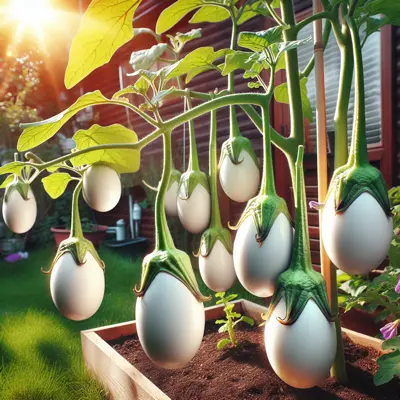
These charming white eggplants look exactly like giant chicken eggs hanging from the plant, creating a delightful conversation piece in any garden. The creamy white fruits have exceptionally tender flesh and mild, sweet flavor that converts even eggplant skeptics. This productive heirloom variety adds visual interest while delivering superior taste and texture.
Harvest
70-80d
Days to harvest
Sun
Full sun
Zones
9–12
USDA hardiness
Height
2-4 feet
Planting Timeline
Showing dates for White Egg in USDA Zone 7
All Zone 7 eggplant →Zone Map
Click a state to update dates
White Egg · Zones 9–12
Growing Details
Succession Planting
White Egg keeps setting fruit on the same plant all season, so there's no need to stagger plantings the way you would with lettuce or radishes. Start seeds indoors in February or March, transplant in April or May once nights hold reliably above 50°F, and that single planting carries you through July–September harvest in zone 7.
If you lose transplants early — bacterial wilt, a late cold snap, whatever — you can start a fresh batch of seeds indoors as late as early May and still get them in the ground by late May or early June. At 70–80 days to harvest, you'll clear the finish line before fall temperatures drop below 55°F. Push past that window and you're gambling on the weather.
Complete Growing Guide
White Egg eggplants require consistent warmth and benefit from starting seeds 8–10 weeks before your last frost, as they need a long growing season to produce their distinctive fruits. Plant in full sun with rich, well-draining soil amended with compost, spacing plants 24–30 inches apart for good air circulation. This variety's thin skin and tender flesh make it particularly susceptible to spider mites and flea beetles in hot, dry conditions, so monitor closely and maintain consistent moisture without waterlogging. Unlike heartier eggplant varieties, White Egg tends toward leggy growth if light is insufficient, so provide at least 12 hours of direct sunlight daily. Pinch the growing tip when plants reach 12 inches tall to encourage bushier growth and more prolific fruiting. Harvest fruits when they reach egg size and develop a glossy sheen, as they become bitter and seedy if left to mature fully.
Light: Full sun (6 or more hours of direct sunlight a day). Soil: Loam (Silt), Sand. Soil pH: Acid (<6.0). Drainage: Good Drainage, Moist. Height: 2 ft. 0 in. - 4 ft. 0 in.. Spread: 1 ft. 0 in. - 3 ft. 0 in.. Spacing: 3 feet-6 feet. Growth rate: Medium. Maintenance: Medium. Propagation: Seed.
Harvesting
Harvest White Egg eggplants when they reach the size of a large chicken egg, typically 3-4 inches long, and display a glossy, creamy white skin without any yellowing or brown spots, which indicate overmaturity. The fruit should yield slightly to gentle pressure but still feel firm—if it becomes soft or spongy, the seeds have begun to harden and flavor deteriorates. For maximum productivity, pick fruits regularly as soon as they reach peak size rather than waiting for all fruits to mature simultaneously, since continuous harvesting encourages the plant to produce additional blooms throughout the season. Begin picking in early morning when temperatures are cooler to ensure the best texture and reduce plant stress.
The fruit is a berry that is egg-shaped, smooth and has glossy skin. The fruit may measure 4 to 8 inches long. It ranges in color from green to white, to purple-black when immature and when it should be eaten. As the fruit matures it gets stringy and bitter. Fruit contains numerous small, flat, pale yellow to brown seeds.
Color: Black, Gold/Yellow, Green, Purple/Lavender, White. Type: Berry. Length: > 3 inches.
Garden value: Edible, Showy
Harvest time: Fall, Summer
Edibility: The immature fruit is edible and best used in food preparation. As the fruit matures, it becomes stringy and bitter. The fruits are usually cooked and served as a vegetable. They may be prepared and eaten by frying, steaming, grilling, roasting, or stewing. They may also be stir-fried, pickled, stuffed, and fried with a light breading.
Storage & Preservation
Store freshly harvested White Egg eggplants at room temperature for 2-3 days or refrigerate in the crisper drawer for up to one week. Unlike many vegetables, eggplants are sensitive to cold damage below 50°F, developing brown spots and bitter flavors if stored too cold for extended periods.
For longer preservation, slice White Egg eggplants into ½-inch rounds, salt lightly to draw out moisture, then blanch for 4 minutes before freezing. Their tender flesh and mild flavor make them excellent candidates for grilling and freezing in prepared dishes like ratatouille or caponata.
Dehydrating works well for this variety—slice thin and dehydrate at 135°F for 8-12 hours until leathery. The mild, sweet flavor concentrates beautifully when dried. Pickled White Egg eggplant makes an attractive and unusual preserve, maintaining the creamy texture while developing complex flavors.
History & Origin
The precise origins of 'White Egg' remain somewhat obscure in documented horticultural records, though it belongs to a heritage lineage of ornamental and culinary eggplant varieties developed through traditional seed-saving practices. White-fruited eggplant cultivars have been cultivated across Asia and Europe for centuries, valued for their distinctive appearance and mild flavor profile that distinguishes them from purple varieties. 'White Egg' likely emerged from Italian or Asian heirloom populations during the 19th or early 20th century, preserved through seed companies and home gardeners rather than formal breeding programs. Its current availability through specialty seed catalogs reflects the broader revival of heirloom vegetable varieties beginning in the late 20th century, though its specific breeder and introduction date remain undocumented in standard botanical literature.
Origin: China South-Central, Laos, Malaya, Myanmar, Thailand, Vietnam
Advantages
- +Stunning white egg-shaped fruits serve as beautiful ornamental garden focal points.
- +Mild, sweet flavor appeals to eggplant-averse gardeners and picky eaters.
- +Exceptionally tender flesh provides superior texture compared to traditional purple varieties.
- +Relatively quick maturation in 70-80 days suits shorter growing seasons.
- +Easy to moderate growing difficulty makes it accessible for beginner gardeners.
Considerations
- -Susceptible to multiple pests including flea beetles and Colorado potato beetles.
- -Vulnerable to bacterial wilt and phomopsis blight disease pressure.
- -Lower overall yield compared to standard purple eggplant varieties.
Companion Plants
Basil planted 12–18 inches away may throw off thrips and aphids with its volatile oils — and if you grow 'Genovese' or a similar large-leaf type, you're already harvesting from both plants at the same time White Egg fruit is coming in, which is practical enough on its own. French marigolds (Tagetes patula specifically) are worth the space: they deter root-knot nematodes and draw in predatory wasps that keep aphid pressure down. Around here in the southeast, tucking a row of spinach or 'Black Seeded Simpson' lettuce under the eggplant canopy also works well — both are shallow-rooted, finish before the summer heat shuts them down, and shade the soil enough to slow moisture loss. Keep brassicas out of the picture entirely; flea beetles feed on both crops, and putting them side by side just gives the beetles a shorter commute. Fennel is allelopathic and will stunt most vegetables within a foot or two of its roots.
Plant Together
Basil
Repels aphids, spider mites, and hornworms while potentially improving eggplant flavor
Tomatoes
Share similar growing conditions and pest management, can be grown together efficiently
Peppers
Fellow nightshades with similar care requirements, help maximize garden space
Marigolds
Repel nematodes, aphids, and flea beetles that commonly attack eggplants
Nasturtiums
Act as trap crops for aphids and cucumber beetles, drawing pests away from eggplant
Spinach
Provides living mulch and ground cover, helping retain soil moisture
Lettuce
Low-growing companion that utilizes space efficiently and doesn't compete for nutrients
Catnip
Repels flea beetles, ants, and mosquitoes that can damage eggplant foliage
Keep Apart
Black Walnut
Produces juglone toxin that causes wilting and stunted growth in nightshade plants
Fennel
Releases allelopathic compounds that inhibit growth and development of eggplants
Brassicas
Heavy feeders that compete for nutrients and may stunt eggplant growth
Nutrition Facts
Per 100g serving. % Daily Value based on 2,000 calorie diet. Source: USDA FoodData Central (FDC #169228)
Pests & Disease Resistance
Resistance
Good general disease tolerance, some susceptibility to bacterial diseases
Common Pests
Flea beetles, Colorado potato beetle, aphids, cutworms
Diseases
Bacterial wilt, early blight, phomopsis blight
Troubleshooting White Egg
What you'll see, why it happens, and what to do about it.
Tiny, irregular shot-holes across young leaves, often worse on transplants in the first 2–3 weeks after setting out
Likely Causes
- Flea beetles (Epitrix spp.) — they overwinter in soil and leaf litter and hit stressed transplants hard
- Plants set out before they're hardened off, making leaves softer and more attractive
What to Do
- 1.Cover transplants immediately with row cover (Reemay or similar) and leave it on until plants hit 12 inches tall
- 2.Side-dress with a balanced fertilizer to push fast growth — flea beetle damage is more cosmetic when the plant is outgrowing the feeding
- 3.If pressure is severe, NC State Extension recommends checking the North Carolina Agricultural Chemicals Manual for labeled foliar options
Plant wilts suddenly during the day even with adequate soil moisture, doesn't recover overnight, and collapses within a week
Likely Causes
- Bacterial wilt (Ralstonia solanacearum) — soil-borne, enters through roots or wounds, and as NC State Extension notes, once introduced it remains in the soil indefinitely
- Colorado potato beetle feeding damage weakening root uptake, though collapse is slower
What to Do
- 1.Dig up and destroy affected plants including the roots — don't compost them
- 2.Do not replant nightshades (tomatoes, peppers, potatoes, eggplant) in that bed for at least 3–4 years; rotate to a non-host crop like beans or corn
- 3.If your garden is small and rotation isn't practical, grow eggplant in containers with fresh bagged mix that never contacts native soil
Yellow-brown lesions with dark borders on older lower leaves, spreading upward, appearing after plants have been in the ground 5–6 weeks
Likely Causes
- Early blight (Alternaria solani) — fungal, splashes up from soil during rain or overhead irrigation
- Dense planting at less than 18 inches that traps humidity around the canopy
What to Do
- 1.Strip affected lower leaves and bag them for the trash — not the compost pile
- 2.Mulch the bed with 3–4 inches of straw to stop rain-splash transmission from the soil surface
- 3.Space plants at the full 18–24 inches and rotate this bed out of nightshades next season
Dark, sunken cankers on stems near the soil line, or water-soaked spots on fruit that turn brown and corky
Likely Causes
- Phomopsis blight (Phomopsis vexans) — fungal, favored by warm wet weather and wounded tissue
- Overhead irrigation late in the day that keeps foliage wet overnight
What to Do
- 1.Switch to drip irrigation or water at the base early in the morning so foliage dries before evening
- 2.Remove and bag any infected stems or fruit immediately — don't leave them on the soil
- 3.Rotate out of eggplant and other nightshades for 2 seasons; NC State Extension's disease management guidance notes that diversified plantings are less likely to see rapid spread
Frequently Asked Questions
How long does White Egg eggplant take to grow from seed?▼
Can you grow White Egg eggplant in containers?▼
What does White Egg eggplant taste like compared to regular eggplant?▼
Is White Egg eggplant good for beginners?▼
When should I plant White Egg eggplant seeds?▼
Why are my White Egg eggplants turning yellow?▼
Zone-by-Zone Planting Calendar
| Zone | Indoor Start | Transplant | Direct Sow | Harvest |
|---|---|---|---|---|
| Zone 3 | April – April | June – July | — | September – October |
| Zone 4 | March – April | June – June | — | August – October |
| Zone 5 | March – March | May – June | — | August – October |
| Zone 6 | March – March | May – June | — | August – October |
| Zone 7 | February – March | April – May | — | July – September |
| Zone 8 | February – February | April – May | — | July – September |
| Zone 9 | January – January | March – April | — | June – August |
| Zone 10 | January – January | February – March | — | May – July |
| Zone 1 | May – May | July – August | — | October – August |
| Zone 2 | April – May | June – July | — | September – September |
| Zone 11 | January – January | January – February | — | April – June |
| Zone 12 | January – January | January – February | — | April – June |
| Zone 13 | January – January | January – February | — | April – June |
Growing Guides from Wind River Greens
Sources & References
External authority sources used in compiling this guide.
See the Methodology page for how this data is sourced, what's AI-assisted, and known limitations.