Hot Pepper 'Beaver Dam'
Capsicum annuum 'Beaver Dam'
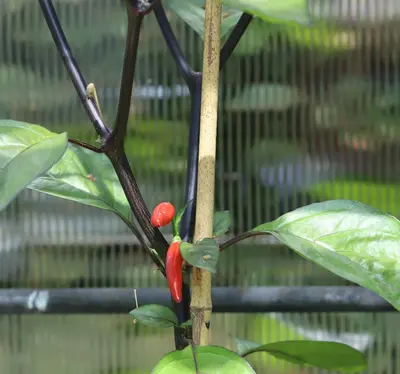
A rare Hungarian heirloom brought to Wisconsin by the Hussli family in 1912, saved from near extinction by the Seed Savers Exchange. These unique peppers start sweet when small and develop medium heat as they mature, offering incredible versatility in the kitchen. The large, productive plants bear distinctively shaped peppers that are perfect for fresh eating, frying, or drying into paprika.
Harvest
75-85d
Days to harvest
Sun
Full sun
Zones
4–11
USDA hardiness
Height
1-3 feet
Planting Timeline
Showing dates for Hot Pepper 'Beaver Dam' in USDA Zone 7
All Zone 7 pepper →Zone Map
Click a state to update dates
Hot Pepper 'Beaver Dam' · Zones 4–11
Growing Details
Complete Growing Guide
This Hungarian heirloom thrives in warm conditions and benefits from starting seeds 8-10 weeks indoors to maximize its 75-85 day maturity window before frost. Unlike many peppers, 'Beaver Dam' produces prolifically on large plants that may stretch in insufficient light, so provide 14-16 hours of bright fluorescent illumination indoors. The variety prefers consistently warm soil (75-85°F) and full sun in the garden, with well-draining soil rich in organic matter. Watch for spider mites, which readily colonize heat-stressed plants—maintain humidity and avoid overhead watering to minimize this pest pressure. A critical advantage is the plant's dual-purpose nature: harvest peppers at small green stages for sweet flavor, or leave them to mature red for medium heat and paprika production. Pinch early flower clusters to encourage stronger plant architecture and larger pepper yields later in the season.
Light: Full sun (6 or more hours of direct sunlight a day). Soil: Clay, High Organic Matter, Loam (Silt), Sand. Soil pH: Acid (<6.0), Alkaline (>8.0), Neutral (6.0-8.0). Drainage: Good Drainage. Height: 1 ft. 0 in. - 3 ft. 8 in.. Spread: 0 ft. 6 in. - 1 ft. 0 in.. Spacing: 12 inches-3 feet. Growth rate: Medium. Maintenance: Low. Propagation: Seed. Regions: Coastal, Mountains, Piedmont.
Harvesting
Beaver Dam peppers reach peak harvest readiness when they transition from green to their mature red or orange-red color, signaling the development of their characteristic medium heat and complex flavor profile. The peppers should feel firm yet slightly yielding to gentle pressure, and have reached their full distinctive shape, typically 3-4 inches long. For maximum versatility, harvest some peppers while still small and green for their sweeter profile, then allow others to fully mature on the plant for drying into paprika or cooking with medium heat. These prolific plants support continuous harvesting throughout the season rather than a single picking, extending productivity well into fall. Pinch off the first flower clusters when plants are young to encourage bushier growth and ultimately larger yields of uniformly sized peppers.
Fruits are a non-pulpy berry and vary considerably across cultivars. Some are long, thin, bright red, and spicy; others are thick, large, and sweet-tasting; others still are small and in ornamental shapes and colors, grown as decoration.
Color: Black, Gold/Yellow, Green, Orange, Red/Burgundy. Type: Berry. Length: 1-3 inches. Width: < 1 inch.
Garden value: Edible, Good Dried, Showy
Harvest time: Summer
Edibility: Fruits edible, but spiciness is unpredictable in intensity.
Storage & Preservation
Fresh 'Beaver Dam' peppers keep best in the refrigerator's crisper drawer at 45–50°F with 85–90% humidity, where they'll last two to three weeks. Store them in a perforated plastic bag to maintain moisture without promoting rot. For longer preservation, freezing works exceptionally well—simply halve and seed the peppers, lay them on a tray to freeze solid, then transfer to freezer bags for up to eight months. Their thick walls make them ideal candidates for drying; hang whole peppers in a warm, airy location or use a dehydrator at 135°F until completely brittle, then grind into homemade paprika. Canning as pickled peppers is another reliable method, following tested recipes for safe acid levels. Fermentation also suits this variety's complex flavor—pack them with salt brine for a probiotic preserve that develops deeper notes over weeks. Because 'Beaver Dam' develops such rich flavor at full maturity, waiting until peppers are completely red before harvesting maximizes both eating quality and preservation results.
History & Origin
A rare Hungarian heirloom, this pepper variety arrived in Wisconsin through the Hussli family, who brought seeds with them in 1912 as part of their immigrant heritage. The variety's specific origins in Hungary remain largely undocumented in formal agricultural records, though its distinctive characteristics and traditional use for paprika production suggest deep roots in Central European pepper cultivation. The Seed Savers Exchange rescued the variety from near extinction, preserving what might otherwise have been lost as subsequent generations moved away from heirloom gardening practices. The pepper's documented history in North America is thus more substantial than its European provenance, making the Hussli family's 1912 introduction the most concrete historical marker available for this distinctive cultivar.
Origin: Tropical North and South America
Advantages
- +Rare heirloom variety with fascinating Hungarian heritage and historical significance.
- +Versatile heat level that progresses from sweet to medium as peppers mature.
- +Large, productive plants provide abundant yields for fresh eating, frying, or drying.
- +Distinctive pepper shape and rich, complex flavor make them excellent for paprika production.
- +Moderate growing difficulty with reasonable 75-85 day maturity suitable for most climates.
Considerations
- -Susceptible to multiple serious diseases including bacterial leaf spot and anthracnose fungus.
- -Vulnerable to several common pepper pests like spider mites, aphids, and hornworms.
- -Requires careful disease management and sanitation practices to prevent crop loss.
- -Blossom end rot tendency indicates need for consistent calcium and moisture regulation.
Companion Plants
Basil sits at the top of the list here — not because the pest-repellency science is ironclad, but because the two plants want nearly identical conditions (full sun, consistent moisture, warm soil above 60°F) and don't compete much for root space. French marigolds (Tagetes patula) make a stronger mechanical argument: their roots produce thiophenes that suppress soil nematodes, and in Georgia's zone 7 summers where root-knot nematode pressure builds fast in sandy soils, putting a marigold border around your pepper block is one of the cheaper insurance moves available. Tomatoes and peppers share the nightshade family, which means they share bacterial leaf spot and mosaic virus pressure too — planting them together doesn't fix that, but it does keep your rotation cleaner: the whole nightshade block moves together, and the rest of the garden stays clear for two seasons.
Onions work as close neighbors because their sulfur compounds disrupt soft-bodied insects like aphids without doing anything to the peppers themselves. Carrots occupy a shallower root zone and pull moisture from a different depth, so they're genuinely not competing. Oregano spreading at the base acts as a low ground cover that slows surface moisture loss between waterings.
Fennel releases allelopathic compounds through its roots that stunt most vegetables within a few feet — peppers included. Keep it on the far edge of the garden or in a container. Beans are a different case: NC State Extension points out that legumes add nitrogen through root bacteria, which is useful in rotation, but side-by-side bean-and-pepper plantings invite shared aphid pressure and mosaic virus transmission. A side-dress of compost at transplant gives you the soil benefit without the pest risk.
Plant Together
Basil
Repels aphids, spider mites, and thrips while potentially improving pepper flavor
Tomatoes
Share similar growing conditions and can be planted together efficiently
Marigolds
Repel nematodes, aphids, and other harmful insects that attack peppers
Oregano
Deters pests like aphids and spider mites with strong aromatic compounds
Carrots
Help break up soil around pepper roots and don't compete for nutrients
Onions
Repel aphids, thrips, and other soft-bodied insects that damage peppers
Parsley
Attracts beneficial insects like hoverflies that prey on pepper pests
Nasturtiums
Act as trap crop for aphids and cucumber beetles, protecting peppers
Keep Apart
Fennel
Produces allelopathic compounds that inhibit pepper growth and development
Beans
Fix nitrogen which can cause peppers to produce excessive foliage at expense of fruit
Kohlrabi
Competes for similar nutrients and can stunt pepper plant growth
Apricot trees
Can harbor diseases like verticillium wilt that affect pepper plants
Nutrition Facts
Per 100g serving. % Daily Value based on 2,000 calorie diet. Source: USDA FoodData Central (FDC #169394)
Pests & Disease Resistance
Resistance
Typical heirloom susceptibility to common pepper diseases
Common Pests
Aphids, spider mites, pepper hornworm, cutworms
Diseases
Bacterial leaf spot, anthracnose, mosaic virus, blossom end rot
Troubleshooting Hot Pepper 'Beaver Dam'
What you'll see, why it happens, and what to do about it.
Sunken, dark, leathery patch on the bottom or side of the fruit — showing up as peppers size up in July and August
Likely Causes
- Blossom end rot — a localized calcium deficiency in the developing fruit, not always a sign of low soil calcium
- Inconsistent watering causing calcium uptake to stall even when calcium is present in the soil
- High ammonium nitrogen fertilizer pushing rapid leafy growth and pulling calcium away from fruit
What to Do
- 1.Water consistently — 1 inch per week, no boom-and-bust cycles; mulch heavily by the time plants start blooming to hold soil moisture steady
- 2.Cut back on high-nitrogen synthetic fertilizers, especially anything ammonium-heavy; switch to a balanced or lower-N source once fruit sets
- 3.Get a soil test before adding calcium amendments — if your pH is already in the 6.0–6.8 range and calcium is adequate, fixing your watering is the real answer
Small, water-soaked spots on leaves that turn brown and scabby, sometimes spreading to the fruit surface
Likely Causes
- Bacterial leaf spot (Xanthomonas campestris pv. vesicatoria) — splashes up from soil in rain or overhead irrigation
- Crowded planting under 18 inches apart that keeps foliage wet longer than it should be
What to Do
- 1.Strip and bag affected leaves — don't compost them
- 2.Switch to drip irrigation or water at the base; keep leaves dry
- 3.Rotate this bed out of nightshades (tomatoes, eggplant, potatoes) for at least 2 seasons — NC State Extension's organic disease management guidance specifically calls out the nightshade family as a rotation group
Leaves mottled or mosaic-patterned in yellow and green, plants stunted, new growth distorted
Likely Causes
- Pepper mosaic virus or cucumber mosaic virus — both transmitted by aphids feeding on the plant
- Aphid pressure that went unnoticed early in the season
What to Do
- 1.There's no cure once a plant is infected — pull and bag severely affected plants to reduce the reservoir
- 2.Control aphid populations hard and early: a strong spray of water knocks them off; insecticidal soap works on contact for heavier infestations
- 3.Plant nasturtiums nearby as a trap crop to draw aphids away from your peppers, and check the undersides of nasturtium leaves every few days so the trap doesn't become a breeding colony
Frequently Asked Questions
How hot are Beaver Dam peppers compared to jalapeños?▼
Can you grow Beaver Dam peppers in containers?▼
When should I plant Beaver Dam pepper seeds?▼
How do you make paprika from Beaver Dam peppers?▼
Are Beaver Dam peppers good for beginners?▼
What's the difference between young and mature Beaver Dam peppers?▼
Zone-by-Zone Planting Calendar
| Zone | Indoor Start | Transplant | Direct Sow | Harvest |
|---|---|---|---|---|
| Zone 1 | May – May | July – August | — | October – August |
| Zone 2 | April – May | June – July | — | September – September |
| Zone 11 | January – January | January – February | — | April – June |
| Zone 12 | January – January | January – February | — | April – June |
| Zone 13 | January – January | January – February | — | April – June |
| Zone 3 | April – April | June – July | — | September – October |
| Zone 4 | March – April | June – June | — | August – October |
| Zone 5 | March – March | May – June | — | August – October |
| Zone 6 | March – March | May – June | — | August – October |
| Zone 7 | February – March | April – May | — | July – September |
| Zone 8 | February – February | April – May | — | July – September |
| Zone 9 | January – January | March – April | — | June – August |
| Zone 10 | January – January | February – March | — | May – July |
Growing Guides from Wind River Greens
Sources & References
External authority sources used in compiling this guide.
See the Methodology page for how this data is sourced, what's AI-assisted, and known limitations.
More Peppers
Carolina Reaper
Sweet Pepper 'Carmen'
Ghost Pepper 'Bhut Jolokia'
Scotch Bonnet 'Scotch Bonnet Orange'
Chocolate Habanero
Sweet Italian Pepper 'Marconi Rosso'
Purple Beauty Bell Pepper
Mad Hatter