Agave Century Plant
Agave americana
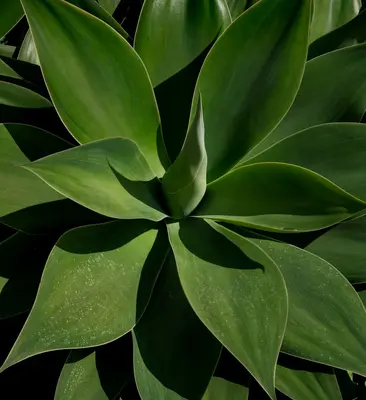
This dramatic Mexican succulent creates a stunning architectural focal point with its massive blue-gray rosette of thick, sword-like leaves edged with fierce spines. True to its name, it grows for many years before producing a spectacular 20-foot flower spike, making it a once-in-a-lifetime garden event that's worth the wait.
Sun
Full sun
Zones
8–11
USDA hardiness
Height
6-10 feet
Complete Growing Guide
Light: Full sun (6 or more hours of direct sunlight a day). Soil: Sand. Drainage: Good Drainage. Height: 6 ft. 0 in. - 10 ft. 0 in.. Spread: 6 ft. 0 in. - 10 ft. 0 in.. Spacing: 6-feet-12 feet. Growth rate: Slow. Maintenance: Low. Propagation: Division, Seed. Regions: Coastal, Piedmont.
Harvesting
Agave americana reaches harvest readiness when its massive rosette fully matures to its characteristic blue-gray coloring with leaves measuring 4-6 feet long and feeling firm and densely packed with sap. Unlike smaller agave varieties that may produce multiple pups for continuous harvesting, the century plant typically follows a single-harvest pattern, as the entire mature rosette is harvested once before or shortly after the monumental flowering event. Time your harvest in early spring before the plant expends massive energy on that dramatic 20-foot flower spike, as this ensures maximum sugar content in the heart and allows you to redirect resources to any emerging offsets for future generations.
Bloom time: Summer
Storage & Preservation
Agave Century Plant is an ornamental succulent, not a food plant requiring storage. However, if harvesting leaves for propagation, store cuttings in a cool, dry location (60-75°F) away from direct sunlight for 3-7 days to allow cuts to callus. For long-term plant preservation: (1) Keep mature plants in containers with excellent drainage in arid climates or indoors; (2) Store seed pods in cool, dry conditions for 2-3 years viability; (3) Preserve leaf cuttings in peat moss or cactus soil mix at room temperature until roots develop (4-8 weeks).
History & Origin
Origin: Mexico and Southwestern United States
Advantages
- +Low maintenance
Considerations
- -Toxic (Leaves, Sap/Juice): Low severity
- -Causes contact dermatitis
Companion Plants
Agave americana does best alongside plants that share its tolerance for lean, dry, alkaline conditions — not because of any chemical interaction, but because they simply won't compete for the same resources. Lavender, rosemary, and sage are the most practical companions here in the southeast, where clay-heavy soils need real amendment before any of these plants will thrive together. All three prefer soil pH above 6.5, ask for minimal supplemental water once established, and their low mounding habit keeps them well clear of agave's leaf spines. Sedum fills a similar role at ground level, staying under 6 inches and tolerating the reflected heat from gravel mulch that would cook most perennials. Desert marigold (Baileya multiradiata) is worth adding if you can find it — it blooms through the dry gaps when little else does, and the coarse, resinous foliage doesn't invite the soft-bodied insects that tend to cluster in moister plantings.
The problem companions — ferns, hostas, impatiens — fail for one straightforward reason: they need consistent moisture and shade to survive. Giving them what they need means the agave gets waterlogged, and that excess moisture is exactly what triggers crown rot and bacterial soft rot. There's no allelopathy here, no root competition story — just flat incompatibility. Their ideal soil conditions are a death sentence for agave. Keep any moisture-dependent plants at least 8–10 feet away, or better yet, put them in a separate bed on a different irrigation zone entirely.
Plant Together
Lavender
Thrives in similar dry conditions and repels pests while attracting beneficial pollinators
Rosemary
Shares drought tolerance and Mediterranean growing conditions, deters harmful insects
Sage
Compatible water needs and soil preferences, natural pest deterrent properties
Sedum
Similar water requirements and creates attractive textural contrast in xerophytic gardens
Palo Verde
Desert native that provides light shade and shares extremely low water requirements
Barrel Cactus
Identical water and soil drainage needs, creates authentic desert landscape design
Desert Marigold
Drought-tolerant perennial that adds color and attracts beneficial insects to desert gardens
Brittlebush
Native desert companion with matching water needs and complementary silver foliage
Keep Apart
Ferns
Require high moisture and humidity levels incompatible with agave's dry conditions
Impatiens
Need frequent watering and shade, creating fungal disease risk in agave's environment
Hostas
Require moist, shaded conditions completely opposite to agave's dry, sunny needs
Pests & Disease Resistance
Resistance
Extremely resistant to diseases and pests
Common Pests
Agave snout weevil, scale insects, mealybugs
Diseases
Crown rot from overwatering, bacterial soft rot in humid conditions
Troubleshooting Agave Century Plant
What you'll see, why it happens, and what to do about it.
Center crown collapses into a brown, mushy mess — often with a foul smell
Likely Causes
- Crown rot from overwatering or poorly draining soil — water sits in the rosette and rots the growing point
- Bacterial soft rot, which moves fast in humid southeastern summers
What to Do
- 1.Cut out all soft tissue with a clean knife until you hit dry, firm flesh — sterilize the blade with rubbing alcohol between cuts
- 2.Let the wound callous in dry shade for several days before any moisture hits it
- 3.If you're planting in-ground, amend heavily with coarse sand or decomposed granite — aim for a bed that drains within 30 seconds of a hard rain
Plant suddenly wilts and collapses from the base, leaves pulling loose easily, no obvious rot smell at first
Likely Causes
- Agave snout weevil (Scyphophorus acupunctatus) — the adult bores into the base to lay eggs, larvae eat the core from the inside out
- By the time you see collapse, the damage is usually fatal and weeks old
What to Do
- 1.Dig the plant immediately and inspect the base for C-shaped white grubs — destroy infested material; do not compost it
- 2.Treat surrounding agaves with a systemic imidacloprid drench in early spring (March–April) before adults become active — this is the window that matters
- 3.Remove any dying or stressed agaves promptly; weevils are drawn to plants already in decline
White cottony clusters in the leaf axils or along the undersides of leaves, with sticky residue on lower foliage
Likely Causes
- Mealybugs — they cluster in the tight spaces where leaves meet the stem
- Scale insects (often brown or gray armored bumps) can appear alongside mealybugs in the same conditions
What to Do
- 1.Dab individual colonies with a cotton swab soaked in 70% isopropyl alcohol — effective for small infestations
- 2.For larger outbreaks, spray with neem oil solution (2 tbsp neem per gallon of water with a few drops of dish soap) in the early morning so it doesn't bake onto the tissue in full sun
- 3.Check new plants for both pests before putting them near established agaves — that's almost always how they arrive
Frequently Asked Questions
How long does it take for Agave Century Plant to flower?▼
Can you grow Agave Century Plant in containers?▼
Is Agave Century Plant good for beginners?▼
How often should you water Agave Century Plant?▼
What temperature does Agave Century Plant need?▼
Does Agave Century Plant attract pests?▼
Growing Guides from Wind River Greens
Sources & References
External authority sources used in compiling this guide.
- ExtensionNC State Extension
See the Methodology page for how this data is sourced, what's AI-assisted, and known limitations.