Peony Sarah Bernhardt
Paeonia lactiflora 'Sarah Bernhardt'
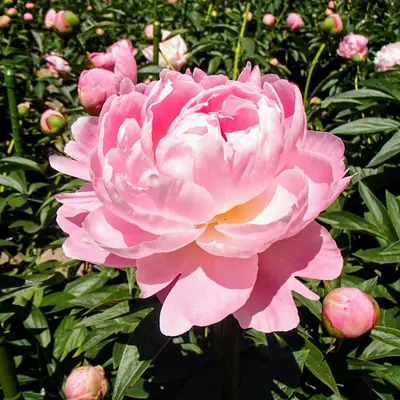
A legendary herbaceous peony that has been the gold standard for over 100 years, producing enormous double blooms in the most perfect shade of soft pink. The fragrant flowers can reach 8 inches across and are beloved by florists and gardeners alike for their romantic, ruffled petals and incredible longevity in both the garden and vase. This reliable bloomer returns year after year, becoming more spectacular with age.
Sun
Full sun
Zones
3–8
USDA hardiness
Height
1-3 feet
Planting Timeline
Showing dates for Peony Sarah Bernhardt in USDA Zone 7
All Zone 7 flower →Zone Map
Click a state to update dates
Peony Sarah Bernhardt · Zones 3–8
Growing Details
Companion Plants
Lavender, catmint, and alliums (ornamental onions like Allium 'Gladiator') are the companions worth planting close to Sarah Bernhardt. Lavender and catmint bloom in roughly the same late-spring window, filling visual gaps without fighting for resources — their root systems run shallow and spread differently than a peony crown. Alliums pull double duty: their sulfur compounds deter thrips at close range, and their narrow vertical form reads cleanly against the peony's wide mounded habit. Marigolds work the same pest-deterrence angle planted at the bed's edge, far enough back that they don't crowd the crown.
Black walnut is a hard no. Juglans nigra produces juglone, a root-zone toxin that moves through the soil and kills or stunts a long list of sensitive plants — Sarah Bernhardt is among them. Check your property lines before planting; even a neighbor's walnut can be a problem within 50 feet. Dense shrubs planted too close create the stagnant, shaded air that Botrytis paeoniae needs to take hold, so give the crown its full 36-48 inches of clearance on all sides.
Plant Together
Lavender
Repels ants and aphids while attracting beneficial pollinators
Catmint
Deters aphids and ants that farm them on peony buds
Alliums
Repel aphids, thrips, and other soft-bodied insects
Marigolds
Deter nematodes and aphids while attracting beneficial insects
Roses
Similar care requirements and bloom sequence extends garden color
Clematis
Provides vertical interest and blooms after peonies fade
Hosta
Fills space as peony foliage dies back, complementary textures
Iris
Blooms before peonies, similar soil and sun requirements
Keep Apart
Black Walnut
Produces juglone toxin that stunts peony growth and causes yellowing
Dense shrubs
Restrict air circulation leading to increased fungal diseases like botrytis
Shallow-rooted annuals
Competition for surface nutrients and disturbance of sensitive feeder roots
Pests & Disease Resistance
Resistance
Good disease resistance when properly planted
Common Pests
Ants (beneficial), thrips, nematodes
Diseases
Botrytis blight, leaf blotch, stem rot if planted too deep
Troubleshooting Peony Sarah Bernhardt
What you'll see, why it happens, and what to do about it.
Gray, fuzzy mold covering buds or stems in cool, wet spring weather — buds may turn brown and fail to open
Likely Causes
- Botrytis blight (Botrytis paeoniae) — a fungal pathogen that thrives below 60°F with high humidity
- Overcrowded planting or dense foliage blocking airflow
What to Do
- 1.Cut out all infected stems at the base and bag them — don't compost them
- 2.Space plants at least 36 inches apart and clear out any debris around the crown each fall
- 3.Apply a copper-based fungicide at bud break if you had Botrytis the previous spring
Glossy reddish-purple or brown blotches spreading across leaves by midsummer, sometimes with a dark border
Likely Causes
- Leaf blotch (Cladosporium paeoniae) — a fungal disease that spreads in warm, humid conditions
- Overhead irrigation wetting foliage repeatedly
What to Do
- 1.Switch to drip irrigation or water at the base — keeping leaves dry cuts transmission significantly
- 2.Strip and dispose of affected leaves; don't leave them on the soil surface
- 3.Cut the entire plant down to the ground in fall and clear the bed — the fungus overwinters in old foliage
Plant fails to bloom year after year despite healthy-looking foliage
Likely Causes
- Eyes planted too deep — peony eyes need to sit no more than 1-2 inches below the soil surface in zones 4-8; deeper planting reliably prevents flowering
- Too much shade — fewer than 6 hours of direct sun is enough to shut down bloom production
- Crown division too small at planting, or plant disturbed or divided too recently
What to Do
- 1.Dig the crown in early fall, check the depth, and replant with the eyes at 1 inch deep — this alone fixes most non-blooming peonies
- 2.If shade is the problem, transplant in September to a spot with 6+ hours of full sun
- 3.After replanting or dividing, give the plant 2-3 full seasons before expecting blooms — peonies are slow to re-establish
Frequently Asked Questions
How long does Peony Sarah Bernhardt take to bloom after planting?▼
Can you grow Peony Sarah Bernhardt in containers?▼
Why won't my Peony Sarah Bernhardt bloom?▼
When should I divide Peony Sarah Bernhardt?▼
Is Peony Sarah Bernhardt deer resistant?▼
What's the difference between Sarah Bernhardt and other pink peonies?▼
Zone-by-Zone Planting Calendar
| Zone | Indoor Start | Transplant | Direct Sow | Harvest |
|---|---|---|---|---|
| Zone 3 | April – May | June – July | June – August | — |
| Zone 4 | March – April | June – June | June – July | — |
| Zone 5 | March – April | May – June | May – July | — |
| Zone 6 | March – April | May – June | May – July | — |
| Zone 7 | February – March | April – May | April – June | — |
| Zone 8 | February – March | April – May | April – June | — |
| Zone 9 | January – February | March – April | March – May | — |
| Zone 10 | January – January | February – March | February – April | — |
| Zone 1 | May – June | July – August | July – September | — |
| Zone 2 | April – May | June – July | June – August | — |
| Zone 11 | January – January | January – February | January – March | — |
| Zone 12 | January – January | January – February | January – March | — |
| Zone 13 | January – January | January – February | January – March | — |