Giorgione
Cichorium intybus
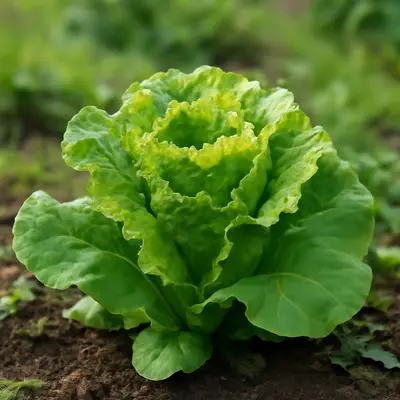
Dense, compact Castelfranco type. Attractive internal speckling intensifies in fall and is sometimes visible on wrapper leaves. Speckling and leaf shape can be variable, but Giorgione is reliably early and holds well in the field. Unlike the milder Bel Fiore, Giorgione balances classic chicory bitterness with pleasant sweetness, especially in fall.
Harvest
50d
Days to harvest
Sun
Full sun
Zones
3–8
USDA hardiness
Height
3-4 feet
Planting Timeline
Showing dates for Giorgione in USDA Zone 7
All Zone 7 lettuce →Zone Map
Click a state to update dates
Giorgione · Zones 3–8
Growing Details
Succession Planting
Direct sow every 14–21 days from March through early May in zone 7, then stop — Giorgione will bolt and turn unpalatably bitter once daytime highs hold consistently above 80°F. Resume sowings in late August and run through September for a fall harvest that stretches into November. The fall planting is generally worth the effort; leaves that size up in cooling temperatures lose much of the sharpness that makes summer chicory hard to use raw.
Complete Growing Guide
Dense, compact Castelfranco type. Attractive internal speckling intensifies in fall and is sometimes visible on wrapper leaves. Speckling and leaf shape can be variable, but Giorgione is reliably early and holds well in the field. Unlike the milder Bel Fiore, Giorgione balances classic chicory bitterness with pleasant sweetness, especially in fall. According to Johnny's Selected Seeds, Giorgione is 50 days to maturity, annual, open pollinated.
Light: Full sun (6 or more hours of direct sunlight a day). Soil: Clay, High Organic Matter, Loam (Silt), Sand, Shallow Rocky. Soil pH: Alkaline (>8.0), Neutral (6.0-8.0). Drainage: Good Drainage, Moist, Occasionally Dry. Height: 3 ft. 0 in. - 4 ft. 0 in.. Spread: 1 ft. 6 in. - 2 ft. 0 in.. Spacing: 12 inches-3 feet. Growth rate: Rapid. Maintenance: High, Medium. Propagation: Seed. Regions: Coastal, Mountains, Piedmont.
Harvesting
Giorgione reaches harvest at 50 days from sowing per Johnny's Selected Seeds. As an annual, harvest continues until frost ends the season.
Brown oblong and 5-ribbed achene with blunt ends. The wider end has a bristles across the top.
Color: Brown/Copper, Cream/Tan. Type: Achene.
Edibility: Leaves can be used in salads or cooked to reduce bitter flavor. Roots can be dried and used as a coffee substitute.
Storage & Preservation
Harvest Giorgione heads at 50 days and store immediately in a perforated plastic bag in the refrigerator's crisper drawer, maintaining 32–40°F and 95% humidity. Properly stored heads keep fresh for 10–14 days. For longer preservation, blanch whole leaves briefly in boiling water for 2–3 minutes, shock in ice water, then freeze in airtight containers or vacuum-seal bags for up to eight months. Drying is less practical for this variety due to its tender texture, though dehydration at low heat (95–105°F) concentrates its slightly bitter, chicory-forward flavor for tea blends. Fermentation is possible: shred leaves, salt generously (2% by weight), pack tightly in a jar, and keep submerged under brine for 3–4 weeks at room temperature, producing a peppery condiment. For best results, avoid washing until just before use, as excess moisture accelerates decay.
History & Origin
Giorgione is open-pollinated, meaning seed saved from healthy plants will produce true-to-type offspring. Listed in the Johnny's Selected Seeds catalog.
Origin: Europe
Advantages
- +Reliably early maturity at 50 days with dense, compact heads
- +Attractive internal red speckling intensifies beautifully in fall conditions
- +Balances classic chicory bitterness with pleasant sweetness unlike milder varieties
- +Holds well in field without bolting, extending harvest window
- +Easy growing difficulty makes it suitable for most gardeners
Considerations
- -Variable leaf shape and speckling reduces visual consistency between plants
- -Requires cooler fall temperatures to fully develop optimal flavor and color
- -Castelfranco types prone to rot in wet, poorly-drained soil conditions
Companion Plants
Radishes are the most practical companion here — they germinate in 5–7 days and their root activity loosens the top few inches of soil before Giorgione gets established. Marigolds (Tagetes patula) are worth planting along the bed edge; their scent deters aphids, which are the insect you're most likely to find colonizing the undersides of chicory leaves. Garlic and chives pull similar duty through their allium sulfur compounds, which disrupt soft-bodied insects that locate hosts by smell. Keep broccoli out of the same bed — it draws heavily on nitrogen at the same 6–12 inch root depth, and chicory at 3–4 feet tall will lose that competition quietly and never show you why it underperformed. Sunflowers release allelopathic compounds from their roots that measurably stunt nearby greens, so give them at least 3 feet of separation.
Plant Together
Radishes
Quick-growing root crop that helps break up soil and deters leaf miners
Marigolds
Repels nematodes, aphids, and other harmful insects while attracting beneficial predators
Nasturtiums
Acts as trap crop for aphids and cucumber beetles, protecting lettuce
Garlic
Natural fungicide properties help prevent lettuce diseases and repel pests
Spinach
Similar growing requirements and harvest times, efficient use of garden space
Dill
Attracts beneficial insects like ladybugs and lacewings that control aphids
Parsley
Attracts beneficial insects and doesn't compete aggressively for resources
Chives
Repels aphids and improves lettuce flavor while providing natural pest deterrent
Carrots
Loosens soil for lettuce roots and doesn't compete for same nutrients
Keep Apart
Broccoli
Competes for same nutrients and can shade lettuce, reducing growth
Sunflowers
Allelopathic effects inhibit lettuce germination and growth
Nutrition Facts
Per 100g serving. % Daily Value based on 2,000 calorie diet. Source: USDA FoodData Central (FDC #2346388)
Pests & Disease Resistance
Common Pests
Aphids, slugs, snails
Diseases
Downy mildew, leaf spot
Troubleshooting Giorgione
What you'll see, why it happens, and what to do about it.
Seedlings collapse at soil level within the first 7–10 days after planting, often with a fuzzy whitish mold on the soil surface nearby
Likely Causes
- Damping off — a complex of soil-borne fungi (Pythium spp., Rhizoctonia solani) that thrives in cold, wet, poorly drained soil
- Replanting chicory or lettuce in the same bed for 3+ consecutive years, which builds up pathogen load
What to Do
- 1.Pull and discard all affected seedlings — don't compost them
- 2.Let the bed dry out slightly between waterings; damping off accelerates in saturated soil
- 3.Rotate this bed out of chicory and lettuce family crops for at least 2 seasons; NC State's IPM guidance specifically flags repeated same-bed planting as a risk factor for this disease complex
Gray-purple fuzzy coating on the undersides of leaves, with yellow patches on the upper surface, appearing during cool, wet stretches
Likely Causes
- Downy mildew (Bremia lactucae) — favored by temperatures between 50–65°F and high humidity or overhead irrigation
- Dense planting under 12 inches between plants, restricting airflow
What to Do
- 1.Remove and trash affected leaves immediately; the spores spread fast in wet conditions
- 2.Switch to drip irrigation or water at the base early in the morning so foliage dries before nightfall
- 3.Space plants at the wider end of the 12–18 inch recommendation if your site tends to stay damp
Ragged holes chewed into lower leaves, with a slime trail visible in the morning — worst after a rain or heavy dew
Likely Causes
- Slugs (Deroceras reticulatum and related species) — active at night, hide under mulch or debris during the day
- Snails — same feeding pattern, same timing
What to Do
- 1.Set shallow traps filled with beer at soil level before dark and empty them each morning
- 2.Pull mulch back 3–4 inches from plant bases to eliminate daytime cover
- 3.Scatter iron phosphate bait (Sluggo or equivalent) around the bed — it breaks down into soil nutrients and is safe around edibles
Frequently Asked Questions
How long does Giorgione lettuce take to harvest?▼
Is Giorgione a good lettuce variety for beginners?▼
What does Giorgione lettuce taste like?▼
Can I grow Giorgione in containers?▼
When should I plant Giorgione lettuce?▼
How does Giorgione compare to other Castelfranco varieties?▼
Zone-by-Zone Planting Calendar
| Zone | Indoor Start | Transplant | Direct Sow | Harvest |
|---|---|---|---|---|
| Zone 1 | — | — | June – July | July – September |
| Zone 2 | — | — | May – July | July – September |
| Zone 11 | — | — | January – February | February – December |
| Zone 12 | — | — | January – February | February – December |
| Zone 13 | — | — | January – February | February – December |
| Zone 3 | — | — | May – June | June – October |
| Zone 4 | — | — | April – June | June – October |
| Zone 5 | — | — | April – May | June – November |
| Zone 6 | — | — | April – May | May – November |
| Zone 7 | — | — | March – May | May – November |
| Zone 8 | — | — | March – April | April – December |
| Zone 9 | — | — | February – March | March – December |
| Zone 10 | — | — | January – March | March – December |
Growing Guides from Wind River Greens
Sources & References
External authority sources used in compiling this guide.
- BreederJohnny's Selected Seeds
- USDAUSDA FoodData Central
See the Methodology page for how this data is sourced, what's AI-assisted, and known limitations.