Heirloom Marriage Genuwine
Solanum lycopersicum 'Heirloom Marriage Genuwine'
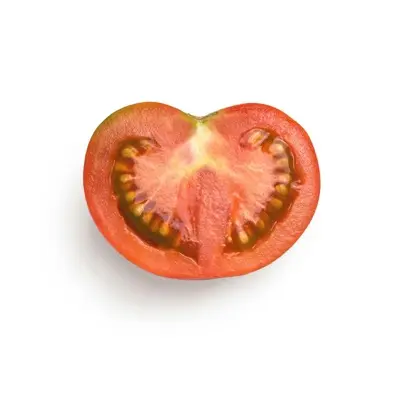
A stunning bicolor heirloom that produces large, ribbed fruits with yellow and red striping that creates a beautiful marbled appearance when sliced. This variety combines the best traits of multiple heirloom parents, delivering exceptional flavor complexity with fruity sweetness and balanced acidity. Perfect for gardeners who want to grow something truly unique that will be the centerpiece of any garden or dinner table.
Harvest
80-85d
Days to harvest
Sun
Full sun
Zones
10–11
USDA hardiness
Height
1-10 feet
Planting Timeline
Showing dates for Heirloom Marriage Genuwine in USDA Zone 7
All Zone 7 tomato →Zone Map
Click a state to update dates
Heirloom Marriage Genuwine · Zones 10–11
Growing Details
Complete Growing Guide
Start seeds 6-8 weeks before your last frost date, as this heirloom's 80-85 day maturity means earlier starting than many indeterminates ensures peak harvest before season's end. Plant in full sun with rich, well-draining soil amended with compost, since the complex flavor development demands consistent nutrition throughout the season. This tall variety (reaching up to 10 feet) requires sturdy support and aggressive pruning—remove suckers regularly to direct energy into fruit development rather than excessive vegetative growth, which can delay ripening. Watch for early blight and septoria leaf spot, common in heirlooms with dense foliage; improve air circulation by removing lower leaves once plants establish. The bicolor genetics can produce variable fruit size and color intensity, so maintain even soil moisture (drip irrigation is ideal) to reduce splitting and ensure the striking marbling develops fully. Practical tip: harvest at the "breaker stage" when colors just begin showing; these fruits continue ripening indoors while maintaining superior flavor complexity.
Light: Full sun (6 or more hours of direct sunlight a day). Soil: Clay, High Organic Matter, Loam (Silt), Sand. Soil pH: Acid (<6.0), Neutral (6.0-8.0). Drainage: Good Drainage, Moist. Height: 1 ft. 0 in. - 10 ft. 0 in.. Spread: 1 ft. 0 in. - 4 ft. 0 in.. Spacing: 3 feet-6 feet. Growth rate: Rapid. Maintenance: High. Propagation: Seed. Regions: Coastal, Mountains, Piedmont.
Harvesting
Harvest Heirloom Marriage Genuwine tomatoes when the yellow striping deepens to golden amber and the red portions achieve full crimson saturation, indicating peak sugar development and acid balance. The fruits should feel slightly yielding to gentle pressure and detach easily from the vine with a light twist. This variety produces fruit over an extended season rather than a single flush, allowing for continuous harvesting throughout summer and into early fall. Time your picks for early morning when temperatures are coolest to maximize juice content and flavor intensity, and prioritize fully colored fruits over underripe specimens, as this cultivar's complex taste profile requires complete maturation.
The fruits are smooth, shiny, glossy, and are classified as berries. The size, shape, and color will vary depending on the variety or cultivar. The color of the fruits may be red, yellow, orange, green, purple, or pink. The fruits may contain over 100 yellow to light brown seeds.
Color: Gold/Yellow, Green, Orange, Pink, Purple/Lavender, Red/Burgundy, Variegated. Type: Berry. Length: > 3 inches. Width: > 3 inches.
Garden value: Edible, Showy
Harvest time: Fall, Summer
Edibility: The fruits or berries of the tomato are edible. They may be eaten raw, cooked, dried, or processed. They are a rich source of Vitamin A, Vitamin C, folic acid, and antioxidants. Lycopene is an antioxidant that gives the tomato its rich red color. Many plants will drop fruit when ripe or the fruit will come off easily. Tomatoes will continue to ripen once picked. Store them at room temperature.
Storage & Preservation
Store freshly harvested Heirloom Marriage Genuwine tomatoes at room temperature, away from direct sunlight, to preserve their complex flavor profile. Avoid refrigeration unless fully ripe, as cold temperatures dull their bright acidity and subtle spicy notes. Keep them in a single layer in a breathable container or cardboard box with moderate air circulation; humidity around 85% prevents shriveling without encouraging mold. Ripe fruit keeps for 5–7 days at room temperature; handle gently to avoid bruising the delicate skin.
For preservation, freezing works well for cooking applications—core and freeze whole or halved on a tray, then transfer to bags. Canning via water bath or pressure canning is suitable for sauces and salsa, though heating diminishes the fresh complexity. Sun-drying concentrates sweetness and is particularly effective for this variety's fruity character. Fermentation is also excellent; lacto-fermented tomato juice retains brightness.
Because these tomatoes excel as fresh slicers, prioritize eating them fresh within days of harvest to fully appreciate their gourmet quality.
History & Origin
The origins of 'Heirloom Marriage Genuwine' remain largely undocumented in standard horticultural records, though its name suggests a deliberate crossing of multiple heirloom parents to unite desirable traits. The "Marriage" nomenclature indicates intentional hybridization rather than natural selection, while "Genuwine" likely reflects a breeder's playful wordplay. The variety appears to have emerged from modern heirloom preservation circles, possibly introduced by a specialty seed company or dedicated home gardener-breeder working within the broader movement to maintain and develop traditional tomato genetics. Without confirmed attribution to a specific university program, commercial seed house, or named breeder, the cultivar's exact genealogy and introduction date remain unclear, though its moderate difficulty rating and refined flavor profile suggest thoughtful selection work by someone with substantial tomato breeding experience.
Origin: Peru
Advantages
- +Stunning yellow and red striped bicolor appearance makes impressive table presentation
- +Complex fruity sweetness with balanced acidity delivers exceptional gourmet flavor profile
- +Medium maturity at 80-85 days allows reasonable harvest window in most climates
- +Unique heirloom genetics from multiple parents creates truly distinctive garden specimen
Considerations
- -Susceptible to late blight and early blight requiring consistent disease management
- -Moderate difficulty level demands experience with staking, pruning, and pest monitoring
- -Prone to blossom end rot and fruit cracking in inconsistent watering conditions
Companion Plants
Basil and French marigolds (Tagetes patula) are the two that pull their weight. Marigolds secrete alpha-terthienyl from their roots, which suppresses root-knot nematodes in the top 12 inches of soil — a real concern with an heirloom variety that NC State Extension flags as likely lacking soilborne disease resistance. Basil's volatile oils from Ocimum basilicum are credited with deterring thrips and aphids; I'd plant it anyway just for the harvest convenience, but the pest argument isn't nothing. Nasturtium works as a trap crop for aphids as long as you're actually checking it and removing the colonies rather than just letting them build up 6 inches from your tomatoes. Keep fennel out entirely — it's broadly allelopathic to most vegetables and there's no upside. Black walnut produces juglone, a compound toxic to Solanums, so don't plant within about 50–80 feet of a walnut's drip line.
Plant Together
Basil
Repels aphids, whiteflies, and hornworms while potentially improving tomato flavor
Marigold
Deters nematodes, aphids, and whiteflies with natural pest-repelling compounds
Nasturtium
Acts as trap crop for aphids and cucumber beetles, drawing pests away from tomatoes
Parsley
Attracts beneficial insects like hoverflies and parasitic wasps that prey on tomato pests
Carrots
Loosens soil for tomato roots and doesn't compete for nutrients due to different root depths
Chives
Repels aphids and may help prevent fungal diseases with natural sulfur compounds
Borage
Attracts pollinators and beneficial insects while potentially deterring hornworms
Lettuce
Benefits from tomato shade during hot weather and has shallow roots that don't compete
Keep Apart
Black Walnut
Produces juglone toxin that causes wilting and stunted growth in tomatoes
Fennel
Inhibits tomato growth through allelopathic compounds released by roots and foliage
Brassicas
Compete heavily for nutrients and may stunt tomato growth when planted too close
Nutrition Facts
Per 100g serving. % Daily Value based on 2,000 calorie diet. Source: USDA FoodData Central (FDC #321360)
Pests & Disease Resistance
Resistance
Moderate resistance to common diseases, prone to cracking in wet weather
Common Pests
Tomato hornworm, cutworms, aphids, spider mites
Diseases
Blossom end rot, early blight, late blight, fruit cracking
Troubleshooting Heirloom Marriage Genuwine
What you'll see, why it happens, and what to do about it.
Dark, sunken, leathery patch on the blossom end of fruit — shows up once fruit is golf-ball size or larger
Likely Causes
- Blossom end rot — calcium deficiency in the developing fruit, usually triggered by inconsistent watering rather than absent calcium in the soil
- Irregular irrigation causing the plant to pull calcium away from fruit toward new growth
What to Do
- 1.Get on a consistent watering schedule — deep and even, not a little every day; mulch heavily to hold soil moisture between waterings
- 2.Pull off the affected fruit; it won't recover, and leaving it on the plant wastes energy
- 3.Test your soil pH — calcium uptake drops below 6.0, so lime if needed to stay in the 6.0–6.8 range
Lower leaves developing dark brown bullseye spots with yellowing halos, working up the plant from the bottom, typically 40–60 days after transplant
Likely Causes
- Early blight (Alternaria solani) — a soil-borne fungus that splashes onto lower leaves during rain or overhead irrigation
- Dense canopy with poor airflow keeping foliage wet longer than it should
What to Do
- 1.Strip affected leaves and bag them — don't compost them, because Alternaria solani persists in plant debris
- 2.Lay 3–4 inches of straw mulch under the plant to stop soil splash from reaching foliage
- 3.NC State Extension recommends rotating nightshades out of the same bed for at least 3–4 years; for tomatoes with persistent disease pressure, a 5–7 year rotation breaks the cycle more reliably
Large sections of foliage turning gray-green and collapsing fast — sometimes overnight — with water-soaked dark spots appearing on fruit
Likely Causes
- Late blight (Phytophthora infestans) — spreads explosively in cool, wet conditions around 60–70°F and can move through an entire planting in days
- Proximity to infected potato plants or neighboring gardens carrying late blight spores
What to Do
- 1.Remove and bag all affected plant material immediately — do not compost it
- 2.NC State Extension notes that late blight timing is unpredictable year to year; check NC State Plant Disease and Insect Clinic (PDIC) alerts during wet springs so you're not caught off guard
- 3.Heirloom Marriage Genuwine carries no built-in resistance to Phytophthora infestans — NC State Extension specifically flags heirloom tomatoes as lacking soilborne disease resistance, so if late blight hits two seasons running, grafting onto a resistant rootstock is worth the extra work at transplant time
Frequently Asked Questions
How long does Heirloom Marriage Genuwine take to grow?▼
Can you grow Heirloom Marriage Genuwine in containers?▼
What does Heirloom Marriage Genuwine taste like?▼
Is Heirloom Marriage Genuwine good for beginners?▼
When should I plant Heirloom Marriage Genuwine?▼
How do you prevent Heirloom Marriage Genuwine from cracking?▼
Zone-by-Zone Planting Calendar
| Zone | Indoor Start | Transplant | Direct Sow | Harvest |
|---|---|---|---|---|
| Zone 3 | April – April | June – July | — | September – October |
| Zone 4 | March – April | June – June | — | September – October |
| Zone 5 | March – March | May – June | — | August – October |
| Zone 6 | March – March | May – June | — | August – October |
| Zone 7 | February – March | April – May | — | July – September |
| Zone 8 | February – February | April – May | — | July – September |
| Zone 9 | January – January | March – April | — | June – August |
| Zone 10 | January – January | February – March | — | May – July |
| Zone 1 | May – May | July – August | — | October – August |
| Zone 2 | April – May | June – July | — | September – September |
| Zone 11 | January – January | January – February | — | April – June |
| Zone 12 | January – January | January – February | — | April – June |
| Zone 13 | January – January | January – February | — | April – June |
Growing Guides from Wind River Greens
Sources & References
External authority sources used in compiling this guide.
See the Methodology page for how this data is sourced, what's AI-assisted, and known limitations.