Franquette Walnut
Juglans regia 'Franquette'
A treasured French heirloom variety that combines exceptional nut quality with impressive cold tolerance and late leafing that avoids spring frosts. Franquette produces elongated nuts with rich, flavorful meats that store exceptionally well through winter months. This variety serves double duty as an excellent pollinator for other walnut varieties while producing its own premium crop.
Harvest
170-200d
Days to harvest
Sun
Full sun
Zones
3–7
USDA hardiness
Height
40-60 feet
Planting Timeline
Showing dates for Franquette Walnut in USDA Zone 7
All Zone 7 nut-tree →Zone Map
Click a state to update dates
Franquette Walnut · Zones 3–7
Growing Details
Complete Growing Guide
Plant Franquette walnuts in well-draining soil with full sun exposure and space trees at least 40 feet apart to accommodate their mature spread. This French heirloom's greatest advantage lies in its late leafing habit—buds break in mid to late spring, effectively dodging damaging spring frosts that plague earlier varieties in cold climates. Water deeply during the first two growing seasons to establish a strong root system, then rely on natural rainfall once established. Watch for walnut husk fly in warm regions, which can damage developing nuts; netting young trees or applying appropriate controls during peak flight season prevents significant losses. Franquette shows remarkable cold hardiness compared to other English walnut cultivars, tolerating temperatures down to zone 5 with protection. For optimal nut quality and storage longevity, allow nuts to fully mature on the tree before harvest—the kernel should rattle freely inside the shell when ready to gather in fall.
Light: Full sun (6 or more hours of direct sunlight a day). Soil: Clay, High Organic Matter, Loam (Silt). Soil pH: Neutral (6.0-8.0). Drainage: Good Drainage, Moist. Height: 40 ft. 0 in. - 60 ft. 0 in.. Spread: 40 ft. 0 in. - 60 ft. 0 in.. Spacing: more than 60 feet. Maintenance: Medium. Propagation: Grafting, Layering, Seed, Stem Cutting. Regions: Mountains, Piedmont.
Harvesting
Franquette walnuts reach peak harvest readiness when the green hull begins splitting naturally and darkening from green to brown, typically revealing the tan shell beneath. At this stage, the nuts feel lighter in hand as the kernel has fully developed and separated slightly from the shell interior. Rather than waiting for a single massive drop, plan for continuous harvesting over two to three weeks, collecting fallen nuts every few days to prevent ground damage and pest infiltration. A crucial timing tip for this variety: harvest before heavy autumn rains, as the hulls' tendency to cling can trap moisture and promote fungal issues that compromise the exceptional storage quality Franquette is prized for.
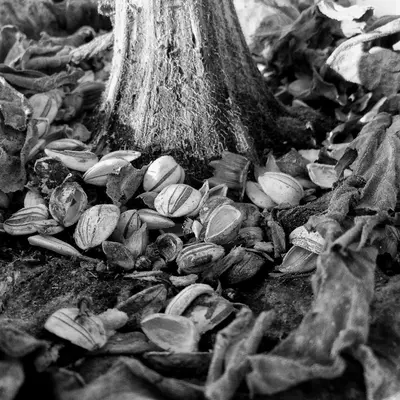
The fruit is a round nut that is encased in a green, semi-fleshy husk that turns brown. The nut measures up to 2 inches long. It matures in the fall and has a very thin wrinkled shell. The nut is thin, smooth, and has shallow furrows. The meat of the nut is creamy white and sweet.
Color: Green. Type: Nut. Length: 1-3 inches. Width: 1-3 inches.
Garden value: Edible, Showy
Harvest time: Fall
Edibility: The nuts are edible. They may be eaten fresh, roasted, and salted.
Storage & Preservation
Franquette walnuts store exceptionally well when kept in their shells. After harvest and thorough drying (which takes 2–3 weeks in a warm, well-ventilated space), store them in a cool, dry location between 32–50°F with humidity below 65 percent. Burlap sacks or mesh bags work better than plastic, which traps moisture. Properly dried and stored, in-shell walnuts remain fresh for up to two years.
For shelled nutmeats, refrigeration extends shelf life to six months; freezing preserves quality for up to a year. The meats can also be roasted lightly and stored in airtight containers at room temperature for several weeks. Vacuum-sealing before freezing prevents rancidity caused by exposure to oxygen and light.
Franquette's dense, oil-rich kernel makes it particularly suited to pressing for walnut oil, which keeps refrigerated for months. This variety's robust flavor actually improves slightly through controlled dry storage, making it ideal for long-term pantry stock.
History & Origin
Originating from France in the nineteenth century, Franquette emerged as a natural seedling selection within the French walnut growing tradition, though precise documentation of its original breeder remains elusive. The variety became established in the Isère region of southeastern France, where it gained recognition for its exceptional nut quality and reliable production in cool climates. French horticulturists valued its late-leafing characteristic, which protected developing buds from spring frosts common to northern walnut-growing territories. By the early twentieth century, Franquette had become widely cultivated throughout Europe and eventually introduced to North America, where it remains one of the most respected temperate walnut varieties for both commercial and home orchards.
Origin: Europe to Central Asia
Advantages
- +Late leafing habit protects Franquette from devastating spring frost damage
- +Elongated nuts with rich flavor and exceptional winter storage capability
- +Cold-hardy French heirloom performs reliably in challenging northern climates
- +Excellent pollinator for other walnut varieties while producing premium crops
- +Easy to moderate difficulty makes Franquette accessible to home growers
Considerations
- -Walnut blight susceptibility requires preventative fungicide sprays in humid regions
- -Walnut husk fly infestations can damage nuts and reduce marketable yield
- -Crown rot develops readily in poorly-drained or waterlogged soil conditions
- -170-200 day maturity demands warm growing season, limiting suitable regions
Companion Plants
Comfrey is the most useful plant to keep under a Franquette — its taproot reaches 6 feet down, pulling up calcium and potassium that get released at the surface each time you cut it back. White clover and chives pull double duty, adding a bit of nitrogen while drawing in the parasitic wasps that keep walnut aphid pressure manageable. Keep tomatoes and potatoes well clear: Franquette produces juglone just as Black Walnut does, and while the concentration is lower, solanaceous crops planted within 30 feet will show stunting or outright collapse. Apple trees are a poor neighbor for a separate reason — shared susceptibility to bacterial blight pressure and brutal belowground competition once two canopies of that scale mature.
Plant Together
Comfrey
Deep roots bring nutrients to surface, leaves make excellent mulch and fertilizer
White Clover
Fixes nitrogen in soil, provides ground cover, and attracts beneficial insects
Chives
Repels aphids and other pests while improving soil health
Marigold
Deters nematodes and other soil pests, attracts beneficial predatory insects
Lavender
Repels moths and other insects, tolerates walnut's allelopathic compounds
Wild Garlic
Natural pest deterrent and relatively tolerant of juglone from walnut roots
Elderberry
Attracts beneficial insects, tolerates partial shade under walnut canopy
Kentucky Bluegrass
Forms durable ground cover and shows good tolerance to walnut's juglone
Keep Apart
Tomatoes
Highly sensitive to juglone toxin produced by walnut roots, causes wilting and death
Black Walnut
Competition for resources and concentrated allelopathic effects when planted too closely
Apple Trees
Susceptible to juglone toxicity, which can stunt growth and reduce fruit production
Potatoes
Very sensitive to juglone, leading to yellowing, wilting, and poor tuber development
Nutrition Facts
Per 100g serving. % Daily Value based on 2,000 calorie diet. Source: USDA FoodData Central (FDC #2346394)
Pests & Disease Resistance
Resistance
Good overall disease resistance, late leafing avoids spring diseases
Common Pests
Walnut husk fly, aphids, scale insects
Diseases
Walnut blight, occasional crown rot in wet soils
Troubleshooting Franquette Walnut
What you'll see, why it happens, and what to do about it.
Black, sunken lesions on the outer husk; nuts shriveling or dropping before fully sizing up in August–September
Likely Causes
- Walnut blight (Xanthomonas arboricola pv. juglandis) — a bacterial disease that spreads fast in wet spring weather
- Infection entering through fresh growth during bloom, when tissue is most vulnerable
What to Do
- 1.Apply copper-based bactericide (copper hydroxide or Bordeaux mixture) at bud break and again at full bloom — timing matters more than rate here
- 2.Prune for an open canopy so foliage dries faster after rain; Franquette's late-leafing habit already reduces early-season exposure, but a crowded scaffold wastes that advantage
- 3.Rake and dispose of infected husks and fallen nuts — leaving them under the tree seeds next year's infection
Small, sticky colonies on new shoot tips in late spring; leaves curling or puckering on terminal growth
Likely Causes
- Walnut aphids (Chromaphis juglandicola or Callaphis juglandis) — usually worst in dry years when natural predators haven't caught up yet
- Excess nitrogen pushing soft, attractive new growth
What to Do
- 1.A strong spray of water knocks colonies back on reachable branches — on a 40-foot tree, focus on what you can actually hit
- 2.Keep a ground layer of flowering plants like white clover or chives within 20 feet of the tree to bring in parasitic wasps and lacewings
- 3.Hold off on high-nitrogen fertilizer once the tree is established; soft flush growth is exactly what aphids want
Bark at the base of the trunk darkening and weeping; leaves wilting on one or more scaffold branches by midsummer
Likely Causes
- Crown rot (Phytophthora cinnamomi or P. cactorum) — almost always triggered by poorly drained soil or irrigation pooling at the trunk
- Planting too deep, burying the graft union or root flare
What to Do
- 1.Pull mulch back at least 6 inches from the trunk immediately — mulch piled against bark is the most common setup for this problem
- 2.Check whether the site holds water for more than 48 hours after heavy rain; if it does, install a French drain or plan future trees elsewhere
- 3.Confirmed Phytophthora infections have no reliable cure once established — remove the tree and replant on a better-draining site
Frequently Asked Questions
How long does it take Franquette Walnut to produce nuts?▼
Is Franquette Walnut good for beginners?▼
What does Franquette Walnut taste like?▼
Can you grow Franquette Walnut in containers?▼
When should I plant Franquette Walnut?▼
Is Franquette Walnut a good pollinator for other walnut varieties?▼
Zone-by-Zone Planting Calendar
Growing Guides from Wind River Greens
Sources & References
External authority sources used in compiling this guide.
See the Methodology page for how this data is sourced, what's AI-assisted, and known limitations.