Benary's Giant Orange
Zinnia elegans
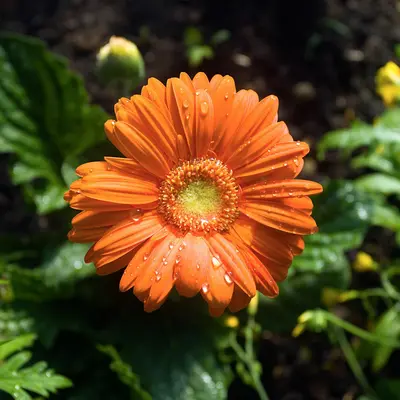
Benary's Giant Orange is a classic heirloom zinnia producing oversized, densely-petaled pompom blooms in vibrant orange. Plants reach full maturity in 75-90 days, thriving in full sun with well-drained, moderately fertile soil. This variety is prized for its dramatic flower size and intense color, making it an exceptional choice for cut flowers and garden displays. Its easy cultivation and heirloom status have made it a gardening favorite for generations.
Harvest
75-90d
Days to harvest
Sun
Full sun
Zones
2–11
USDA hardiness
Height
0-3 feet
Planting Timeline
Showing dates for Benary's Giant Orange in USDA Zone 7
All Zone 7 flower →Zone Map
Click a state to update dates
Benary's Giant Orange · Zones 2–11
Growing Details
Succession Planting
Direct sow every 2–3 weeks from April through early June in zone 7, stopping once daytime highs are consistently above 90°F — germination gets patchy in that kind of heat, and seedlings that do emerge often stall out rather than push. For a continuous cut-flower supply into fall, start a final round indoors in late June and transplant out in mid-July after 5–7 days of hardening off; those plants tend to hit peak bloom in September, right as the worst of summer backs off.
Complete Growing Guide
Recommended by the Association of Specialty Cut Flower Growers. High yields of long, sturdy stems with 4-6" fully double, dahlia-like blooms. Excellent vase life. Vigorous plants hold up well in summer heat and rain. Low susceptibility to powdery mildew. Cut-and-come-again flower, yielding multiple cuts over the season. According to Johnny's Selected Seeds, Benary's Giant Orange is 75 - 90 days to maturity, annual, open pollinated. Notable features: Use for Cut Flowers and Bouquets.
Light: Full sun (6 or more hours of direct sunlight a day). Soil: High Organic Matter, Loam (Silt). Soil pH: Acid (<6.0), Alkaline (>8.0), Neutral (6.0-8.0). Drainage: Good Drainage, Occasionally Dry. Height: 0 ft. 6 in. - 3 ft. 0 in.. Spread: 0 ft. 8 in. - 1 ft. 0 in.. Spacing: 12 inches-3 feet. Growth rate: Rapid. Maintenance: Medium. Propagation: Seed. Regions: Coastal, Mountains, Piedmont.
Harvesting
Benary's Giant Orange reaches harvest at 75 - 90 days from sowing per Johnny's Selected Seeds. Expect 4-6" at peak. As an annual, harvest continues until frost ends the season.
Type: Achene.
Storage & Preservation
For fresh storage, remove lower foliage and place stems in clean water at room temperature (65-72°F) or refrigerate at 34-40°F for extended vase life. Maintain humidity around 50-60%. Typical vase life is 7-10 days. Preservation methods: (1) Air dry by hanging stems upside down in a cool, dark location for 1-2 weeks to create dried arrangements. (2) Press individual blooms between paper in a heavy book for 2-3 weeks to preserve for crafts or floral pressing. (3) Glycerin preservation by placing stems in a 1:1 water-glycerin solution for 7-10 days to create long-lasting, pliable dried flowers.
History & Origin
Benary's Giant Orange is open-pollinated, meaning seed saved from healthy plants will produce true-to-type offspring. Listed in the Johnny's Selected Seeds catalog.
Origin: Mexico
Advantages
- +Produces abundant long stems ideal for professional cut flower arrangements
- +Large 4-6 inch fully double blooms resemble dahlias for dramatic displays
- +Excellent vase life means cut flowers stay fresh significantly longer
- +Heat and rain tolerant plants thrive during challenging summer growing conditions
- +Cut-and-come-again harvesting provides continuous blooms throughout the entire season
Considerations
- -Requires 75-90 days to bloom, delaying color compared to faster varieties
- -Orange color may clash with certain garden color schemes or arrangements
- -Vigorous growth habit demands regular deadheading to maintain continuous flowering
Companion Plants
Marigolds (Tagetes patula especially) and alyssum are the most useful neighbors here — marigolds push back on aphids and whiteflies through both root exudates and foliar compounds, while alyssum draws in parasitic wasps and hoverflies that keep pest pressure from building unchecked. Cosmos and sunflowers are solid structural companions, sharing the same full-sun, moderate-water requirements without competing hard at the root zone. Black walnut trees are a genuine problem: juglone, the allelopathic compound they deposit through leaf litter and roots, can stunt or kill sensitive annuals planted within their drip line. Fennel causes similar trouble through its own root secretions and is best kept to a separate corner of the garden entirely.
Plant Together
Marigolds
Repel nematodes, aphids, and whiteflies while attracting beneficial insects
Nasturtiums
Act as trap crops for aphids and cucumber beetles, attracting them away from zinnias
Cosmos
Attract beneficial insects like lacewings and parasitic wasps, complement zinnia bloom times
Sunflowers
Provide beneficial insects habitat and attract pollinators without competing for resources
Basil
Repels aphids, spider mites, and thrips while attracting beneficial pollinators
Alyssum
Attracts hoverflies and parasitic wasps that control aphids and other pests
Celosia
Similar growing requirements and attracts beneficial insects without resource competition
Calendula
Repels aphids and whiteflies while attracting beneficial insects and pollinators
Keep Apart
Black Walnut Trees
Release juglone toxin that inhibits growth and can kill zinnias and other sensitive plants
Fennel
Produces allelopathic compounds that inhibit germination and growth of nearby flowers
Eucalyptus
Releases allelopathic chemicals through roots and leaf litter that suppress zinnia growth
Pests & Disease Resistance
Common Pests
Thrips, spider mites, aphids
Diseases
Powdery mildew (low susceptibility in this variety)
Troubleshooting Benary's Giant Orange
What you'll see, why it happens, and what to do about it.
Silver-streaked or papery patches on petals and leaves, flowers deformed or failing to open fully
Likely Causes
- Thrips (Frankliniella occidentalis) — tiny, fast-moving insects feeding inside buds and on petal surfaces
- Damage is often worse during hot, dry stretches when thrips populations spike
What to Do
- 1.Tap a flower head over a white sheet of paper — if you see tiny slivers moving, you've confirmed thrips
- 2.Remove and bag heavily infested blooms to reduce the local population
- 3.Apply spinosad-based spray in the early morning when pollinators aren't active; repeat every 5–7 days for two to three cycles
Fine stippling across leaves, bronzing, and a dusty webbing on the undersides — especially in hot, dry weather
Likely Causes
- Two-spotted spider mite (Tetranychus urticae) — population can double in under a week when temperatures stay above 85°F
- Drought stress makes plants more susceptible and mites more active
What to Do
- 1.Blast the undersides of leaves with a strong stream of water every couple of days — it physically dislodges mites and eggs
- 2.Keep soil consistently moist; stressed plants are more attractive to mites
- 3.For heavy infestations, apply insecticidal soap or neem oil to the undersides of leaves at dusk; repeat every 4–5 days
Soft, clustered insects on new growth or stem tips, leaves curling inward or sticky to the touch
Likely Causes
- Aphids (multiple species, often Aphis gossypii or Macrosiphum euphorbiae) — they cluster on tender growth and excrete honeydew
- Ants farming aphid colonies, which actively protect them from predators
What to Do
- 1.If you see ants running up the stems, deal with them first — a ring of diatomaceous earth or a sticky barrier around the base interrupts the cycle
- 2.Knock aphids off with a firm water spray; ladybeetles and parasitic wasps will often finish the job if you give it 3–4 days
- 3.Insecticidal soap works well for persistent colonies — coat the stem tips and undersides thoroughly
White powdery coating on upper leaf surfaces, spreading from older leaves outward, usually appearing mid-to-late summer
Likely Causes
- Powdery mildew — Benary's Giant Orange carries lower susceptibility than most zinnia varieties, but dense planting or poor airflow will still trigger it
- Overhead watering late in the day, which keeps foliage wet overnight
What to Do
- 1.Space plants at least 12 inches apart and pull any crowding neighbors to get air moving through the bed
- 2.Water at the base in the morning — skip wetting the foliage entirely if you can manage it
- 3.Strip off affected leaves and apply a baking soda spray (1 tablespoon baking soda + 1 teaspoon neem oil per gallon of water) weekly; it won't reverse existing infection but slows spread
Frequently Asked Questions
How long do Benary's Giant Orange flowers last in a vase?▼
Is Benary's Giant Orange good for beginners?▼
Can you grow Benary's Giant Orange in containers?▼
When should I plant Benary's Giant Orange seeds?▼
How many flowers will one plant produce?▼
What makes Benary's Giant Orange stand out as a cut flower?▼
Zone-by-Zone Planting Calendar
| Zone | Indoor Start | Transplant | Direct Sow | Harvest |
|---|---|---|---|---|
| Zone 1 | May – June | July – August | July – September | — |
| Zone 2 | April – May | June – July | June – August | — |
| Zone 11 | January – January | January – February | January – March | — |
| Zone 12 | January – January | January – February | January – March | — |
| Zone 13 | January – January | January – February | January – March | — |
| Zone 3 | April – May | June – July | June – August | — |
| Zone 4 | March – April | June – June | June – July | — |
| Zone 5 | March – April | May – June | May – July | — |
| Zone 6 | March – April | May – June | May – July | — |
| Zone 7 | February – March | April – May | April – June | — |
| Zone 8 | February – March | April – May | April – June | — |
| Zone 9 | January – February | March – April | March – May | — |
| Zone 10 | January – January | February – March | February – April | — |
Growing Guides from Wind River Greens
Sources & References
External authority sources used in compiling this guide.
- BreederJohnny's Selected Seeds
See the Methodology page for how this data is sourced, what's AI-assisted, and known limitations.