Blue Podded Blauwschokker
Pisum sativum 'Blauwschokker'
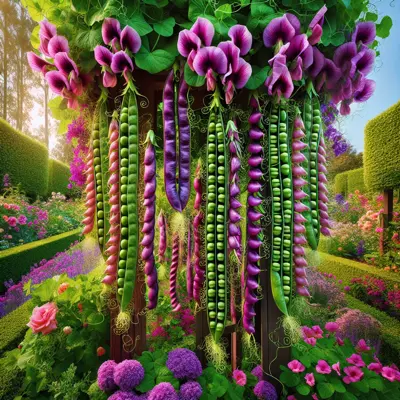
A stunning Dutch heirloom that produces vibrant purple pods and bright magenta flowers, making it as ornamental as it is edible. This unique variety has been treasured since the 1800s for its striking appearance and excellent flavor as both a snow pea and dried pea. The purple pods turn green when cooked, creating a delightful culinary surprise.
Harvest
70-80d
Days to harvest
Sun
Full sun to partial shade
Zones
2–11
USDA hardiness
Height
12-18 inches
Planting Timeline
Showing dates for Blue Podded Blauwschokker in USDA Zone 7
All Zone 7 pea →Zone Map
Click a state to update dates
Blue Podded Blauwschokker · Zones 2–11
Growing Details
Succession Planting
Direct sow every 14-21 days starting as soon as soil can be worked — soil temps around 45°F are fine for germination, though 10-14 days to sprout is typical. In zone 7, that means starting in early March and continuing through late April. Stop sowing by early May; seeds sown after that will germinate into heat and plants rarely set pods well once daytime highs are consistently above 80°F.
If your fall stays mild, you can get a second run going. Count back 80 days from your average first frost date and direct sow then — in zone 7, that's roughly mid-August. Fall plantings often outperform spring ones because the plants mature into cooling weather rather than warming, which cuts down on Erysiphe pisi pressure and tends to mean better pod fill on these long blue pods.
Complete Growing Guide
Start preparing your planting site in early spring by working compost or well-aged manure into the soil to a depth of 8-10 inches. Blue Podded Blauwschokkers thrive in soil with a pH between 6.0-7.0, so test and amend if necessary. These vigorous climbers need sturdy support structures at least 6-8 feet tall—install trellises, poles, or strong netting before planting.
Direct sow seeds 2-4 weeks before your last frost date when soil temperature reaches 45°F. Plant seeds 2 inches deep and 4-6 inches apart along your support structure. In zones 3-5, you can start seeds indoors 4-6 weeks early, but peas transplant poorly due to sensitive taproots—use biodegradable pots if starting indoors. Soak seeds overnight in lukewarm water to improve germination rates.
Once seedlings emerge, side-dress with a balanced fertilizer (10-10-10) when plants reach 4 inches tall, then switch to a low-nitrogen, phosphorus-rich fertilizer when flowering begins to encourage pod development. Over-fertilizing with nitrogen will give you lush foliage but fewer pods.
Train young vines onto supports when they're 6 inches tall—their tendrils will grab onto anything within reach. Water consistently but avoid overhead watering once flowering begins, as wet foliage invites powdery mildew. Apply 1-2 inches of water weekly, focusing on the root zone.
Common mistakes include planting too late (heat stress reduces yields), inadequate support structures that collapse under the plant's weight, and harvesting too infrequently. Pick pods every 2-3 days once production begins to keep plants productive through the growing season.
Harvesting
For snow peas, harvest Blue Podded Blauwschokker pods when they're 3-4 inches long and the peas inside are barely visible as tiny bumps. The pods should be bright purple, flat, and snap crisply when bent—avoid any that feel limp or show yellowing. For shelling peas, wait until pods are plump and rounded but still bright purple, typically 2-3 weeks after the snow pea stage. Test by opening one pod—mature peas should be sweet and tender, not starchy.
Harvest in early morning when pods are crisp and full of moisture. Use both hands: hold the vine steady with one hand while gently pulling pods upward and away with the other. Never yank downward, as this can damage the delicate vines and reduce future production. Check plants every 2-3 days during peak season, as pods can go from perfect to overripe quickly in warm weather. For dried peas, leave pods on the vine until they turn brown and rattle when shaken, usually 110 days from planting.
Storage & Preservation
Fresh Blue Podded Blauwschokker pods store best unwashed in perforated plastic bags in the refrigerator, maintaining quality for 5-7 days. For longer storage, blanch whole pods in boiling water for 2 minutes, plunge in ice water, drain thoroughly, and freeze in airtight containers for up to 8 months. The purple color will fade during blanching but flavor remains excellent.
To preserve shelled peas, blanch for 90 seconds before freezing. For dried peas, allow pods to dry completely on the vine, shell out peas, and store in airtight containers in a cool, dry place—they'll keep for years. Unlike many vegetables, these peas don't can well due to their delicate texture, but dried peas make excellent soup bases and can be ground into flour for unique purple-tinted baked goods.
History & Origin
Blue Podded Blauwschokker traces its roots to 19th-century Netherlands, where 'blauwschokker' literally translates to 'blue pod' in Dutch. This distinctive heirloom was developed by Dutch farmers who prized both its ornamental beauty and practical versatility as a dual-purpose crop. The variety gained popularity throughout Northern Europe during the 1800s, particularly valued in monastery and estate gardens where its striking purple pods and magenta flowers served decorative purposes alongside vegetable production.
Dutch immigrants brought seeds to North America in the late 1800s, where it became established in communities throughout the Midwest and Northeast. The variety nearly disappeared during the mid-20th century push toward commercial uniformity, but was preserved by dedicated seed savers and specialty growers. Today's Blue Podded Blauwschokker maintains the same genetic characteristics as its 19th-century ancestors, making it a true heirloom variety rather than a modern recreation. Its resurgence in recent decades reflects growing interest in both ornamental edibles and preserving agricultural biodiversity.
Advantages
- +Stunning ornamental value with purple pods and bright magenta flowers
- +Exceptional versatility—harvest as snow peas, shelling peas, or dried peas
- +Strong climbing vigor reaches 6-8 feet with proper support
- +Cool weather tolerance allows early spring planting
- +Extended harvest period when picked regularly
- +Edible flowers add unique color to salads and garnishes
- +Self-pollinating with good pod set in various weather conditions
Considerations
- -Requires substantial support structures due to vigorous climbing habit
- -Purple pod color fades to green when cooked, disappointing some gardeners
- -Moderate disease resistance makes it more susceptible than modern varieties
- -Longer maturity time than many modern pea varieties
- -Can become stringy quickly if not harvested at optimal timing
Companion Plants
Carrots and radishes are the most practical neighbors for Blauwschokker. They occupy different soil depths — peas fix nitrogen near the surface while carrots pull from 8-12 inches down — so there's no real competition for the same resources. Radishes do double duty: they break up compacted soil for the peas' shallow roots and, when left to bolt at the row edge, draw in predatory wasps that knock back aphid pressure. Lettuce and spinach fill in nicely as understory crops since all three are cool-season plants on the same schedule, maturing together without one hogging water while the others are dormant.
Keep peas well away from onions, garlic, and fennel. Onions and garlic produce sulfur compounds that inhibit the Rhizobium bacteria peas depend on for nitrogen fixation — put them too close and you're working against one of the main reasons to grow a legume. Fennel is broadly allelopathic and tends to stunt neighboring plants regardless of species; it does better isolated in its own spot than mixed into a bed.
Plant Together
Carrots
Peas fix nitrogen that carrots use, while carrots help break up soil for pea roots
Radishes
Break up compacted soil and mature quickly, creating space for pea root development
Lettuce
Grows well in partial shade provided by pea plants and doesn't compete for nutrients
Spinach
Cool-season crop that benefits from nitrogen fixed by peas and shares similar growing conditions
Marigolds
Repel aphids and other pests that commonly attack pea plants
Nasturtiums
Act as trap crops for aphids and add beneficial insects to the garden
Chives
Repel aphids and other soft-bodied insects that damage pea plants
Cucumber
Benefits from nitrogen fixed by peas and can use pea plants as natural trellising
Keep Apart
Onions
Can inhibit pea growth and nitrogen fixation through root secretions
Garlic
Releases compounds that can stunt pea growth and interfere with beneficial soil bacteria
Fennel
Produces allelopathic compounds that inhibit growth of most garden plants including peas
Nutrition Facts
Per 100g serving. % Daily Value based on 2,000 calorie diet. Source: USDA FoodData Central (FDC #170419)
Pests & Disease Resistance
Resistance
Moderate disease resistance typical of heirloom varieties
Common Pests
Aphids, pea weevils, birds attracted to flowers, spider mites
Diseases
Powdery mildew, root rot, pea enation mosaic virus, downy mildew
Troubleshooting Blue Podded Blauwschokker
What you'll see, why it happens, and what to do about it.
White powdery coating on leaves and stems, usually appearing after plants are 40-50 days old and temps start climbing
Likely Causes
- Powdery mildew (Erysiphe pisi) — a fungal pathogen that thrives in warm days with cool nights, common as spring stretches toward summer
- Poor airflow from overcrowded planting at less than 4-inch spacing
What to Do
- 1.Strip and trash (don't compost) the worst-affected leaves to slow spread
- 2.Give plants more breathing room next planting — aim for 5-6 inches between seeds rather than the minimum 4
- 3.Direct sow earlier so plants finish before daytime highs push past 75°F consistently; Blauwschokker is a cool-season crop and Erysiphe pisi accelerates as heat sets in
Stunted plants with mottled, puckered leaves and pods that either don't form or come out misshapen
Likely Causes
- Pea enation mosaic virus (PEMV) — transmitted by aphids (Acyrthosiphon pisum and Myzus persicae) feeding on infected plants nearby
- Aphid pressure from nearby overwintered host plants or weedy areas
What to Do
- 1.Pull and bag affected plants immediately — there's no cure once a plant is infected
- 2.Knock back aphid colonies with a strong water spray or insecticidal soap before they build up on new shoot tips
- 3.Use floating row cover from germination onward if PEMV has been a repeat problem in your garden — it blocks the aphid vectors
Frequently Asked Questions
How long does Blue Podded Blauwschokker take to grow?▼
Do Blue Podded Blauwschokker pods stay purple when cooked?▼
Can you grow Blue Podded Blauwschokker in containers?▼
Is Blue Podded Blauwschokker good for beginners?▼
When should I plant Blue Podded Blauwschokker seeds?▼
What does Blue Podded Blauwschokker taste like compared to regular peas?▼
Zone-by-Zone Planting Calendar
| Zone | Indoor Start | Transplant | Direct Sow | Harvest |
|---|---|---|---|---|
| Zone 1 | — | — | June – July | August – September |
| Zone 2 | — | — | May – July | August – September |
| Zone 11 | — | — | January – February | March – December |
| Zone 12 | — | — | January – February | March – December |
| Zone 13 | — | — | January – February | March – December |
| Zone 3 | — | — | May – June | July – October |
| Zone 4 | — | — | April – June | July – October |
| Zone 5 | — | — | April – May | June – November |
| Zone 6 | — | — | April – May | June – November |
| Zone 7 | — | — | March – May | June – November |
| Zone 8 | — | — | March – April | May – December |
| Zone 9 | — | — | February – March | April – December |
| Zone 10 | — | — | January – March | April – December |
Growing Guides from Wind River Greens
Sources & References
External authority sources used in compiling this guide.
See the Methodology page for how this data is sourced, what's AI-assisted, and known limitations.