Timeless Mix
Ageratum houstonianum
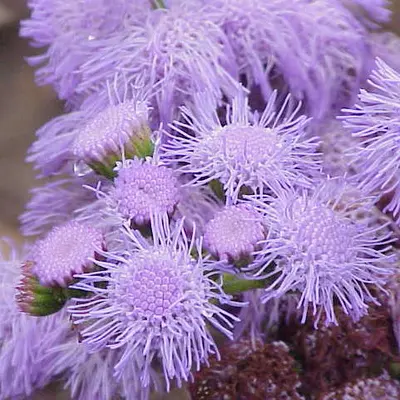
Long-lasting 1-2" flower clusters add texture and interest to mixed bouquets. Mix includes lovely shades of red, pink, blue, and white, which complement any color scheme. Attracts bees and butterflies to the garden. Ideal for beds, containers, and cutting. For continuous blooms from early summer until frost, make 2-3 successive plantings. Ageratum is also known as flossflower.
Harvest
80-100d
Days to harvest
Sun
Full sun to partial shade
Zones
2–11
USDA hardiness
Height
6-12 inches
Planting Timeline
Showing dates for Timeless Mix in USDA Zone 7
All Zone 7 flower →Zone Map
Click a state to update dates
Timeless Mix · Zones 2–11
Growing Details
Succession Planting
Ageratum takes 80-100 days to flower, so timing your successions matters if you want continuous bloom. In zone 7, start seeds indoors in late February and get transplants in the ground by late April after last frost. A second sow in mid-March, transplanted out in mid-May, will carry bloom through late summer. Don't bother starting a third round after early June — plants started that late won't hit their stride before fall frost, and temperatures above 90°F slow germination significantly anyway.
Deadhead spent flower clusters every 7-10 days to keep plants producing rather than setting seed. If a planting looks ragged by August — which it often does after a punishing Georgia summer — cut it back by one-third and side-dress with a balanced granular fertilizer (10-10-10 at the label rate). You'll usually get a decent flush of new growth in September once daytime highs drop back into the low 80s.
Complete Growing Guide
Long-lasting 1-2" flower clusters add texture and interest to mixed bouquets. Mix includes lovely shades of red, pink, blue, and white, which complement any color scheme. Attracts bees and butterflies to the garden. Ideal for beds, containers, and cutting. For continuous blooms from early summer until frost, make 2-3 successive plantings. Ageratum is also known as flossflower. According to Johnny's Selected Seeds, Timeless Mix is 80 - 100 days to maturity, annual, open pollinated. Notable features: Grows Well in Containers, Use for Cut Flowers and Bouquets, Ideal for Drying and Crafts, Attracts Beneficial Insects.
Light: Full sun (6 or more hours of direct sunlight a day), Partial Shade (Direct sunlight only part of the day, 2-6 hours). Soil: High Organic Matter. Drainage: Good Drainage, Moist. Height: 0 ft. 6 in. - 1 ft. 0 in.. Spread: 0 ft. 10 in. - 1 ft. 0 in.. Spacing: Less than 12 inches. Growth rate: Medium.
Harvesting
Timeless Mix reaches harvest at 80 - 100 days from sowing per Johnny's Selected Seeds. Expect 1-2" at peak. As an annual, harvest continues until frost ends the season.
Fruit is a cypsela which is a type of achene.
Type: Achene.
Storage & Preservation
Timeless Mix is grown for ornamental display rather than preservation. Fresh cut flowers last 5-7 days in a vase filled with cool water and standard floral preservative. Store cut stems in the refrigerator at 40°F if you need to condition them before arranging—this extends vase life by slowing respiration. For drying, hang small bundles of stems upside down in a warm, dark, well-ventilated space for 2-3 weeks; dried clusters retain color and can be used in dried arrangements for winter decoration. Alternatively, press individual flower clusters between paper for botanical crafts or scrapbooking. Store dried flowers in airtight containers away from humidity and direct light to preserve color fidelity.
History & Origin
Timeless Mix is open-pollinated, meaning seed saved from healthy plants will produce true-to-type offspring. Listed in the Johnny's Selected Seeds catalog.
Origin: Central America
Advantages
- +Vibrant multi-color mix works well in any garden color scheme
- +Long-lasting flower clusters provide extended visual interest and texture
- +Attracts pollinators like bees and butterflies to your garden
- +Easy to grow with minimal care requirements for beginners
- +Versatile for beds, containers, cutting, and successive plantings
Considerations
- -Requires multiple plantings every 2-3 weeks for continuous summer blooms
- -Susceptible to powdery mildew and root rot in humid conditions
- -Prefers consistently moist soil and struggles in drought or waterlogged areas
- -Short individual blooms at 1-2 inches may appear delicate or insignificant
Companion Plants
Marigolds and ageratum make a natural pairing — not just visually, but practically. Marigolds (especially Tagetes patula) release thiophenes from their roots, which suppress soil nematodes, and their scent confuses aphids and whiteflies, two pests that also target ageratum. Planted in alternating blocks 10-12 inches apart, they cover each other's weaknesses pretty well. Sweet alyssum is worth tucking along the border too: its small flowers draw in parasitic wasps and hoverflies that prey on aphids, and it stays low enough that it won't shade out shorter ageratum varieties.
Nasturtiums pull double duty as a trap crop — aphids tend to pile onto them first, which keeps pressure off neighboring plants. In our zone 7 Georgia garden, nasturtiums bolt and fade by late June anyway, so plant them early and let them do their job before the heat takes them. Cosmos and zinnias work well as taller backdrop plants; they don't compete aggressively at the root level, and the height variation improves airflow through the bed — which matters directly for powdery mildew control.
Keep ageratum well away from black walnut trees. Black walnut produces juglone, a compound that leaches through the root zone and stunts or kills many annuals outright, and ageratum is no exception. Eucalyptus presents a different problem: the oils in its decomposing leaf litter inhibit germination and root development for plants growing underneath. If either tree is nearby, relocating the bed is the only real fix.
Plant Together
Marigolds
Repel nematodes, aphids, and other harmful insects while attracting beneficial pollinators
Sweet Alyssum
Attracts beneficial insects like lacewings and hoverflies that prey on garden pests
Nasturtiums
Act as trap crops for aphids and cucumber beetles while adding edible flowers
Cosmos
Attract beneficial insects and pollinators without competing heavily for resources
Zinnias
Attract butterflies, bees, and beneficial predatory insects like ladybugs
Lavender
Repels moths, fleas, and mosquitoes while attracting bees and other pollinators
Sunflowers
Provide beneficial shade and attract birds that eat harmful insects
Petunias
Repel aphids, tomato hornworms, and other garden pests naturally
Keep Apart
Black Walnut
Produces juglone toxin that inhibits growth and can kill many flowering plants
Eucalyptus
Releases allelopathic compounds that suppress growth of nearby plants
Pine Trees
Acidify soil through needle drop and create dense shade that inhibits flower growth
Pests & Disease Resistance
Common Pests
Spider mites, whiteflies, aphids
Diseases
Powdery mildew, root rot (in poorly drained soil)
Troubleshooting Timeless Mix
What you'll see, why it happens, and what to do about it.
White powdery coating on leaves and stems, usually showing up mid-summer when nights cool down slightly
Likely Causes
- Powdery mildew (Erysiphe cichoracearum) — a fungal pathogen that thrives in humid air with poor circulation
- Planting too close together, keeping foliage wet and airflow low
What to Do
- 1.Thin plants to at least 8 inches apart and cut out any badly affected stems at the base
- 2.Spray foliage in the morning with a diluted baking soda solution (1 tablespoon per gallon of water) — gives leaves time to dry before evening
- 3.Don't overhead water; switch to drip or water at the soil line
Tiny yellow stippling across leaves, sometimes with fine webbing on leaf undersides — plants look dull and washed out
Likely Causes
- Two-spotted spider mites (Tetranychus urticae) — pressure spikes in hot, dry spells above 90°F
- Drought stress, which weakens the plant and makes it more susceptible to mite colonization
What to Do
- 1.Blast the undersides of leaves with a strong stream of water from a hose — knocks mites off and they rarely climb back
- 2.Keep soil consistently moist; ageratum under drought stress draws mite pressure faster than a well-watered plant
- 3.If the infestation is heavy, apply insecticidal soap directly to leaf undersides, repeating every 5-7 days for 2-3 applications
Frequently Asked Questions
How long does Timeless Mix ageratum take to bloom from seed?▼
Can you grow Timeless Mix ageratum in containers?▼
Is Timeless Mix ageratum good for beginners?▼
When should I plant Timeless Mix ageratum outdoors?▼
How do I deadhead Timeless Mix to encourage more blooms?▼
What's the difference between Timeless Mix and single-color ageratum varieties?▼
Zone-by-Zone Planting Calendar
| Zone | Indoor Start | Transplant | Direct Sow | Harvest |
|---|---|---|---|---|
| Zone 1 | May – June | July – August | July – September | — |
| Zone 2 | April – May | June – July | June – August | — |
| Zone 11 | January – January | January – February | January – March | — |
| Zone 12 | January – January | January – February | January – March | — |
| Zone 13 | January – January | January – February | January – March | — |
| Zone 3 | April – May | June – July | June – August | — |
| Zone 4 | March – April | June – June | June – July | — |
| Zone 5 | March – April | May – June | May – July | — |
| Zone 6 | March – April | May – June | May – July | — |
| Zone 7 | February – March | April – May | April – June | — |
| Zone 8 | February – March | April – May | April – June | — |
| Zone 9 | January – February | March – April | March – May | — |
| Zone 10 | January – January | February – March | February – April | — |
Growing Guides from Wind River Greens
Sources & References
External authority sources used in compiling this guide.
- ExtensionNC State Extension
- BreederJohnny's Selected Seeds
See the Methodology page for how this data is sourced, what's AI-assisted, and known limitations.