Upland Cress
Barbarea verna
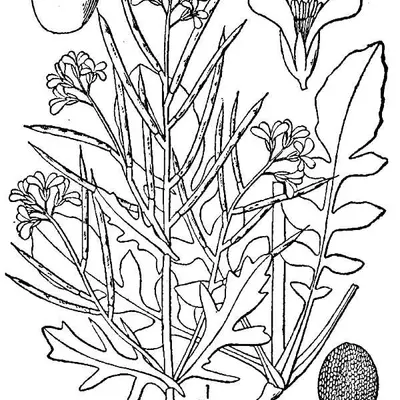
Slow to start but, once established, easy to grow. Long standing and slow bolting. 6-8" rosettes of dark green, glossy, rounded leaves. Similar to watercress but much easier to grow. Sometimes called "creasy greens" in the South.
Harvest
50d
Days to harvest
Sun
Part sun
Zones
1–11
USDA hardiness
Height
6-8 inches
Planting Timeline
Showing dates for Upland Cress in USDA Zone 7
All Zone 7 lettuce →Zone Map
Click a state to update dates
Upland Cress · Zones 1–11
Growing Details
Succession Planting
Direct sow every 14–18 days from March through early May in zone 7, then stop once daytime highs are consistently above 80°F — upland cress bolts fast in heat and the leaves turn bitter within days of flowering. Pick it back up in late August, sowing every 2–3 weeks through mid-October. At 50 days to harvest, a sowing on September 20th will still come in before a hard frost in most of zone 7.
Don't push new sowings too deep into November — germination slows noticeably below 45°F soil temperature and you'll get thin, patchy stands. Two solid fall successions are worth more than a third that stalls out in cold ground.
Complete Growing Guide
Growing Upland Cress (Barbarea verna) lettuce. Light: Part sun. Hardy in USDA zones 1 to 11. Days to maturity: 50. Difficulty: Easy.
Harvesting
Ready for harvest in 50 days from sowing or transplant. Harvest at peak ripeness for best flavor and storage life. Pick regularly to encourage continued production where applicable.
Storage & Preservation
Upland cress keeps best when refrigerated immediately after harvest at 32–40°F in a perforated plastic bag or container lined with damp paper towels; this maintains crispness for 7–10 days. Humidity should stay high to prevent wilting. For longer preservation, freezing works well: blanch leaves for 2–3 minutes, cool in ice water, drain thoroughly, and freeze in airtight bags for up to 8 months. Dried upland cress retains its peppery bite better than most greens—hang-dry in bundles or use a dehydrator at 95–105°F until papery, then store in an airtight jar away from light. Fermenting is also excellent; pack leaves with salt (5% by weight) in jars, pressing until brine covers them, and ferment at room temperature for 3–5 weeks for a tangy condiment. Unlike milder lettuces, upland cress's mustard-like flavor actually intensifies slightly when preserved, making it particularly suited to fermentation and drying applications.
History & Origin
Barbarea verna is a biennial herb in the family Brassicaceae. Common names include land cress, American cress, bank cress, black wood cress, Belle Isle cress, Bermuda cress, poor man's cabbage, early yellowrocket, early wintercress, scurvy cress, creasy greens, and upland cress. It is native to southern Europe and western Asia, and naturalized elsewhere It has been cultivated as a leaf vegetable in England since the 17th century. As it requires less water than watercress, it is easier to cultivate.
Advantages
- +Easy to grow — beginner-friendly
- +Quick harvest — ready in about 50 days
- +Wide hardiness — grows in USDA zones 1-11
Companion Plants
Radishes are the most practical companion for upland cress — they germinate in 5–7 days, break up the top inch of soil, and draw flea beetles (Phyllotreta spp.) away from the cress before its canopy fills in. Chives planted along the bed edge interfere with cabbage moths and aphids through scent masking, which is a real if modest effect. Nasturtiums pull double duty: they're a known aphid trap crop, and their low, dense foliage shades enough bare soil to slow moisture loss between waterings.
Skip planting upland cress anywhere near other brassicas — broccoli, kale, arugula, even mustard greens share the same flea beetle and Peronospora downy mildew pressure, and stacking them in one area just makes scouting harder and outbreaks worse. Fennel doesn't play well with most vegetables; its root exudates suppress nearby plant growth through allelopathy, and it has no business in a mixed salad bed.
Plant Together
Chives
Repels aphids and other soft-bodied insects that commonly attack leafy greens
Radishes
Break up soil for shallow-rooted cress and mature quickly without competing for space
Carrots
Deep roots don't compete with shallow cress roots, and carrots help aerate soil
Marigolds
Repel aphids, whiteflies, and other pests that damage leafy greens
Nasturtiums
Act as trap crop for aphids and flea beetles, drawing pests away from cress
Lettuce
Similar growing requirements and harvest timing, efficient use of garden space
Spinach
Compatible growth habits and water needs, both prefer cool weather
Dill
Attracts beneficial insects like lacewings and parasitic wasps that control aphids
Keep Apart
Brassicas
Compete for same nutrients and attract similar pests like flea beetles and cabbage worms
Fennel
Releases allelopathic compounds that inhibit growth of most vegetables including cress
Sunflowers
Create excessive shade and compete aggressively for water and nutrients
Nutrition Facts
Per 100g serving. % Daily Value based on 2,000 calorie diet. Source: USDA FoodData Central (FDC #2346388)
Pests & Disease Resistance
Common Pests
Cabbage moths, flea beetles, slugs
Diseases
Downy mildew, damping off (seedlings in waterlogged conditions)
Troubleshooting Upland Cress
What you'll see, why it happens, and what to do about it.
Seedlings collapse at the soil line within the first 7–10 days after germination, sometimes with a fuzzy whitish mold visible on the soil surface
Likely Causes
- Damping off — typically Pythium or Rhizoctonia spp. — triggered by waterlogged, poorly drained soil
- Sowing into cold, wet ground before soil has had a chance to drain between rains
What to Do
- 1.Don't sow into saturated beds; wait until the top inch of soil crumbles rather than clumps
- 2.Work in compost or coarse perlite before seeding to improve drainage
- 3.If you've had damping off in the same bed before, drench the seedbed with a diluted neem solution at sowing — it won't cure an outbreak but it slows spread
Tiny, irregular shothole pits punched through leaves, especially on young growth, appearing rapidly in dry weather
Likely Causes
- Flea beetles (Phyllotreta spp.) — small, jumping beetles that feed heavily on Brassica-family greens like upland cress
What to Do
- 1.Cover the bed with row cover immediately at sowing — flea beetles find plants fast and young seedlings have little leaf area to spare
- 2.Keep the bed consistently moist; flea beetles prefer dry, dusty conditions and back off with regular irrigation
- 3.For a bad infestation, spinosad spray (an OMRI-listed organic option) applied in the evening reduces adults without hitting pollinators
Grayish-white fuzzy patches on the undersides of older leaves, with yellowing on the corresponding upper surface, spreading bed-wide in cool, humid weather
Likely Causes
- Downy mildew (Peronospora parasitica) — a water mold that sporulates in humid conditions, especially when temperatures sit between 50–65°F
- Crowded planting that traps moisture between plants
What to Do
- 1.Thin plants to at least 6 inches apart so air moves through the canopy
- 2.Water at the base of the plant, not overhead, and always in the morning so foliage dries before nightfall
- 3.Pull and bag — don't compost — heavily infected leaves; rotate that bed out of cress and other brassicas for one full season
Frequently Asked Questions
How long does upland cress take to grow from seed to harvest?▼
Is upland cress good for beginners?▼
Can you grow upland cress in containers?▼
What does upland cress taste like?▼
When should I plant upland cress?▼
Upland cress vs. watercress—what's the difference?▼
Zone-by-Zone Planting Calendar
| Zone | Indoor Start | Transplant | Direct Sow | Harvest |
|---|---|---|---|---|
| Zone 1 | — | — | June – July | July – September |
| Zone 2 | — | — | May – July | July – September |
| Zone 11 | — | — | January – February | February – December |
| Zone 12 | — | — | January – February | February – December |
| Zone 13 | — | — | January – February | February – December |
| Zone 3 | — | — | May – June | June – October |
| Zone 4 | — | — | April – June | June – October |
| Zone 5 | — | — | April – May | June – November |
| Zone 6 | — | — | April – May | May – November |
| Zone 7 | — | — | March – May | May – November |
| Zone 8 | — | — | March – April | April – December |
| Zone 9 | — | — | February – March | March – December |
| Zone 10 | — | — | January – March | March – December |
Growing Guides from Wind River Greens
Sources & References
External authority sources used in compiling this guide.
- BreederJohnny's Selected Seeds
- USDAUSDA FoodData Central
See the Methodology page for how this data is sourced, what's AI-assisted, and known limitations.