Winterberry Holly
Ilex verticillata
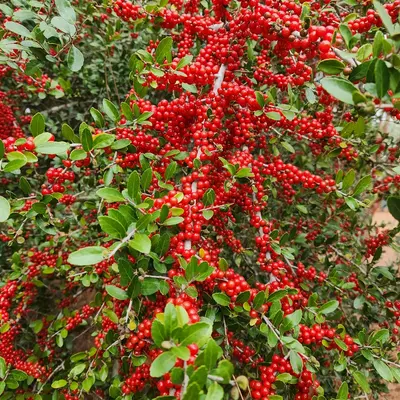
A native deciduous holly that transforms the winter landscape with brilliant red berries persisting on bare branches long after leaves have dropped. This adaptable shrub thrives in wet soils where other plants struggle, making it perfect for rain gardens or low-lying areas. The spectacular winter berry display attracts birds while providing crucial cold-season interest when most shrubs are dormant.
Sun
Full sun to partial shade
Zones
3–9
USDA hardiness
Height
3-15 feet
Planting Timeline
Showing dates for Winterberry Holly in USDA Zone 7
All Zone 7 shrub →Zone Map
Click a state to update dates
Winterberry Holly · Zones 3–9
Growing Details
Complete Growing Guide
Light: Deep shade (Less than 2 hours to no direct sunlight), Full sun (6 or more hours of direct sunlight a day), Partial Shade (Direct sunlight only part of the day, 2-6 hours). Soil: Clay, Loam (Silt), Sand. Soil pH: Acid (<6.0). Drainage: Good Drainage, Moist, Occasionally Wet. Height: 3 ft. 0 in. - 15 ft. 0 in.. Spread: 3 ft. 0 in. - 12 ft. 0 in.. Spacing: 3 feet-6 feet. Growth rate: Slow. Maintenance: Low. Regions: Coastal, Mountains, Piedmont.
Harvesting
Bright red berry-like fruits on female plants persist into winter. Cultivars may have yellow-orange or orange fruits. Fruits ripen from August to December. Fruits are striking on bare branches.
Color: Gold/Yellow, Orange, Red/Burgundy. Type: Drupe. Length: < 1 inch. Width: < 1 inch.
Garden value: Long-lasting, Showy
Harvest time: Fall, Winter
Storage & Preservation
Winterberry holly branches with berries can be displayed fresh in water at room temperature (65-75°F) for 2-3 weeks, keeping humidity moderate. Store cut branches in the refrigerator (35-40°F) in water to extend freshness up to a month. For preservation, air-dry branches in bundles in a cool, dark location for dried arrangements lasting several months. Alternatively, glycerin treatment preserves branches while maintaining berry color and flexibility. Freezing cut branches on trays before storing in freezer bags extends storage through winter for decorative use.
History & Origin
Ilex verticillata, the winterberry, is a species of holly native to eastern North America in the United States and southeast Canada, from Newfoundland west to Ontario and Minnesota, and south to Alabama.
Advantages
- +Attracts: Butterflies, Pollinators, Small Mammals, Songbirds, Specialized Bees
- +Low maintenance
Considerations
- -Toxic (Fruits, Leaves): Low severity
Companion Plants
Blueberries, Rhododendrons, and Mountain Laurel pair naturally with Winterberry Holly because they all thrive in acidic soil — pH 4.5 to 6.0 — so you're not fighting competing soil chemistry in the same bed. Ferns and Hostas fill in the low understory without crowding the root zone, and in our zone 7 Georgia gardens, that ground-level layer holds soil moisture through the worst of the July dry spells. Dogwood and Serviceberry work well as canopy companions because they share Winterberry's preference for moist, slightly acidic woodland edges without shading it out completely.
Keep Winterberry well away from Black Walnut (Juglans nigra). The roots secrete juglone, and broadleaf shrubs planted within 50 feet often decline slowly and die without any other obvious cause — it's easy to misread as a soil problem. Pine litter drops pH faster than most plants tolerate; sustained needle fall can push soil below 4.5, which locks out manganese and iron even when you've fertilized. Eucalyptus leaf litter carries allelopathic compounds with a similar effect. None of those three are worth the risk near a planting you're trying to establish.
Plant Together
Blueberry
Shares similar acidic soil requirements and provides complementary fruiting seasons
Rhododendron
Compatible acid-loving shrub that creates attractive layered plantings
Mountain Laurel
Native companion with similar soil and moisture preferences
Ferns
Provide understory groundcover and thrive in the same moist, acidic conditions
Dogwood
Creates natural woodland habitat and shares wildlife attraction benefits
Serviceberry
Native shrub companion that extends berry season for wildlife
Hosta
Shade-tolerant perennial that complements the holly's understory environment
Astilbe
Thrives in similar moist, partially shaded conditions with acid soil
Keep Apart
Black Walnut
Produces juglone toxin that inhibits growth of many shrubs including hollies
Eucalyptus
Allelopathic compounds suppress growth of nearby plants
Pine Trees
Heavy needle drop can create overly acidic conditions and block air circulation
Pests & Disease Resistance
Resistance
Excellent disease resistance, very hardy native
Common Pests
Scale insects, leaf miners (minor)
Diseases
Tar spot (cosmetic), root rot in overly wet conditions
Troubleshooting Winterberry Holly
What you'll see, why it happens, and what to do about it.
Yellow or orange blotches on upper leaf surface in summer, with raised black tar-like spots on the undersides
Likely Causes
- Tar spot fungus (Rhytisma americanum) — cosmetic fungal infection that overwinters in fallen leaves
- Prolonged wet summers that allow spore dispersal
What to Do
- 1.Rake and bag all fallen leaves in autumn — don't compost them, the spores survive
- 2.No fungicide is necessary; the plant's vigor and berry production are unaffected
- 3.Thin interior branches in late winter if the shrub is densely packed, so foliage dries faster after rain
Bark encrusted with gray or brown bumps that don't rub off cleanly, sometimes with sticky residue on stems below
Likely Causes
- Scale insects (most commonly Calico scale or Oystershell scale) — NC State Extension lists these as a minor but recurring pest on Ilex
- Overcrowded or stressed plants that can't outgrow light infestations
What to Do
- 1.Scrub light infestations off with a stiff brush and a bucket of soapy water
- 2.Apply horticultural oil in early spring before new growth breaks, when crawlers are active — follow label rates, typically a 2–3% dilution
- 3.Cut back on nitrogen fertilizer; soft new growth is exactly what scale insects prefer
Sudden wilting and dieback of entire branches despite adequate rainfall, with dark brown discoloration at the root crown when you dig down
Likely Causes
- Phytophthora root rot — triggered by poorly drained clay soil or a low spot that collects standing water after rain
- Planting too deep, which keeps the root crown perpetually wet
What to Do
- 1.Dig up the plant if it's still small enough, cut away blackened roots with clean shears, and replant on a slight berm so water sheds away from the crown
- 2.Amend heavy clay with composted pine bark before planting — Ilex verticillata needs consistent moisture, not waterlogged soil
- 3.Don't replant a replacement in the same hole without fixing drainage first; Phytophthora persists in soil for years
Frequently Asked Questions
When is the best time to plant winterberry holly?▼
Is winterberry holly good for beginners?▼
How long do winterberry holly berries last on branches?▼
Can you grow winterberry holly in containers?▼
Do you need a male winterberry holly for berries?▼
What pests affect winterberry holly and how do you treat them?▼
Zone-by-Zone Planting Calendar
Growing Guides from Wind River Greens
Sources & References
External authority sources used in compiling this guide.
- ExtensionNC State Extension
See the Methodology page for how this data is sourced, what's AI-assisted, and known limitations.