French Hydrangea
Hydrangea macrophylla
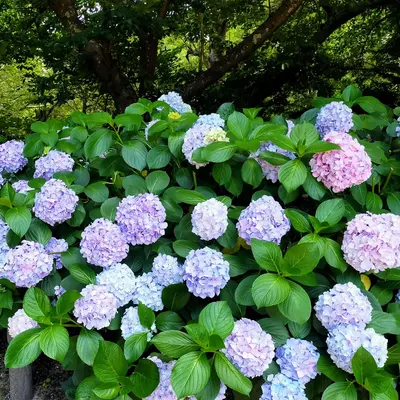
The classic mophead hydrangea that transforms any garden into a cottage paradise with its massive, globe-shaped flower clusters. These stunning shrubs are famous for their color-changing ability - producing blue blooms in acidic soil and pink in alkaline conditions. A timeless favorite that delivers months of spectacular color and makes excellent cut flowers.
Sun
Partial shade
Zones
6–11
USDA hardiness
Height
3-6 feet
Planting Timeline
Showing dates for French Hydrangea in USDA Zone 7
All Zone 7 shrub →Zone Map
Click a state to update dates
French Hydrangea · Zones 6–11
Growing Details
Complete Growing Guide
French Hydrangeas flower on old wood, so prune immediately after blooming in late summer rather than in spring to avoid removing next year's flower buds. These shrubs thrive in morning sun with afternoon shade, particularly in hot climates, and require consistently moist (not waterlogged) soil rich in organic matter. To manipulate bloom color reliably, adjust soil pH in early spring before flower buds set: apply aluminum sulfate for blue flowers in acidic conditions (pH below 6.0) or lime for pink blooms in alkaline soil (pH above 7.0). Watch for powdery mildew in humid conditions with poor air circulation—space plants adequately and water at the base only. French Hydrangeas are prone to wilting on hot days even with adequate moisture; provide afternoon shade and mulch heavily to keep roots cool and retain soil moisture consistently throughout the growing season.
Light: Dappled Sunlight (Shade through upper canopy all day), Deep shade (Less than 2 hours to no direct sunlight), Partial Shade (Direct sunlight only part of the day, 2-6 hours). Soil: Clay, High Organic Matter, Loam (Silt), Sand. Soil pH: Acid (<6.0), Alkaline (>8.0), Neutral (6.0-8.0). Drainage: Good Drainage, Occasionally Wet. Height: 3 ft. 0 in. - 6 ft. 0 in.. Spread: 3 ft. 0 in. - 6 ft. 0 in.. Spacing: 3 feet-6 feet. Growth rate: Rapid. Maintenance: Low. Propagation: Layering, Leaf Cutting, Stem Cutting. Regions: Coastal, Mountains, Piedmont.
Harvesting
French Hydrangea blooms reach peak harvest readiness when the mophead clusters feel papery to the touch and the outer florets have fully opened while the center maintains slight firmness, typically six to eight weeks after flowering begins. The color should appear fully saturated and matte rather than glossy, indicating the flowers have matured. These shrubs support continuous harvesting throughout their blooming season by cutting individual stems at the base, which encourages additional flower production; alternatively, harvest the entire plant at once for maximum impact. For longest vase life, cut stems early in the morning after dew dries, as fully hydrated stems condition better and last significantly longer indoors than afternoon harvests.
cup-like capsule
Type: Capsule.
Harvest time: Fall
Storage & Preservation
Fresh hydrangea blooms should be stored in a cool location away from direct sunlight. Keep cut flowers in a refrigerator at 35-40°F with 80-90% humidity, which extends vase life to 1-2 weeks. Change water every 2-3 days and re-cut stems at an angle. For preservation, air-dry blooms by hanging stems upside-down in a well-ventilated, dark space (2-3 weeks), press individual flowers between paper for floral crafts, or freeze blooms in water in ice cube trays for decorative purposes.
History & Origin
The mophead hydrangea (Hydrangea macrophylla) emerged from Japanese breeding traditions, where cultivars were developed centuries before reaching Europe in the late 18th century. French and Belgian horticulturists subsequently refined these Asian specimens throughout the 19th century, establishing the ornamental standards that define the "French Hydrangea" type today. While specific original breeders and cultivars remain poorly documented in readily available sources, the French contribution to hydrangea popularization and improvement is well-established through their horticultural societies and nursery culture of that era. The "French Hydrangea" designation reflects this European refinement rather than a single identifiable cultivar, representing instead a class of macrophylla hydrangeas perfected through collective breeding efforts.
Origin: Japan, China, Korea and Southeast Asia;
Advantages
- +Massive globe-shaped flower clusters create dramatic cottage garden focal points
- +Soil pH flexibility allows blue or pink blooms based on acidity
- +Extended blooming period provides months of reliable garden color
- +Excellent cut flowers for fresh arrangements and floral displays
- +Moderate difficulty makes it accessible for most home gardeners
Considerations
- -Susceptible to powdery mildew and leaf spot diseases in humid conditions
- -Requires well-drained soil to prevent root rot and plant decline
- -Aphids and spider mites frequently infest foliage during growing season
- -Needs consistent moisture and specific soil pH for optimal color production
Companion Plants
Hostas, astilbe, ferns, and heuchera pair well with French Hydrangea because they all thrive in 4-6 hours of dappled shade with consistent moisture — no one plant is pulling more than its share of either. Rhododendrons and azaleas belong in the same bed for a more practical reason: they need the same acidic soil (pH 5.0-6.0), so a single round of soil amendment with sulfur or acidic compost covers all of them. Black Walnut is the one to keep far off — its roots release juglone, a compound that interferes with cellular respiration in many ornamentals, and H. macrophylla shows it as wilting and slow dieback that looks like drought stress until you trace the source.
Plant Together
Hostas
Share similar shade and moisture requirements, create complementary foliage texture
Astilbe
Thrives in same acidic, moist soil conditions and partial shade
Ferns
Prefer similar acidic, well-draining soil and provide textural contrast
Azaleas
Both prefer acidic soil and benefit from similar fertilization schedules
Heuchera
Tolerates same light conditions and adds colorful foliage at ground level
Japanese Painted Fern
Complements hydrangea blooms with silvery foliage in acidic soil
Caladium
Thrives in partial shade with consistent moisture like hydrangeas
Rhododendron
Both are acid-loving shrubs with similar water and soil requirements
Keep Apart
Black Walnut Tree
Produces juglone toxin that inhibits hydrangea growth and causes wilting
Eucalyptus
Allelopathic compounds suppress nearby plant growth and competes for water
Pine Trees
Surface roots compete aggressively for water and nutrients hydrangeas need
Pests & Disease Resistance
Resistance
Moderate resistance to most diseases
Common Pests
Aphids, spider mites, scale insects
Diseases
Powdery mildew, leaf spot, root rot in poorly drained soil
Troubleshooting French Hydrangea
What you'll see, why it happens, and what to do about it.
White powdery coating on upper leaf surfaces, usually appearing mid-summer when nights cool down
Likely Causes
- Powdery mildew (Erysiphe polygoni) — a fungal disease that spreads by airborne spores in humid, low-airflow conditions
- Planting too close to walls or other shrubs, cutting off air circulation
What to Do
- 1.Remove and trash (not compost) the worst-affected leaves
- 2.Spray with a diluted neem oil solution (2 tsp neem per gallon of water) every 7-10 days until symptoms stop spreading
- 3.Thin out any crossing branches in the center of the shrub to open up airflow
Leaves yellowing and wilting despite regular watering, with dark brown or mushy tissue at the crown when you dig around the base
Likely Causes
- Phytophthora root rot — triggered by poorly drained soil that stays saturated for more than a day or two after rain
- Planting in a low spot that collects runoff
What to Do
- 1.Dig up the shrub, trim off any blackened roots, and replant in a spot with at least 12 inches of well-draining amended soil
- 2.If the original site is the only option, work pine bark fines and coarse compost into the top 12 inches before replanting to break up compaction
- 3.Hold off on fertilizer until the plant pushes healthy new growth — feeding a compromised root system forces foliage the plant can't support