Red Twig Dogwood
Cornus sericea
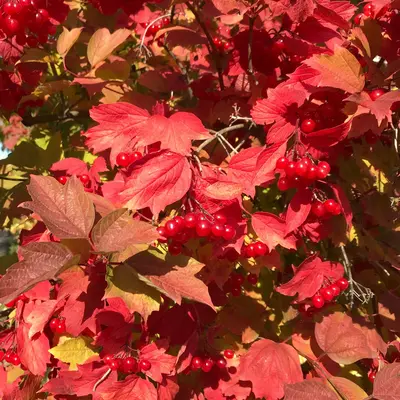
A native multi-season shrub prized for its brilliant red winter stems that provide stunning color when most plants are dormant. This adaptable shrub produces clusters of white flowers in spring, followed by white berries that attract birds, while the bright red bark creates dramatic winter interest against snow. Thriving in wet soils where other shrubs fail, it's perfect for rain gardens and naturalizing.
Sun
Full sun to partial shade
Zones
2–7
USDA hardiness
Height
5-9 feet
Planting Timeline
Showing dates for Red Twig Dogwood in USDA Zone 7
All Zone 7 shrub →Zone Map
Click a state to update dates
Red Twig Dogwood · Zones 2–7
Growing Details
Complete Growing Guide
Red Twig Dogwood is one of the most forgiving native shrubs you can plant, but a little site planning goes a long way toward maximizing that signature winter color.
**Site Selection and Soil Prep** Choose a spot with full sun to partial shade — at least 4-6 hours of direct light. Stems develop their most vivid red coloring in full sun; in deep shade, expect duller, more burgundy tones and looser growth. This shrub thrives in moist to wet soils, including clay, boggy edges, and rain garden basins where most shrubs would drown. It also tolerates average garden soil as long as you water during droughts. Soil pH is flexible (5.5-7.5). Before planting, work 2-3 inches of compost into the top 12 inches of soil, especially if your ground is sandy or compacted.
**Planting** Plant nursery-grown specimens in early spring or early fall. Dig a hole twice as wide as the root ball but no deeper — the root flare should sit slightly above grade. Backfill with native soil (skip rich amendments in the planting hole; you want roots to push outward). Water deeply and mulch with 2-3 inches of shredded bark, keeping mulch a few inches away from the stems.
**Watering and Feeding** Water weekly the first year to establish, providing about an inch per week. After establishment, it's remarkably resilient — drought-tolerant in shade and thriving in standing water in sun. Fertilizer is rarely needed. If growth seems weak, apply a light topdressing of compost in spring rather than synthetic fertilizer, which can encourage soft growth prone to canker.
**Pruning for Winter Color (The Most Important Step)** The brightest red color appears on one- and two-year-old stems. Old stems fade to dull gray-brown. Each spring before bud break (late February through March), prune out about one-third of the oldest stems at ground level. This is called renewal pruning. Every 3-4 years, you can cut the entire shrub back to 6-8 inches (coppicing) for a complete refresh — it will rebound vigorously. Skip pruning, and the display dulls within a few years.
**Common Mistakes to Avoid** Don't plant in dry, sandy soil without supplemental irrigation — leaf scorch and canker follow stress. Don't shear it like a hedge; that ruins the natural arching form and reduces flowering. Don't crowd it: this shrub spreads by underground stolons and suckers, forming colonies 8-10 feet wide over time. Give it room or plan to dig out suckers each spring.
**Zone-Specific Tips** Hardy in USDA zones 2-7 (some cultivars to zone 8). In zones 2-4, mulch heavily the first winter to prevent frost heave. In hot southern zones (7-8), site in afternoon shade and ensure consistent moisture — heat is a bigger threat than cold. In windy prairie regions, the suckering habit is an asset for erosion control on slopes and pond banks.
Harvesting
Red Twig Dogwood isn't harvested as food, but its stems are gathered for floral and seasonal decor — and timing matters enormously. Cut stems for arrangements between late November and early March, after leaves have dropped and color has fully developed (cold weather actually intensifies the red). Stems harvested too early, while still partially green, will look muddy and continue trying to leaf out indoors.
Choose stems that are one to two years old — pencil-thick to thumb-thick, smooth, and uniformly bright red. Older stems with gray patches and peeling bark have lost their color. Use sharp bypass pruners and cut at an angle just above an outward-facing bud or branch junction, ideally taking stems from the oldest part of the shrub so your harvest doubles as renewal pruning. Morning harvest, when stems are fully hydrated, gives the longest vase life. Avoid harvesting more than one-third of the shrub in any single season, and never strip one side bare — work evenly around the plant to maintain its shape.
Storage & Preservation
For fresh use, recut stem bottoms at an angle and split the base an inch up with pruners to help water uptake, then plunge into a deep bucket of cool water for several hours before arranging. Stems hold their color for 3-6 weeks in a cool indoor spot, and indefinitely outdoors in winter planters where freezing keeps them dormant.
To preserve stems long-term, simply air-dry them upright in an empty vase — the bark retains most of its red color for one to two years, though it gradually fades to a softer rust tone. For deeper, longer-lasting color, some florists spray dried stems with a clear matte sealant or floral lacquer. Avoid glycerin preservation, which works for foliage but turns dogwood bark dark and dull. Stored stems keep best in a dry, dark space; sunlight bleaches the color quickly.
History & Origin
Red Twig Dogwood (Cornus sericea, formerly Cornus stolonifera) is native across North America, ranging from Alaska and Newfoundland south to northern Mexico, and is one of the most widely distributed dogwoods on the continent. Indigenous peoples — including the Ojibwe, Cree, and various Plains nations — used it extensively for centuries: the inner bark was dried and smoked in traditional kinnikinnick blends, the flexible stems were woven into baskets and fish traps, and bark preparations served medicinal purposes for fevers and skin ailments.
European botanists documented the species in the 18th century, and it entered ornamental horticulture in the 1800s as gardeners noticed its dramatic winter stem color. Modern breeding has produced standout cultivars: 'Cardinal' (developed at the University of Minnesota in the 1980s for cold-hardiness and brilliant cherry-red stems), 'Arctic Fire'® (a compact dwarf form), 'Bailey's Red Twig' (a non-suckering selection), and 'Flaviramea' (a yellow-stemmed variant). Today it's a staple of naturalistic landscape design, rain gardens, and ecological restoration projects across temperate North America.
Advantages
- +Brilliant scarlet winter stems provide 4-5 months of color when the landscape is dormant
- +Thrives in wet, boggy soils and seasonal flooding where most shrubs fail
- +Extremely cold-hardy down to USDA zone 2 (-40°F)
- +Native species supporting pollinators, songbirds, and over 100 species of native moths and butterflies
- +Suckering root system makes it excellent for erosion control on slopes and stream banks
- +Virtually deer-resistant compared to most ornamental shrubs
- +Easy to propagate — fresh cuttings stuck directly in moist soil root readily
Considerations
- -Aggressive suckering habit can colonize beyond intended boundaries if not managed yearly
- -Requires annual renewal pruning — without it, stem color dulls dramatically within 3-4 years
- -Summer foliage is unremarkable; the shrub is a one-trick pony focused on winter interest
- -Susceptible to leaf spot and stem canker in hot, dry, or stagnant-air conditions
- -Can look ragged and twiggy in mid-summer after flowering finishes
Companion Plants
Elderberry and Winterberry Holly pair naturally with Red Twig Dogwood because all three are native shrubs that genuinely want the same conditions: consistent moisture, a soil pH between 5.5 and 7.0, and room to spread at least 6 feet in every direction. Managing them as a group means one watering regime, one mulch layer, one drainage fix — instead of three separate problems. Hosta, Ferns, and Wild Ginger slot in underneath and around the drip line because they're built for partial shade; a 7-foot Cornus sericea creates exactly that by midsummer. Cardinal Flower and Astilbe add late-season color without fighting for root space.
Black Walnut (Juglans nigra) is the serious problem here. Cornus sericea shows documented sensitivity to juglone — the allelopathic compound walnut roots and leaf litter release into the soil — and decline can set in well before you'd notice a connection. Pine Trees pile up acidic duff that drags soil pH below 5.5 and creates a dry, root-matted zone where dogwood struggles to establish. Eucalyptus releases a different suite of allelopathic oils but causes similar suppression; it has no business near native shrubs regardless.
Plant Together
Elderberry
Similar moisture and soil requirements, attracts beneficial insects and birds
Wild Ginger
Thrives in similar partial shade conditions, provides groundcover beneath shrub
Astilbe
Complementary flowering times, both prefer moist soil and partial shade
Hosta
Excellent understory companion, similar shade and moisture preferences
Winterberry Holly
Compatible wetland shrub, extends winter interest with complementary red berries
Cardinal Flower
Thrives in similar moist conditions, attracts hummingbirds and pollinators
Ferns
Natural woodland companions, prefer same moist, partially shaded conditions
Spicebush
Native woodland shrub with similar habitat needs, supports native wildlife
Keep Apart
Black Walnut
Produces juglone which is toxic to many plants including dogwoods
Pine Trees
Acidify soil and create dry conditions unfavorable to moisture-loving dogwood
Eucalyptus
Allelopathic compounds inhibit growth of nearby plants including dogwoods
Pests & Disease Resistance
Resistance
Generally disease resistant, very hardy
Common Pests
Few serious pest problems
Diseases
Leaf spot, canker in stressed conditions
Troubleshooting Red Twig Dogwood
What you'll see, why it happens, and what to do about it.
Circular tan or brown spots on leaves mid-summer, sometimes with a purple or reddish halo
Likely Causes
- Cercospora leaf spot (Cercospora cornicola) or Septoria leaf spot — both fungal, both worse in wet, humid conditions
- Overcrowded planting that traps moisture against the foliage
What to Do
- 1.Rake up and bag affected leaves — don't compost them
- 2.Thin any crossing interior branches to open up airflow
- 3.Avoid overhead irrigation; water at the base in the morning so foliage dries quickly
Sunken, discolored patches on stems — sometimes oozing — that girdle a branch and kill it back
Likely Causes
- Cytospora canker or Botryosphaeria canker, both opportunistic fungi that move in when the shrub is stressed by drought, waterlogging, or mechanical damage
- Compacted, poorly drained soil that keeps roots oxygen-starved
What to Do
- 1.Prune out infected wood 6 inches below the visible canker margin; sterilize pruners with 70% isopropyl alcohol between cuts
- 2.Improve drainage around the root zone — Red Twig Dogwood tolerates wet soil but not standing water for weeks at a stretch
- 3.Keep string trimmers away from the base; bark wounds are the most common entry point on landscape shrubs
Twig color fading — stems that were vivid red last winter are dull brownish-orange by year three or four
Likely Causes
- Natural aging of old wood — only first- and second-year stems produce intense red color; older wood goes gray-brown
- Skipping annual rejuvenation pruning
What to Do
- 1.Cut one-third of the oldest, thickest stems down to 2-4 inches from the ground each late winter, February or March, before new growth starts
- 2.If the whole shrub looks dull, do a hard renewal cut — take everything down to 6 inches; it will push vigorous new red stems by fall
Frequently Asked Questions
How fast does Red Twig Dogwood grow?▼
When should I cut back Red Twig Dogwood?▼
Can Red Twig Dogwood grow in standing water?▼
Is Red Twig Dogwood invasive?▼
Will Red Twig Dogwood grow in shade?▼
What's the difference between Red Twig Dogwood and Red Osier Dogwood?▼
Zone-by-Zone Planting Calendar
Growing Guides from Wind River Greens
Sources & References
External authority sources used in compiling this guide.
- ExtensionNC State Extension
See the Methodology page for how this data is sourced, what's AI-assisted, and known limitations.