Summer Breeze Cherry Blossom
Fragaria x ananass
These gorgeous, everbearing, deep pink flowers are semidouble and put on a good show from midsummer to frost. No need for deadheading - this variety will continue to bloom even while it sets fruit. Let the flowers go by and enjoy bright red berries a few weeks later. Few runners. May overwinter with some pampering. Suitable for both container and in-ground growing. 10-12" plant with 1 1/2" flowers. Grows best in Zones 3-10.Edible Flowers: Mildly strawberry flavored blooms make for a tasty garnish.
Harvest
70-100d
Days to harvest
Sun
Full sun
Zones
5–9
USDA hardiness
Height
0 ft. 4 in. - 0 ft. 9 in.
Planting Timeline
Showing dates for Summer Breeze Cherry Blossom in USDA Zone 7
All Zone 7 berry →Zone Map
Click a state to update dates
Summer Breeze Cherry Blossom · Zones 5–9
Growing Details
Complete Growing Guide
These gorgeous, everbearing, deep pink flowers are semidouble and put on a good show from midsummer to frost. No need for deadheading - this variety will continue to bloom even while it sets fruit. Let the flowers go by and enjoy bright red berries a few weeks later. Few runners. May overwinter with some pampering. Suitable for both container and in-ground growing. 10-12" plant with 1 1/2" flowers. Grows best in Zones 3-10.Edible Flowers: Mildly strawberry flavored blooms make for a tasty garnish. According to Johnny's Selected Seeds, Summer Breeze Cherry Blossom is 70-100 to flower; 100-120 to fruit to maturity, annual, hybrid (f1). Notable features: Grows Well in Containers, Edible Flowers.
Light: frah-GAR-ee-ah vir-jin-ee-AN-uh. Soil: Clay, High Organic Matter, Loam (Silt). Drainage: Good Drainage, Moist, Occasionally Dry. Height: 0 ft. 4 in. - 0 ft. 9 in.. Spread: 1 ft. 0 in. - 2 ft. 0 in.. Growth rate: Medium. Maintenance: Medium. Propagation: Division. Regions: Coastal, Mountains, Piedmont.
Harvesting
Summer Breeze Cherry Blossom reaches harvest at 70-100 to flower; 100-120 to fruit from sowing per Johnny's Selected Seeds. Expect 10-12" at peak. As an annual, harvest continues until frost ends the season.
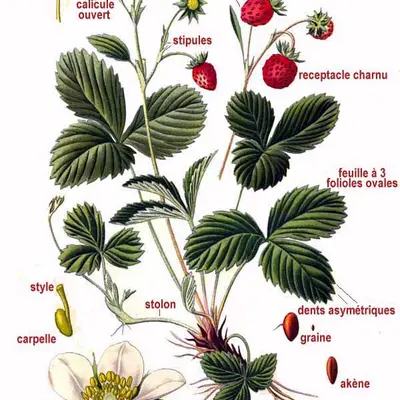
Flowers give way to achene-dotted ovoid fruits (strawberries) which mature to red fruit, 1/2 inch across. Seeds are embedded in the pits of the strawberries.
Color: Red/Burgundy. Type: Berry. Length: < 1 inch. Width: < 1 inch.
Garden value: Edible
Harvest time: Summer
Bloom time: Spring
Edibility: Wild strawberries have a sweet tart flavor.
Storage & Preservation
# Storage and Preservation
Summer Breeze berries keep longest at 32–34°F with 90–95% humidity in shallow ventilated containers lined with paper towels; avoid stacking deeper than two layers to prevent bruising. Expect a fresh shelf life of 5–7 days under these conditions, less at room temperature. Freezing works well for this variety—hull and freeze whole on a tray before transferring to bags for up to 10 months. For longer preservation, consider jam-making, which suits the berries' balanced sweetness and acidity. Alternatively, dehydration at 135–145°F produces concentrated flavor for snacking or reconstituting. These berries are particularly prone to mold if stored with excess moisture, so prioritize good air circulation and avoid washing until just before use. Quick-freezing whole berries preserves their texture remarkably well, making them ideal for smoothies or baking later.
History & Origin
Summer Breeze Cherry Blossom is an F1 hybrid developed through controlled cross-pollination. Listed in the Johnny's Selected Seeds catalog.
Origin: East Canada to Northern and Eastern United States and Mexico
Advantages
- +Stunning deep pink semidouble flowers bloom continuously from midsummer to frost.
- +No deadheading required; blooms persist while fruit develops simultaneously.
- +Produces edible flowers with mild strawberry flavor for garnish uses.
- +Compact 10-12 inch plant suits containers and small garden spaces.
- +Few runners minimize sprawl and maintenance compared to other strawberry varieties.
Considerations
- -Moderate growing difficulty requires attention to care and conditions.
- -Overwintering success uncertain; needs pampering in colder climates.
- -Limited hardiness range of Zones 3-10 excludes extremely cold regions.
- -Everbearing habit may produce fewer total berries than June-bearing types.
Companion Plants
Chives and garlic are the most practical companions here. Both are alliums, and their sulfur compounds disrupt the host-finding behavior of aphids and spider mites before those pests even land — NC State Extension lists spider mites as a genuine recurring problem on strawberries, so anything that interrupts their approach is worth planting. Keep alliums at the bed edge at 6–8 inch spacing so they don't compete for crown space. A garlic tea spray (steep 3–4 crushed cloves in a quart of water overnight, strain, apply directly to foliage) can also slow powdery mildew spread between spray intervals.
Comfrey earns its spot differently. Its roots go down 6 feet or more, pulling up calcium and potassium from well below the strawberry root zone, and chopped leaves break down fast into a mulch that feeds the bed without smothering the crowns. One or two plants at the corners is plenty — don't mix comfrey into the main planting, because a mature specimen will muscle out everything within 18 inches. Nasturtiums attract lacewings and hoverflies that feed on spider mite eggs, which is a more measurable benefit than the vague "pest confusion" they're usually credited with.
Black walnut is the one companion you don't want within 50 feet. Juglone — the allelopathic compound in walnut roots and decomposing leaf litter — is acutely toxic to Fragaria x ananassa. Grass rhizomes sneaking in from a lawn edge are a slower problem but just as stubborn: once they tangle into strawberry runners, clean removal is nearly impossible without pulling the whole bed.
Plant Together
Chives
Repels aphids and Japanese beetles while attracting beneficial pollinators
Comfrey
Deep roots bring nutrients to surface, leaves make excellent mulch and compost
Nasturtiums
Acts as trap crop for aphids and cucumber beetles, deters ants
Clover
Fixes nitrogen in soil and provides living mulch to retain moisture
Marigolds
Repels nematodes and various pest insects through natural compounds
Garlic
Deters borers, aphids, and fungal diseases with sulfur compounds
Lavender
Attracts beneficial insects and repels moths and other flying pests
Tansy
Repels ants, mice, and flying insects but plant away from harvest areas
Keep Apart
Black Walnut
Produces juglone toxin that inhibits growth and can kill cherry trees
Grass
Competes heavily for water and nutrients, especially harmful to young trees
Cherry Laurel
Can harbor similar pests and diseases, creating concentrated problem areas
Nutrition Facts
Per 100g serving. % Daily Value based on 2,000 calorie diet. Source: USDA FoodData Central (FDC #171719)
Pests & Disease Resistance
Common Pests
Slugs, spider mites, strawberry crown moth
Diseases
Powdery mildew, leaf scorch, red stele root rot
Troubleshooting Summer Breeze Cherry Blossom
What you'll see, why it happens, and what to do about it.
White powdery coating on leaf surfaces, spreading from older leaves outward, usually appearing mid-summer
Likely Causes
- Powdery mildew (Podosphaera aphanis) — a fungal pathogen that thrives in warm, dry days followed by cool, humid nights
- Poor airflow from tight 12-inch spacing or planting against a wall or fence
What to Do
- 1.Remove and trash (not compost) the worst-affected leaves immediately
- 2.Thin runners aggressively so air can move through the bed — a dense strawberry mat holds humidity right at leaf level
- 3.Apply a diluted potassium bicarbonate spray (1 tablespoon per gallon of water) every 7 days until symptoms stop spreading
Slime trails on fruit and foliage overnight; half-eaten berries found at or near soil level in the morning
Likely Causes
- Slugs (Deroceras reticulatum and related species) — most active during wet stretches and in dense plantings with heavy mulch
- Straw mulch that stays wet and gives slugs daytime cover directly under the fruit
What to Do
- 1.Scatter iron phosphate bait (Sluggo or equivalent) around the bed perimeter and between plants — reapply after rain
- 2.Pull mulch back a couple of inches from the crown of each plant so slugs have less shelter right at berry level
- 3.Set a shallow dish of beer near the bed at dusk; check and empty it each morning — not a complete fix, but it cuts pressure noticeably
Frequently Asked Questions
How long does it take Summer Breeze Cherry Blossom to produce berries?▼
Can you grow Summer Breeze Cherry Blossom in containers?▼
Is Summer Breeze Cherry Blossom good for beginner gardeners?▼
What do Summer Breeze Cherry Blossom edible flowers taste like?▼
When should I plant Summer Breeze Cherry Blossom?▼
What's special about Summer Breeze Cherry Blossom's growing habit?▼
Zone-by-Zone Planting Calendar
| Zone | Indoor Start | Transplant | Direct Sow | Harvest |
|---|---|---|---|---|
| Zone 3 | — | June – August | — | August – September |
| Zone 4 | — | June – July | — | August – September |
| Zone 5 | — | May – July | — | August – October |
| Zone 6 | — | May – July | — | July – October |
| Zone 7 | — | May – June | — | July – October |
| Zone 8 | — | April – June | — | June – November |
| Zone 9 | — | March – May | — | May – December |
| Zone 10 | — | March – April | — | May – December |
Growing Guides from Wind River Greens
Sources & References
External authority sources used in compiling this guide.
- BreederJohnny's Selected Seeds
- USDAUSDA FoodData Central
See the Methodology page for how this data is sourced, what's AI-assisted, and known limitations.