Legacy Blueberry
Vaccinium corymbosum 'Legacy'
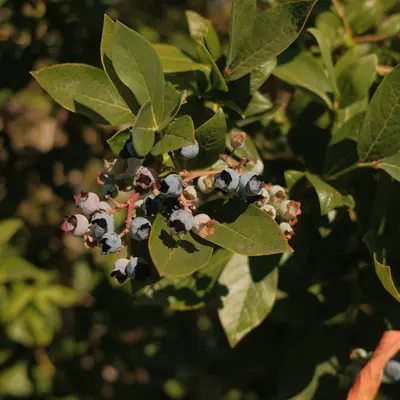
A late-season highbush blueberry prized for its enormous, firm berries that can reach the size of quarters. This vigorous variety produces consistently heavy crops of sweet, flavorful berries with excellent storage quality, making it perfect for fresh eating and preserving. Legacy's compact growth habit and beautiful fall foliage make it an attractive addition to any edible landscape.
Sun
Full sun to partial shade
Zones
3–8
USDA hardiness
Height
6-12 feet
Planting Timeline
Showing dates for Legacy Blueberry in USDA Zone 7
All Zone 7 berry →Zone Map
Click a state to update dates
Legacy Blueberry · Zones 3–8
Growing Details
Complete Growing Guide
Late-season Legacy blueberries fruit significantly later than standard highbush varieties, typically ripening in August through September, so ensure your location has sufficient frost-free days before planting. This cultivar thrives in acidic soil (pH 4.5-5.5) with excellent drainage and benefits from consistent moisture during fruit development. Legacy's vigor can lead to excessive vegetative growth if over-fertilized with nitrogen, so apply restraint with fertilizer to encourage fruiting rather than foliage. While generally disease-resistant, monitor for mummy berry in humid climates by removing infected fruit promptly. The firm berries resist cracking even after rain, a significant advantage over softer late-season varieties. Prune lightly in late winter, removing only the weakest canes, since Legacy naturally maintains a compact, attractive form that requires less corrective pruning than sprawling cultivars.
Light: Full sun (6 or more hours of direct sunlight a day), Partial Shade (Direct sunlight only part of the day, 2-6 hours). Soil: Clay, Loam (Silt), Sand. Soil pH: Acid (<6.0). Drainage: Good Drainage, Moist, Occasionally Dry. Height: 6 ft. 0 in. - 12 ft. 0 in.. Spread: 6 ft. 0 in. - 10 ft. 0 in.. Spacing: 6-feet-12 feet. Growth rate: Medium. Maintenance: Medium. Propagation: Seed, Stem Cutting. Regions: Mountains, Piedmont.
Harvesting
Peak readiness for Legacy blueberries arrives when berries achieve their distinctive deep blue-purple color and reach nearly quarter-size, feeling firm yet yielding slightly to gentle pressure. Unlike single-harvest varieties, Legacy produces continuously throughout late season, allowing you to pick ripe berries every few days rather than all at once. The most reliable timing tip: harvest only berries that roll freely from the stem with minimal finger pressure, as this indicates full sugar development and optimal flavor. Premature picking results in tart, mealy fruit, so patience during the ripening window ensures the sweet, rich taste this cultivar is known for.
Blue to purple small round fruits that show up in August, ripening from a green to pink color to full ripeness. Females cannot produce fruit on their own. Fruit is edible.
Color: Blue, Green, Pink, Purple/Lavender. Type: Berry. Length: < 1 inch. Width: < 1 inch.
Garden value: Edible
Harvest time: Summer
Edibility: The berries are edible and have been used raw, sun-dried. smoke-dried, and baked. They have high iron content.
Storage & Preservation
Fresh Legacy berries store exceptionally well due to their firm texture and thick skin. Store unwashed berries in shallow containers in the refrigerator at 32-35°F, where they'll maintain quality for 2-3 weeks—significantly longer than softer varieties. Line containers with paper towels to absorb excess moisture and prevent mold.
For freezing, spread clean, dry berries on baking sheets and freeze individually before transferring to freezer bags. Legacy's firm flesh maintains texture better than most varieties when thawed. The large size also makes them excellent for dehydrating—slice thicker berries in half for even drying.
Legacy's sweet flavor and low water content make superior jams and preserves with less added pectin needed. The berries hold their shape well in baked goods and won't create soggy muffins like some varieties. Their concentrated flavor intensifies when cooked, making them particularly valuable for sauces and reductions.
History & Origin
Legacy Blueberry emerged from the University of Florida's blueberry breeding program in the 1990s, developed to extend the commercial harvest season into late fall when premium berry prices prevail. Bred by Paul Lyrene and his colleagues, Legacy represents a deliberate cross aimed at combining superior fruit size and firmness with the cold-hardiness needed for northern highbush cultivation. The variety draws from the established germplasm of Vaccinium corymbosum breeding lines, inheriting its vigor and productivity while introducing the exceptionally large berry characteristic that distinguishes it in the market. Since its release, Legacy has become widely adopted by both commercial orchards and home gardeners seeking late-season production without sacrificing berry quality.
Origin: Eastern North America
Advantages
- +Exceptionally large berries reaching quarter-size with excellent firm texture
- +Consistently heavy yields make Legacy ideal for commercial and home production
- +Sweet flavor with mild tartness and rich taste profile appeals widely
- +Compact growth habit fits small spaces while providing attractive fall foliage
- +Outstanding storage quality preserves berries longer than most highbush varieties
Considerations
- -Susceptible to mummy berry and anthracnose diseases requiring vigilant management
- -Requires well-drained soil or develops root rot in wet conditions
- -Birds aggressively target large berries necessitating netting for crop protection
- -Moderate difficulty level demands experience with pruning and disease prevention
Companion Plants
The best companions for Legacy blueberry all share one trait: they're comfortable in the same acidic, 4.5–5.5 pH soil that blueberries demand. Azaleas and rhododendrons are the obvious choices — they're ericaceous plants like blueberries, so planting them nearby doesn't force any soil amendment compromises. Pine trees pull similar duty: their needle drop slowly acidifies the surrounding soil over years, and their root systems tend to run wide and shallow rather than crowding directly into the blueberry's zone. Cranberry slots in for the same reason — same pH preference, no chemical friction. Thyme as low groundcover around the base suppresses weeds without shading the roots, and marigolds along the bed edge get credited with deterring aphids, though that one's more farmer folklore than settled science.
Strawberries are a reasonable fit in terms of soil pH and they fill the space under a blueberry's canopy efficiently. Both crops want consistent moisture, though — in a dry stretch, they'll compete hard, so don't skip irrigation and expect either one to pick up the slack for the other.
Black walnut is a flat-out problem. It produces juglone, a compound that interferes with root respiration in sensitive plants, and blueberries are on that list. In our zone 7 Georgia gardens, established walnuts can have root spreads well past the drip line, so "nearby" is riskier than it looks. Tomatoes and brassicas aren't allelopathic, but they want soil pH above 6.0 — grow them close and you're constantly pulling the soil chemistry in opposite directions, which means one of them is always losing.
Plant Together
Azalea
Shares similar acidic soil requirements and shallow root system
Rhododendron
Thrives in same acidic conditions and provides wind protection
Pine Trees
Naturally acidifies soil through needle drop, creates ideal pH
Cranberry
Compatible acid-loving plant that shares similar growing conditions
Thyme
Attracts beneficial pollinators and repels harmful insects
Marigold
Deters nematodes and other soil-borne pests naturally
Strawberry
Ground cover that retains soil moisture and attracts pollinators
Ferns
Thrives in acidic conditions and provides natural mulch layer
Keep Apart
Black Walnut
Produces juglone toxin that severely inhibits blueberry growth
Tomato
Requires alkaline soil conditions opposite to blueberry needs
Brassicas
Prefer neutral to alkaline soil, compete for different nutrients
Nutrition Facts
Per 100g serving. % Daily Value based on 2,000 calorie diet. Source: USDA FoodData Central (FDC #2346411)
Pests & Disease Resistance
Resistance
Good resistance to mummy berry and stem blight
Common Pests
Birds, aphids, scale insects, blueberry maggot
Diseases
Mummy berry, anthracnose, root rot in poorly drained soils
Troubleshooting Legacy Blueberry
What you'll see, why it happens, and what to do about it.
Berries shriveling and turning brown before fully ripening, often with a hard, mummified look by early summer
Likely Causes
- Mummy berry (Monilinia vaccinii-corymbosi) — a fungal disease that overwinters in infected fruit on the ground and shoots spores onto new growth in spring
- Wet spring weather that keeps spore counts high around bloom time
What to Do
- 1.Rake up and dispose of any mummified fruit from the previous season before buds break — don't compost them, bag and trash them
- 2.Apply a layer of fresh wood chip mulch (2-4 inches) over the soil surface in late winter to physically block spore release
- 3.If you've had repeated infections, apply a copper-based fungicide at early bud swell, before bloom, following label rates
Leaves yellowing between the veins while the veins themselves stay green, most visible on new growth
Likely Causes
- Iron chlorosis caused by soil pH above 5.5 — Legacy blueberries need pH 4.5–5.5, and at higher pH levels iron becomes chemically unavailable even if it's present in the soil
- Planting in soil that was never acidified before establishment
What to Do
- 1.Test your soil pH first (your county extension office can run this for a few dollars) — don't guess
- 2.Work elemental sulfur into the root zone to bring pH down; NC State Extension recommends applying sulfur in fall so it has time to react before the next growing season
- 3.For a faster short-term fix, drench the root zone with a chelated iron solution, which stays plant-available even at higher pH
Frequently Asked Questions
How long does Legacy blueberry take to produce fruit?▼
Can you grow Legacy blueberry in containers?▼
What does Legacy blueberry taste like compared to other varieties?▼
When should I plant Legacy blueberry bushes?▼
Is Legacy blueberry good for beginners?▼
How big do Legacy blueberry bushes get?▼
Zone-by-Zone Planting Calendar
Growing Guides from Wind River Greens
Sources & References
External authority sources used in compiling this guide.
See the Methodology page for how this data is sourced, what's AI-assisted, and known limitations.