Black Pearl Ornamental Pepper
Capsicum annuum 'Black Pearl'
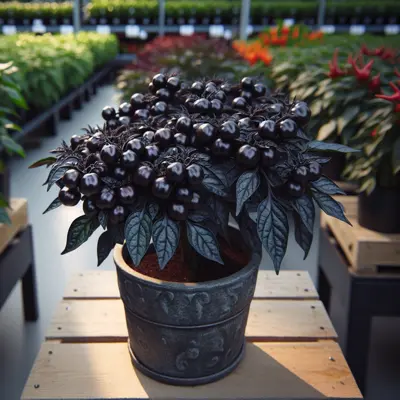
A stunning ornamental pepper with jet-black foliage and small, round berries that mature from black to red. Winner of the All-America Selections award, this compact plant serves double duty as both landscape accent and edible crop. The berries pack serious heat while adding dramatic color to gardens and containers.
Harvest
70-80d
Days to harvest
Sun
Full sun
Zones
4–11
USDA hardiness
Height
1-3 feet
Planting Timeline
Showing dates for Black Pearl Ornamental Pepper in USDA Zone 7
All Zone 7 berry →Zone Map
Click a state to update dates
Black Pearl Ornamental Pepper · Zones 4–11
Growing Details
Complete Growing Guide
Black Pearl ornamental peppers demand warm soil and consistent temperatures above 70°F to germinate reliably, so start seeds indoors 8–10 weeks before your last frost date rather than direct seeding. These plants thrive in full sun with well-draining soil enriched with compost, and their compact, ornamental habit means they perform exceptionally well in containers where you can control moisture and heat retention. Unlike standard pepper varieties, Black Pearl's dark foliage makes it more susceptible to sunscald on exposed fruit during extreme heat waves, so afternoon shade in hot climates prevents white patches on ripening berries. Watch for spider mites, which are attracted to the dry conditions this cultivar prefers—mist foliage early in the morning if infestations appear. One practical advantage: deadheading spent flowers encourages denser branching and extends the ornamental display well into fall, maximizing both visual impact and berry production in a single season.
Light: Full sun (6 or more hours of direct sunlight a day). Soil: Clay, High Organic Matter, Loam (Silt), Sand. Soil pH: Acid (<6.0), Alkaline (>8.0), Neutral (6.0-8.0). Drainage: Good Drainage. Height: 1 ft. 0 in. - 3 ft. 8 in.. Spread: 0 ft. 6 in. - 1 ft. 0 in.. Spacing: 12 inches-3 feet. Growth rate: Medium. Maintenance: Low. Propagation: Seed. Regions: Coastal, Mountains, Piedmont.
Harvesting
Black Pearl peppers reach peak harvest readiness when they transition from glossy jet-black to a deep crimson red, a color shift that typically occurs 70-80 days after planting. The berries should feel firm yet yield slightly to gentle pressure, indicating maximum capsaicinoid development and mature seed formation. This cultivar responds exceptionally well to continuous harvesting, where regular picking of ripe peppers encourages prolific branching and extended production throughout the growing season. Rather than waiting for all peppers to ripen simultaneously, harvest individual berries as they turn red while leaving immature black peppers on the plant to continue developing; this staggered approach maintains plant vigor and prevents the energy drain of supporting an overwhelming fruit load at once. For optimal timing, pick peppers in early morning when their waxy skin is fully hydrated, which enhances their visual appeal and extends their shelf life.
Fruits are a non-pulpy berry and vary considerably across cultivars. Some are long, thin, bright red, and spicy; others are thick, large, and sweet-tasting; others still are small and in ornamental shapes and colors, grown as decoration.
Color: Black, Gold/Yellow, Green, Orange, Red/Burgundy. Type: Berry. Length: 1-3 inches. Width: < 1 inch.
Garden value: Edible, Good Dried, Showy
Harvest time: Summer
Edibility: Fruits edible, but spiciness is unpredictable in intensity.
Storage & Preservation
Store fresh Black Pearl peppers in a cool, dry place between 50–60°F with moderate humidity, or refrigerate them in a perforated plastic bag in the crisper drawer where they'll keep for up to three weeks. For longer storage, drying is ideal given their intended use as a dried spice; hang whole peppers in bundles in a warm, well-ventilated area until completely brittle, then crumble or grind as needed. Freezing works well too—slice or dice them raw on a tray, freeze solid, then transfer to freezer bags for up to eight months. Hot sauce production suits this variety perfectly; ferment or cook down fresh peppers with salt and vinegar for a shelf-stable condiment. Because Black Pearls are exceptionally pungent, wear gloves during processing and avoid touching your face; the capsaicin concentration makes them more irritating than milder pepper varieties.
History & Origin
The Black Pearl ornamental pepper emerged from ornamental pepper breeding programs that gained momentum in the early 2000s, though precise documentation of its original breeder remains limited in publicly available sources. As a Capsicum annuum cultivar, it belongs to the same species as most common peppers but was specifically selected for dramatic dark foliage and bicolor fruit characteristics that appeal to both gardeners and culinary enthusiasts. Its All-America Selections award indicates professional horticultural recognition, suggesting development through established seed companies or university breeding initiatives rather than traditional heritage lineage. The variety represents modern ornamental pepper breeding's focus on dual-purpose plants that combine aesthetic appeal with functional heat and flavor.
Origin: Tropical North and South America
Advantages
- +Stunning jet-black foliage creates dramatic visual interest in gardens and containers
- +Award-winning All-America Selections variety with proven ornamental and culinary performance
- +Compact plant size makes it ideal for small spaces and container gardening
- +Edible berries transition from black to vibrant red for extended color display
- +Fast maturation in 70-80 days provides quick gratification for eager gardeners
Considerations
- -Highly susceptible to multiple serious diseases including bacterial spot and mosaic virus
- -Vulnerable to multiple pest species including pepper weevils and flea beetles
- -Extreme heat level may be too intense for most culinary applications
Companion Plants
Marigolds (Tagetes patula specifically) are worth planting at 12-inch intervals around Black Pearl — their root secretions and scent deter thrips and aphids, and the flowers draw in predatory wasps that work the aphid population down without any spray on your end. Basil is a reasonable neighbor for different reasons: it doesn't do much measurable pest work on peppers, but it occupies the same water budget (about 1 inch a week), stays shallow-rooted enough to avoid competing with pepper roots, and keeps the bed productive without crowding.
Keep fennel out entirely — it releases allelopathic compounds that stunt most vegetables, and peppers don't get a pass. Brassicas are a different problem: they share flea beetles and aphids with Capsicum annuum, so putting them close pulls more pest pressure toward your Black Pearl plants than you'd otherwise have.
Plant Together
Basil
Repels aphids, spider mites, and thrips while enhancing pepper growth
Marigold
Deters nematodes, aphids, and whiteflies with natural compounds
Nasturtium
Acts as trap crop for aphids and cucumber beetles, repels squash bugs
Parsley
Attracts beneficial insects like hoverflies and parasitic wasps
Oregano
Repels spider mites and aphids while providing ground cover
Carrots
Loosens soil for pepper roots and doesn't compete for nutrients
Chives
Repels aphids and improves pepper flavor and growth
Petunias
Natural pest deterrent against hornworms, aphids, and squash bugs
Keep Apart
Fennel
Inhibits pepper growth through allelopathic compounds
Brassicas
Compete for similar nutrients and may stunt pepper development
Black Walnut
Produces juglone toxin that severely stunts or kills pepper plants
Nutrition Facts
Per 100g serving. % Daily Value based on 2,000 calorie diet. Source: USDA FoodData Central (FDC #169118)
Pests & Disease Resistance
Resistance
Good general disease resistance
Common Pests
Aphids, flea beetles, pepper weevil
Diseases
Bacterial spot, anthracnose, mosaic virus
Troubleshooting Black Pearl Ornamental Pepper
What you'll see, why it happens, and what to do about it.
Small, irregular holes punched through leaves, mostly on younger growth, appearing soon after transplant
Likely Causes
- Flea beetles (Epitrix hirtipennis or related species) — tiny, jumping beetles that feed heavily on stressed transplants
- Transplant shock leaving the plant too weak to outpace the damage
What to Do
- 1.Cover transplants with floating row cover (Agribon AG-19 or similar) for the first 2–3 weeks after setting out — flea beetles are worst early in the season
- 2.Side-dress with a balanced fertilizer to push vigorous new growth; a plant that hits 12 inches quickly shrugs off flea beetle damage that would stall a weak one
- 3.If pressure is severe, apply kaolin clay (Surround WP) as a physical deterrent; reapply after rain
Dark, water-soaked spots on fruit that turn sunken and orange-brown at harvest, sometimes with a salmon-colored spore mass in the center
Likely Causes
- Anthracnose (Colletotrichum capsici or C. gloeosporioides) — a fungal disease that infects fruit quietly during warm, wet weather and shows up at or near ripening
- Overhead irrigation wetting fruit repeatedly throughout the season
What to Do
- 1.Switch to drip irrigation or soaker hoses; keeping water off the fruit breaks the infection cycle
- 2.Pick fruit as soon as it colors up fully — anthracnose damage accelerates on fruit left on the plant past peak ripeness
- 3.At season's end, pull and bag all plant debris rather than tilling it in; Colletotrichum overwinters on infected stems and mummified fruit
Frequently Asked Questions
How hot are Black Pearl ornamental peppers?▼
Can you grow Black Pearl peppers in containers?▼
Are Black Pearl pepper plants perennial?▼
When do Black Pearl peppers turn from black to red?▼
Is Black Pearl pepper good for beginners?▼
How long does it take to grow Black Pearl peppers?▼
Zone-by-Zone Planting Calendar
| Zone | Indoor Start | Transplant | Direct Sow | Harvest |
|---|---|---|---|---|
| Zone 4 | — | June – July | — | August – September |
| Zone 5 | — | May – July | — | August – October |
| Zone 6 | — | May – July | — | July – October |
| Zone 7 | — | May – June | — | July – October |
| Zone 8 | — | April – June | — | June – November |
| Zone 9 | — | March – May | — | May – December |
| Zone 10 | — | March – April | — | May – December |
| Zone 11 | — | February – March | — | April – December |
Growing Guides from Wind River Greens
Sources & References
External authority sources used in compiling this guide.
See the Methodology page for how this data is sourced, what's AI-assisted, and known limitations.