Elan
Fragaria x ananassa
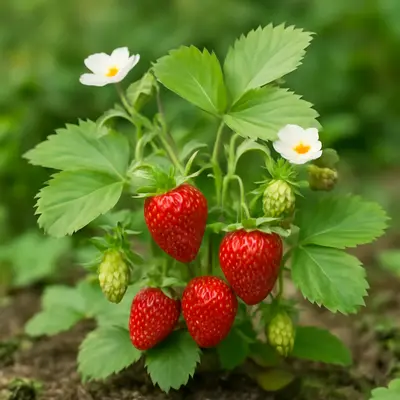
Elan has a vigorous habit (many runners) and white flowers that produce medium-size, conical berries with intensely sweet flavor. Suitable for field, greenhouse, and container production. Produces fruit the first year and bears from June through frost. Grows best in Zones 5-8.Edible Flowers: Flowers add a mild, strawberry-like flavor if sprinkled on salads or when used as a garnish for drinks and desserts.
Harvest
100-120d
Days to harvest
Sun
Full sun
Zones
5–9
USDA hardiness
Height
0 ft. 4 in. - 0 ft. 9 in.
Planting Timeline
Showing dates for Elan in USDA Zone 7
All Zone 7 berry →Zone Map
Click a state to update dates
Elan · Zones 5–9
Growing Details
Complete Growing Guide
Elan has a vigorous habit (many runners) and white flowers that produce medium-size, conical berries with intensely sweet flavor. Suitable for field, greenhouse, and container production. Produces fruit the first year and bears from June through frost. Grows best in Zones 5-8.Edible Flowers: Flowers add a mild, strawberry-like flavor if sprinkled on salads or when used as a garnish for drinks and desserts. According to Johnny's Selected Seeds, Elan is 100-120 to fruit to maturity, perennial, hybrid (f1). Notable features: Greenhouse Performer, Grows Well in Containers, Edible Flowers.
Light: frah-GAR-ee-ah vir-jin-ee-AN-uh. Soil: Clay, High Organic Matter, Loam (Silt). Drainage: Good Drainage, Moist, Occasionally Dry. Height: 0 ft. 4 in. - 0 ft. 9 in.. Spread: 1 ft. 0 in. - 2 ft. 0 in.. Growth rate: Medium. Maintenance: Medium. Propagation: Division. Regions: Coastal, Mountains, Piedmont.
Harvesting
Elan reaches harvest at 100-120 to fruit from sowing per Johnny's Selected Seeds.
Flowers give way to achene-dotted ovoid fruits (strawberries) which mature to red fruit, 1/2 inch across. Seeds are embedded in the pits of the strawberries.
Color: Red/Burgundy. Type: Berry. Length: < 1 inch. Width: < 1 inch.
Garden value: Edible
Harvest time: Summer
Bloom time: Spring
Edibility: Wild strawberries have a sweet tart flavor.
Storage & Preservation
Elan berries store best at 32–34°F with 90–95% humidity in shallow containers lined with paper towels to absorb excess moisture and prevent bruising. Expect a fresh shelf life of 5–7 days when kept refrigerated; use within 2–3 days for peak flavor and firmness. For longer preservation, freezing works exceptionally well—hull and freeze on trays before bagging to prevent clumping—maintaining quality for up to 12 months. Elan also preserves beautifully as jam or compote due to its balanced sugar-acid profile, requiring standard canning methods and achieving excellent gel set. Dried Elan berries concentrate their sweetness and store shelf-stable for several months in airtight containers. A practical tip: harvest Elan in early morning when berries are cool and fully firm; this significantly extends refrigerated shelf life compared to afternoon-picked fruit.
History & Origin
Elan is an F1 hybrid developed through controlled cross-pollination. Listed in the Johnny's Selected Seeds catalog.
Origin: East Canada to Northern and Eastern United States and Mexico
Advantages
- +Produces fruit in the first year, ideal for impatient gardeners
- +Intensely sweet flavor makes Elan superior to many commercial varieties
- +Vigorous runner production enables easy propagation and expansion
- +Bears continuously from June through frost for extended harvests
- +Versatile growing options work in fields, greenhouses, and containers
Considerations
- -Abundant runners require active management to prevent garden takeover
- -Moderate difficulty demands consistent care and attention from growers
- -Susceptible to common strawberry diseases in humid climates
Companion Plants
Borage draws in predatory insects — lacewings, hoverflies — that work through aphid and spider mite populations without any effort on your part, and it doesn't compete with strawberries' shallow 6-inch root zone. Chives and garlic both off-gas sulfur compounds that aphids tend to avoid, so a border planting of either pulls double duty as a low-maintenance deterrent. Clover in the pathways fixes nitrogen at the surface where Elan's feeder roots can actually reach it. Black walnut is the one to keep far off — juglone seeps through the soil and will stunt or kill strawberry plants before you realize what's happening.
Plant Together
Clover
Fixes nitrogen in soil and provides ground cover to suppress weeds
Chives
Repels aphids and Japanese beetles while attracting beneficial insects
Borage
Attracts pollinators and beneficial insects, may improve berry flavor
Marigolds
Repel nematodes and various harmful insects through natural compounds
Pine Trees
Provide acidic needle mulch that berries prefer for optimal soil pH
Garlic
Natural pest deterrent that repels aphids, spider mites, and small mammals
Strawberries
Share similar growing conditions and help maximize space in berry gardens
Comfrey
Deep taproot brings nutrients to surface, leaves make excellent mulch
Keep Apart
Black Walnut
Releases juglone toxin that inhibits growth and can kill berry plants
Brassicas
Compete for nutrients and may inhibit berry root development
Fennel
Allelopathic compounds inhibit growth of most garden plants including berries
Nutrition Facts
Per 100g serving. % Daily Value based on 2,000 calorie diet. Source: USDA FoodData Central (FDC #167762)
Pests & Disease Resistance
Common Pests
Spider mites, slugs, aphids
Diseases
Powdery mildew, leaf spot, gray mold
Troubleshooting Elan
What you'll see, why it happens, and what to do about it.
White powdery coating on leaves, starting on upper surfaces, usually mid-summer
Likely Causes
- Powdery mildew (Podosphaera aphanis) — favored by warm days, cool nights, and poor airflow
- Crowded runners that haven't been thinned, trapping humidity at crown level
What to Do
- 1.Remove the worst-affected leaves and dispose of them — don't compost them
- 2.Thin runners aggressively so plants sit at least 18 inches apart
- 3.Apply a dilute potassium bicarbonate spray (1 tablespoon per gallon) every 7 days until the flush clears
Berries collapsing into gray-brown mush before or just after harvest, especially after a stretch of wet weather
Likely Causes
- Gray mold (Botrytis cinerea) — spores move fast once humidity stays above 90% for 8+ hours
- Fruit sitting in contact with wet mulch or soil
What to Do
- 1.Pick every ripe and overripe berry immediately — Botrytis spreads from soft fruit to healthy fruit overnight
- 2.Keep straw mulch pulled slightly back from the crowns so the surface dries faster between waterings
- 3.If infection is heavy, a copper fungicide applied at first sign can slow spread — follow label rates
Ragged holes in ripening berries or in young leaves, with a slime trail visible in the morning
Likely Causes
- Slugs (Deroceras reticulatum and related species) — almost always worse in mulched beds with consistent moisture
- Low-lying planting sites that stay damp overnight
What to Do
- 1.Set out iron phosphate bait (Sluggo or equivalent) in the evening, scattered around the bed perimeter — reapply after rain
- 2.Pull mulch back 2 inches from the crowns so slugs lose their daytime cover
- 3.A ring of diatomaceous earth around individual crowns helps during dry spells, but loses effectiveness once wet
Frequently Asked Questions
How long does it take Elan berries to fruit from planting?▼
Can you grow Elan strawberries in containers?▼
What does Elan strawberry taste like?▼
Is Elan a good strawberry variety for beginners?▼
What are the best growing zones for Elan strawberries?▼
How much sunlight does Elan strawberry need?▼
Zone-by-Zone Planting Calendar
| Zone | Indoor Start | Transplant | Direct Sow | Harvest |
|---|---|---|---|---|
| Zone 3 | — | June – August | — | September – September |
| Zone 4 | — | June – July | — | August – September |
| Zone 5 | — | May – July | — | August – October |
| Zone 6 | — | May – July | — | August – October |
| Zone 7 | — | May – June | — | July – October |
| Zone 8 | — | April – June | — | July – November |
| Zone 9 | — | March – May | — | June – December |
| Zone 10 | — | March – April | — | May – December |
Growing Guides from Wind River Greens
Sources & References
External authority sources used in compiling this guide.
- BreederJohnny's Selected Seeds
- USDAUSDA FoodData Central
See the Methodology page for how this data is sourced, what's AI-assisted, and known limitations.