Jewel Black Raspberry
Rubus occidentalis 'Jewel'
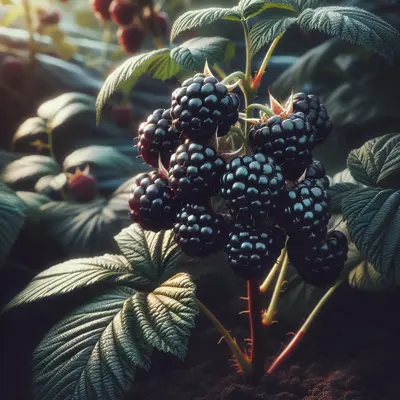
A premium black raspberry variety developed by Cornell University, prized for its exceptional sweet-tart flavor and firm, glossy berries. Jewel produces abundant crops of large, jet-black fruits that hold their shape beautifully for fresh eating or baking. This hardy variety offers excellent disease resistance and reliable harvests that make it a favorite among home gardeners.
Harvest
60-70d
Days to harvest
Sun
Full sun to partial shade
Zones
4–8
USDA hardiness
Height
3-6 feet
Planting Timeline
Showing dates for Jewel Black Raspberry in USDA Zone 7
All Zone 7 berry →Zone Map
Click a state to update dates
Jewel Black Raspberry · Zones 4–8
Growing Details
Complete Growing Guide
Light: Full sun (6 or more hours of direct sunlight a day), Partial Shade (Direct sunlight only part of the day, 2-6 hours). Soil: High Organic Matter. Drainage: Moist, Occasionally Dry. Height: 3 ft. 0 in. - 6 ft. 0 in.. Spread: 4 ft. 0 in. - 8 ft. 0 in.. Growth rate: Rapid. Maintenance: Low. Propagation: Seed, Stem Cutting. Regions: Coastal, Mountains, Piedmont.
Harvesting
This compound drupe is initially white, later becomes red, and finally turns black-purple when it is mature. Each drupe consists of multiple drupelets, each drupelet containing a single seed. Fruits are available June-July.
Color: Black, Red/Burgundy. Type: Drupe. Length: < 1 inch.
Harvest time: Summer
Edibility: The fleshy fruits are sweet and slightly tart in flavor; they detach cleanly and easily from their receptacles. Excellent flavor.
Storage & Preservation
Fresh Jewel black raspberries keep best unwashed in the refrigerator for 3-5 days when stored in shallow containers lined with paper towels. Never wash berries until ready to eat, as moisture accelerates spoilage. For optimal flavor, allow refrigerated berries to come to room temperature for 15-20 minutes before serving.
For long-term storage, freeze berries individually on parchment-lined baking sheets for 2-3 hours, then transfer to freezer bags. This prevents clumping and maintains Jewel's distinctive firm texture when thawed. Frozen berries retain quality for up to 12 months.
Jewel's intense flavor and natural pectin content make it exceptional for jam-making—the berries hold their shape beautifully in preserves. Dehydrate at 135°F for 12-18 hours to create intensely flavored dried berries perfect for trail mixes and baking. The variety's complex wine-like notes also make it excellent for fruit wines and vinegars.
Advantages
- +Attracts: Bees, Butterflies, Pollinators, Small Mammals, Songbirds
- +Edible: The fleshy fruits are sweet and slightly tart in flavor; they detach cleanly and easily from their receptacles. Excellent flavor.
- +Fast-growing
- +Low maintenance
Companion Plants
Garlic and chives are the workhorses here. Both release sulfur compounds that deter aphids and Japanese beetles — two of the more persistent problems on black raspberries — and they don't compete aggressively for root space since they stay shallow. Plant them at the base of the row, not right up against the crowns. Comfrey is worth including at the row ends: its deep taproot pulls calcium and potassium up from the subsoil, and the cut leaves break down fast as a mulch. Marigolds (Tagetes patula specifically) draw in predatory wasps that parasitize raspberry crown borer larvae before they can do their two-year damage underground.
Black walnut is non-negotiable — keep your Jewel planting at least 50 feet away, full stop. The roots and decaying hulls release juglone, and NC State Extension flags raspberries as highly susceptible; even a few years after a walnut is removed, the soil holds enough juglone to set plants back hard. Skip tomatoes as neighbors for a different reason: they share Verticillium dahliae as a soil host, so ground that's grown tomatoes in the last 3-4 years carries real wilt risk for a planting you're hoping will produce for a decade.
Plant Together
Garlic
Repels aphids, spider mites, and other pests while improving soil health
Chives
Natural fungicide properties help prevent powdery mildew and other fungal diseases
Marigolds
Repel nematodes and aphids while attracting beneficial predatory insects
Tansy
Deters ants, mice, and flying insects that can damage berries
Comfrey
Deep taproot brings nutrients to surface, acts as dynamic accumulator for potassium
Nasturtiums
Trap crop for aphids and cucumber beetles, adds nitrogen to soil
Yarrow
Attracts beneficial insects and improves soil nutrients through deep root system
Rue
Strong scent repels many insect pests and small mammals
Keep Apart
Black Walnut
Produces juglone which is toxic to raspberry plants and inhibits growth
Tomatoes
Share verticillium wilt disease and compete for similar nutrients
Wild Cherry
Attracts same pests and can harbor diseases that affect raspberry plants
Nutrition Facts
Per 100g serving. % Daily Value based on 2,000 calorie diet. Source: USDA FoodData Central (FDC #2346410)
Pests & Disease Resistance
Resistance
Good resistance to anthracnose and powdery mildew
Common Pests
Japanese beetles, raspberry crown borer, aphids, spider mites
Diseases
Cane blight, verticillium wilt, root rot in poorly drained soils
Troubleshooting Jewel Black Raspberry
What you'll see, why it happens, and what to do about it.
Canes wilting and collapsing mid-season, with dark brown discoloration just under the bark at the base
Likely Causes
- Raspberry crown borer (Pennisetia marginata) — larvae tunnel into the crown and lower canes over 2 years
- Cane blight (Leptosphaeria coniothyrium) — fungal infection entering through pruning wounds or mechanical damage
What to Do
- 1.Cut out and destroy any affected canes at ground level — don't compost them
- 2.Inspect the crown for sawdust-like frass, which confirms crown borer; dig out and destroy infested crowns if the planting is small enough
- 3.Disinfect pruning shears with 70% isopropyl alcohol between cuts to avoid spreading cane blight
Leaves cupping downward or showing a sticky residue on upper surfaces, with small clusters of soft-bodied insects on new growth
Likely Causes
- Aphids (commonly Amphorophora agathonica on Rubus) — cluster on tender shoot tips and undersides of young leaves
- Ants farming aphid colonies, which protects them from predators and makes infestations worse
What to Do
- 1.Knock aphids off with a firm spray of water — do this in the morning so foliage dries before evening
- 2.If populations are heavy, apply insecticidal soap directly to the colonies; repeat every 5-7 days until pressure drops
- 3.Check for ant trails leading up the canes and use a sticky barrier (like Tanglefoot) around the base to cut off their access
New canes yellowing from the bottom up, stunted growth, and plants declining even with adequate water — especially in beds that previously grew tomatoes or potatoes
Likely Causes
- Verticillium wilt (Verticillium dahliae) — soil-borne fungus that persists for years and is especially common in ground that's hosted nightshades
- Poor drainage compounding root stress and making plants more susceptible to secondary infection
What to Do
- 1.There's no cure once a plant is infected — remove and dispose of it; don't replant Rubus in that spot for at least 4 years
- 2.Before establishing a new bed, avoid ground with a history of tomatoes, peppers, eggplant, or strawberries — all are verticillium hosts
- 3.Improve drainage by raising beds 8-10 inches or amending with coarse compost before planting
Frequently Asked Questions
How long does Jewel black raspberry take to produce fruit?▼
Can you grow Jewel black raspberries in containers?▼
What does Jewel black raspberry taste like compared to red raspberries?▼
When should I plant Jewel black raspberry canes?▼
Is Jewel black raspberry good for beginners?▼
Jewel vs Cumberland black raspberry - what's the difference?▼
Zone-by-Zone Planting Calendar
Growing Guides from Wind River Greens
Sources & References
External authority sources used in compiling this guide.
- ExtensionNC State Extension
- USDAUSDA FoodData Central
See the Methodology page for how this data is sourced, what's AI-assisted, and known limitations.