Bluecrop Blueberry
Vaccinium corymbosum 'Bluecrop'
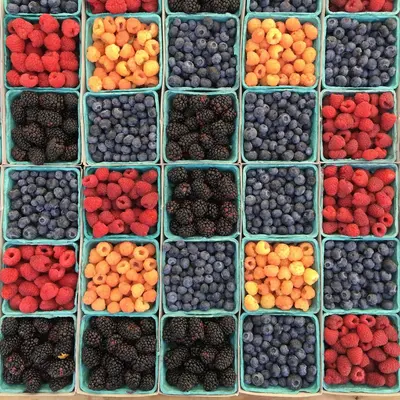
The gold standard of highbush blueberries and America's most widely planted variety for good reason. This mid-season producer yields large, flavorful berries with excellent storage quality and consistent annual crops. Bluecrop's exceptional cold hardiness, disease resistance, and reliable performance make it the perfect choice for beginner blueberry growers.
Sun
Full sun to partial shade
Zones
3–8
USDA hardiness
Height
6-12 feet
Planting Timeline
Showing dates for Bluecrop Blueberry in USDA Zone 7
All Zone 7 berry →Zone Map
Click a state to update dates
Bluecrop Blueberry · Zones 3–8
Growing Details
Complete Growing Guide
Bluecrop blueberries fruit in mid-season, typically two to three weeks after early varieties, making them ideal for extending your harvest window when paired with other cultivars. This variety thrives in acidic soil (pH 4.5–5.5) with consistent moisture and full sun exposure of at least six hours daily. Bluecrop demonstrates remarkable resistance to mummy berry and stem canker compared to other highbush types, though it can still develop leaf spot in humid conditions—ensure good air circulation and avoid overhead watering. One key tendency: Bluecrop produces heavily and consistently, so thin young branches during the first two years to encourage a strong framework rather than exhausting the plant with excessive fruit. A practical tip is to plant at least two compatible varieties nearby for cross-pollination, which significantly boosts berry size and yield even though Bluecrop can self-pollinate.
Light: Full sun (6 or more hours of direct sunlight a day), Partial Shade (Direct sunlight only part of the day, 2-6 hours). Soil: Clay, Loam (Silt), Sand. Soil pH: Acid (<6.0). Drainage: Good Drainage, Moist, Occasionally Dry. Height: 6 ft. 0 in. - 12 ft. 0 in.. Spread: 6 ft. 0 in. - 10 ft. 0 in.. Spacing: 6-feet-12 feet. Growth rate: Medium. Maintenance: Medium. Propagation: Seed, Stem Cutting. Regions: Mountains, Piedmont.
Harvesting
Bluecrop berries reach peak harvest readiness when they display a deep, uniform blue color with a silvery bloom coating and feel slightly soft to gentle finger pressure, typically reaching three-quarter inch diameter. Rather than harvesting all berries at once, pick Bluecrop continuously over several weeks during mid-season, returning to plants every three to four days as new fruits ripen, which extends your harvest window and concentrates flavor in each picking. For optimal results, harvest in early morning after dew dries but before afternoon heat, as cooler berries store better and maintain firmness during transport and refrigeration.
Blue to purple small round fruits that show up in August, ripening from a green to pink color to full ripeness. Females cannot produce fruit on their own. Fruit is edible.
Color: Blue, Green, Pink, Purple/Lavender. Type: Berry. Length: < 1 inch. Width: < 1 inch.
Garden value: Edible
Harvest time: Summer
Edibility: The berries are edible and have been used raw, sun-dried. smoke-dried, and baked. They have high iron content.
Storage & Preservation
Fresh Bluecrop berries store exceptionally well compared to other varieties. Keep unwashed berries refrigerated in their original container or shallow bowls at 32-36°F for up to 2 weeks. Don't wash until ready to eat, as moisture accelerates spoilage. At room temperature, they'll maintain quality for 2-3 days.
For freezing, spread unwashed berries on cookie sheets until solid, then transfer to freezer bags—this prevents clumping and maintains individual berry integrity. Bluecrop's firm texture makes it excellent for baking straight from frozen. The berries maintain their shape and don't release excessive juice.
Dehydrate Bluecrop berries at 135°F for 12-18 hours for chewy, raisin-like treats that store for months in airtight containers. Their balanced sweet-tart flavor intensifies beautifully when dried. For jams and preserves, Bluecrop's natural pectin content creates excellent gel without added thickeners, and the berries hold their shape well in whole-berry preserves.
History & Origin
Developed by the USDA Agricultural Research Service and released in 1952, Bluecrop emerged from a systematic highbush blueberry breeding program aimed at creating a cold-hardy, productive variety suited to northern climates. The variety descends from crosses involving wild and cultivated blueberry germplasm, though detailed parentage records are limited in available literature. Its introduction marked a significant advancement in commercial blueberry cultivation, as it combined the superior yield and fruit quality of southern highbush types with the winter hardiness necessary for northern growing regions. Bluecrop quickly became the industry standard, remaining America's most widely planted blueberry variety and establishing itself as the benchmark against which other cultivars are measured.
Origin: Eastern North America
Advantages
- +Most widely planted highbush blueberry variety with proven reliability
- +Produces large, flavorful berries with excellent cold hardiness
- +Exceptional disease resistance and consistent annual crops without thinning
- +Perfect for beginner growers due to easy-to-moderate difficulty level
- +Mid-season harvest with outstanding storage quality for fresh eating
Considerations
- -Susceptible to mummy berry and stem canker fungal diseases
- -Requires well-drained soil or develops root rot problems
- -Blueberry maggot and bird predation require active pest management
Companion Plants
The best companions for Bluecrop are plants that share its unusual soil requirements. Azaleas, rhododendrons, and heather all thrive at pH 4.5–5.5, so your soil amendments — elemental sulfur, pine bark mulch, acidified irrigation — benefit the whole planting instead of creating a chemical tug-of-war between neighbors. Pine trees do the same job passively: needle drop slowly acidifies the surrounding soil, and Bluecrop planted at their margins picks up that drift over years without any extra effort on your part. Cranberries fit the same logic, and if you've got a low, consistently moist spot on your property, the two make genuinely practical neighbors.
Strawberries earn a spot on the beneficial list not because of any chemical interaction, but because they fill the ground layer under blueberry canes without fighting for the same resources. Bluecrop's feeder roots sit mostly in the top 12 inches, but the plants aren't aggressive lateral spreaders, so strawberries can occupy the understory without much conflict. Thyme works similarly at the base — low-profile, and there's some evidence it reduces egg-laying pressure from certain soil insects, though I wouldn't call it a silver bullet.
Black walnut is the companion to take seriously. The roots and decomposing hulls release juglone, a biochemical compound that interferes with cellular respiration in sensitive plants — Vaccinium corymbosum is on that list. In our zone 7 Georgia gardens, where black walnut grows readily along field edges, keep your blueberry planting at least 50 feet from any established tree. Tomatoes and brassicas are a simpler mismatch: they prefer pH 6.0–7.0, and growing them beside your blueberries means every amendment you apply for one crop works against the other.
Plant Together
Azalea
Both thrive in acidic soil conditions and have similar water requirements
Rhododendron
Prefers same acidic soil pH and provides beneficial shade during hot summers
Pine Trees
Pine needles naturally acidify soil and provide wind protection
Strawberries
Ground cover that helps retain soil moisture and suppress weeds
Cranberries
Share similar acidic soil requirements and growing conditions
Heather
Thrives in acidic conditions and attracts beneficial pollinators
Ferns
Tolerates acidic soil and provides natural mulch when fronds decompose
Thyme
Repels harmful insects while attracting beneficial pollinators
Keep Apart
Black Walnut
Produces juglone toxin that inhibits blueberry growth and development
Tomatoes
Require alkaline soil conditions opposite to blueberry's acidic needs
Brassicas
Prefer neutral to alkaline soil pH which conflicts with blueberry requirements
Nutrition Facts
Per 100g serving. % Daily Value based on 2,000 calorie diet. Source: USDA FoodData Central (FDC #2346411)
Pests & Disease Resistance
Resistance
Good resistance to stem canker and mummy berry
Common Pests
Blueberry maggot, aphids, scale insects, birds
Diseases
Mummy berry, stem canker, root rot in poorly drained soils
Troubleshooting Bluecrop Blueberry
What you'll see, why it happens, and what to do about it.
Berries shriveling and turning brown on the bush before fully ripening, with small black 'mummy' fruits persisting into the following season
Likely Causes
- Mummy berry (Monilinia vaccinii-corymbosi) — a fungal disease that overwinters in those dried mummified fruits on the ground
- Cool, wet spring weather during bloom, which favors spore release
What to Do
- 1.Rake up and dispose of all mummified fruits from the ground in late winter — don't compost them, bag them
- 2.Apply a 3-4 inch layer of fresh wood chip mulch in early spring to physically block spore dispersal before bloom
- 3.If the problem recurs annually, apply a copper-based fungicide at bud swell, before flowers open
Canes dying back from the tips downward, with reddish-brown discoloration under the bark and a canker lesion at the base of the affected shoot
Likely Causes
- Stem canker (Botryosphaeria corticis) — most destructive on stressed or poorly sited plants
- Soil pH above 5.5, which weakens Vaccinium corymbosum and makes it vulnerable to secondary pathogens
What to Do
- 1.Prune out affected canes 6 inches below the visible canker margin and burn or bag the cuttings
- 2.Test your soil pH — Bluecrop needs it between 4.5 and 5.5; amend with elemental sulfur if you're running too high
- 3.Avoid heavy nitrogen applications in late summer, which push soft new growth that canker exploits
Small white maggots found inside ripe or nearly ripe berries, with a soft, collapsed texture on affected fruit
Likely Causes
- Blueberry maggot (Rhagoletis mendax) — adult flies lay eggs just under the skin of ripening fruit in midsummer
- Lack of monitoring traps allowing populations to build undetected
What to Do
- 1.Hang yellow sticky traps baited with ammonium acetate near your bushes starting in late June to catch adults early
- 2.Pick ripe fruit promptly — don't leave overripe berries on the bush, which attract more egg-laying females
- 3.If you've had confirmed infestations, apply kaolin clay to fruit clusters starting at color break and reapply after rain
Leaves turning yellow between the veins while the veins themselves stay green, starting on younger leaves first
Likely Causes
- Iron chlorosis caused by soil pH too high (above 5.5), which locks up available iron even when it's present in the soil
- Waterlogged roots reducing iron uptake — blueberries need consistent moisture but not standing water
What to Do
- 1.Test soil pH immediately — if it's above 5.5, work elemental sulfur into the root zone; don't expect overnight results, pH correction typically takes 3-6 months
- 2.Check drainage; if the planting site holds water after rain, raised beds or mounded rows are your fix
- 3.A foliar spray of chelated iron (Fe-EDTA or Fe-EDDHA) can green the plant up quickly while you address the underlying pH problem
Frequently Asked Questions
How long does it take for Bluecrop blueberry bushes to produce fruit?▼
Can you grow Bluecrop blueberries in containers?▼
What does Bluecrop blueberry taste like compared to other varieties?▼
When should I plant Bluecrop blueberry bushes?▼
Is Bluecrop blueberry good for beginner gardeners?▼
How much space do Bluecrop blueberry bushes need?▼
Zone-by-Zone Planting Calendar
Growing Guides from Wind River Greens
Sources & References
External authority sources used in compiling this guide.
- ExtensionNC State Extension
- USDAUSDA FoodData Central
See the Methodology page for how this data is sourced, what's AI-assisted, and known limitations.