Wisteria
Wisteria sinensis
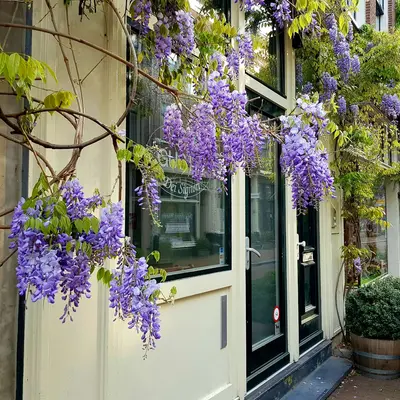
The queen of flowering vines, Chinese Wisteria creates breathtaking displays of fragrant purple flower clusters that cascade like living waterfalls in spring. These vigorous woody vines can transform pergolas, arbors, and sturdy structures into romantic garden focal points that bloom for decades. While requiring patience and annual pruning, the spectacular spring show makes Wisteria one of the most coveted ornamental vines.
Sun
Full sun to partial shade
Zones
5–8
USDA hardiness
Height
10-25 feet
Planting Timeline
Showing dates for Wisteria in USDA Zone 7
All Zone 7 vine →Zone Map
Click a state to update dates
Wisteria · Zones 5–8
Growing Details
Complete Growing Guide
Light: Full sun (6 or more hours of direct sunlight a day), Partial Shade (Direct sunlight only part of the day, 2-6 hours). Soil: Clay, Loam (Silt), Sand. Soil pH: Acid (<6.0), Alkaline (>8.0), Neutral (6.0-8.0). Drainage: Good Drainage, Moist. Height: 10 ft. 0 in. - 25 ft. 0 in.. Spread: 4 ft. 0 in. - 30 ft. 0 in.. Spacing: 12 inches-3 feet. Growth rate: Rapid. Maintenance: High. Propagation: Grafting, Layering, Stem Cutting. Regions: Coastal, Mountains, Piedmont.
Harvesting
After bloom, drooping clusters of velvety seed pods persist into fall.
Color: Green. Type: Legume. Length: > 3 inches. Width: < 1 inch.
Garden value: Showy
Harvest time: Fall, Summer
Edibility: Flowers edible raw or cooked (stems removed).
Storage & Preservation
Wisteria is an ornamental vine, not typically harvested or stored for consumption. If preserving cuttings for propagation, store in cool, moist conditions (40-50°F) in sealed plastic bags for up to 2 weeks. For long-term propagation: take hardwood cuttings in autumn and store in sand/peat mix at 40°F until spring planting. Alternatively, collect and dry seed pods in late fall, then store in cool, dry conditions until spring. Air layering is another preservation method—successful rooted sections can be separated and planted the following year.
History & Origin
Chinese Wisteria (Wisteria sinensis) originates from central and eastern China, where it has grown wild for centuries as part of traditional gardens and landscapes. The species was introduced to Europe in the early 19th century, arriving in England around 1816 through horticultural trade routes. The genus itself was named by Thomas Jefferson and botanist William Bartram in honor of Caspar Wistar, an 18th-century physician and patron of botany, though documentation of specific cultivars and breeding lines remains sparse. The plant's popularity in Western ornamental gardening exploded during the Victorian era, when its dramatic spring blooms captured gardeners' imaginations. No single documented breeder or breeding program is definitively credited with developing the cultivated Wisteria sinensis varieties available today.
Origin: China
Advantages
- +Attracts: Butterflies, Pollinators
- +Edible: Flowers edible raw or cooked (stems removed).
- +Fast-growing
Considerations
- -Toxic (Bark, Flowers, Leaves, Roots, Sap/Juice, Seeds, Stems): Low severity
- -High maintenance
Companion Plants
Clematis and roses are the most practical pairings here — they share wisteria's preferred pH range of 6.0–7.0 and similar sun needs, so you're not fighting competing requirements, and they layer well on a shared trellis or fence. Lavender and alliums at the base pull their weight by masking the scent of tender new growth that aphids zero in on. Black walnut (Juglans nigra) is the one to keep well away — it produces juglone through its roots, and wisteria is sensitive enough that you'll see decline within a season or two of close planting. Pine and eucalyptus are slower trouble: their litter acidifies soil below pH 6.0 over several years, which quietly undermines the nutrient uptake wisteria depends on.
Plant Together
Clematis
Compatible climbing partner with similar growing requirements and complementary bloom times
Roses
Wisteria provides structural support while roses add fragrance and extended blooming season
Honeysuckle
Similar growing conditions and attracts beneficial pollinators while providing layered fragrance
Lavender
Repels pests that may damage wisteria and thrives in similar well-draining soil conditions
Alliums
Natural pest deterrent that protects wisteria roots from soil-dwelling insects
Hostas
Excellent ground cover beneath wisteria that tolerates the filtered shade from vine canopy
Japanese Maple
Provides sturdy support structure while creating beautiful contrast with wisteria blooms
Astilbe
Thrives in the partial shade created by mature wisteria and adds colorful understory blooms
Keep Apart
Black Walnut
Produces juglone toxin that inhibits wisteria growth and can cause root damage
Pine Trees
Acidifies soil significantly which inhibits wisteria's preferred neutral to slightly alkaline conditions
Eucalyptus
Releases allelopathic compounds that suppress wisteria growth and competes aggressively for water
Pests & Disease Resistance
Resistance
Generally disease resistant, may get crown gall
Common Pests
Scale insects, aphids, Japanese beetles
Diseases
Crown gall, root rot in poorly drained soils
Troubleshooting Wisteria
What you'll see, why it happens, and what to do about it.
Sticky residue on stems and leaves, with clusters of small soft-bodied insects on new growth
Likely Causes
- Aphid infestation (commonly Aphis glycines or generalist species) — they congregate on tender shoots and excrete honeydew
- Ants farming aphids — ants will actively protect colonies from predators to harvest the honeydew
What to Do
- 1.Blast the colonies off with a firm stream of water from a hose; repeat every 2-3 days until numbers drop
- 2.Spray with insecticidal soap, covering the undersides of leaves — don't bother spraying on a hot afternoon, it'll burn the foliage
- 3.Check for ant trails and use a sticky barrier around the main trunk to disrupt ant activity
Leaves skeletonized or ragged with patches of brown, starting midsummer — often with shiny metallic beetles visible on the plant
Likely Causes
- Japanese beetle (Popillia japonica) feeding — they chew between leaf veins and leave the dried tissue behind
- Adults aggregate on stressed or sunny-side growth first
What to Do
- 1.Hand-pick beetles in the early morning when they're sluggish and drop them into a bucket of soapy water
- 2.Skip the Japanese beetle bag traps — research from the University of Kentucky shows they attract more beetles to your yard than they catch
- 3.Apply neem oil every 7 days during peak adult season (June–August) as a deterrent, not a kill-on-contact treatment
Wilting and yellowing despite adequate watering; crown or base of stems looks dark, mushy, or water-soaked
Likely Causes
- Root rot — usually Phytophthora or Pythium species — caused by soil that holds water rather than draining
- Planting in a low spot where water pools after rain
What to Do
- 1.Dig back to inspect the crown; if the tissue is brown and soft below the soil line, the plant is unlikely to recover and should be removed
- 2.Before replanting, work in coarse grit or aged compost to break up compaction, or raise the planting area 6-8 inches above grade
- 3.Hold off on putting another wisteria in that spot for at least one full growing season — Phytophthora persists in wet soil long after the original plant is gone
Frequently Asked Questions
How long does Wisteria take to bloom after planting?▼
Is Wisteria good for beginners?▼
Can you grow Wisteria in containers?▼
When should I plant Wisteria?▼
How do I prevent Wisteria from taking over?▼
Are Wisteria pods toxic?▼
Zone-by-Zone Planting Calendar
Growing Guides from Wind River Greens
Sources & References
External authority sources used in compiling this guide.
- ExtensionNC State Extension
See the Methodology page for how this data is sourced, what's AI-assisted, and known limitations.