Virginia Creeper
Parthenocissus quinquefolia
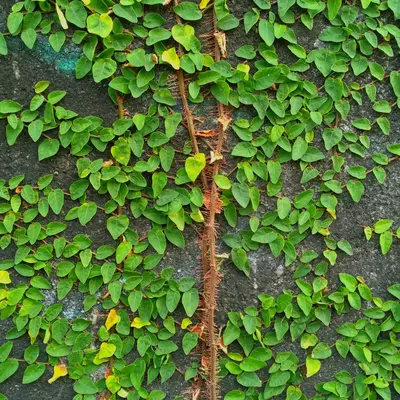
A stunning native North American vine that provides spectacular fall color with its five-fingered leaves turning brilliant scarlet and orange. Virginia Creeper climbs effortlessly using adhesive tendrils, making it perfect for covering walls, fences, or arbors without damaging surfaces like some other climbing vines. This fast-growing perennial vine also provides excellent wildlife habitat and food for birds.
Sun
Full sun to partial shade
Zones
3–10
USDA hardiness
Height
30-50 feet
Planting Timeline
Showing dates for Virginia Creeper in USDA Zone 7
All Zone 7 vine →Zone Map
Click a state to update dates
Virginia Creeper · Zones 3–10
Growing Details
Complete Growing Guide
Light: Dappled Sunlight (Shade through upper canopy all day), Full sun (6 or more hours of direct sunlight a day), Partial Shade (Direct sunlight only part of the day, 2-6 hours). Soil: Clay, High Organic Matter, Loam (Silt), Sand. Soil pH: Acid (<6.0), Alkaline (>8.0), Neutral (6.0-8.0). Drainage: Good Drainage, Moist, Occasionally Dry, Occasionally Wet. Height: 30 ft. 0 in. - 50 ft. 0 in.. Spread: 5 ft. 0 in. - 10 ft. 0 in.. Growth rate: Rapid. Maintenance: Medium. Propagation: Seed, Stem Cutting. Regions: Coastal, Mountains, Piedmont.
Harvesting
In North Carolina, fruits are available from July to August. Blue-black berries (to 3/8” diameter) are hidden by the foliage and are often not visible until autumn leaf drop
Color: Black, Blue, Purple/Lavender. Type: Berry. Length: < 1 inch. Width: < 1 inch.
Garden value: Showy
Harvest time: Fall, Summer
Edibility: toxic berries
Storage & Preservation
Virginia Creeper is an ornamental vine, not a harvested plant, so traditional storage and preservation methods don't apply. However, propagated cuttings can be stored in cool, humid conditions (50-60°F, 80-90% humidity) for short periods before planting. For long-term preservation, root cuttings in moist perlite or peat moss and store in a cool location. Seeds can be stratified in moist sand at 40°F for 60 days before spring planting. Dried pressed leaves retain color for decorative purposes when stored flat in paper in a cool, dry location.
History & Origin
Origin: Eastern Canada and United States to Mexico, North Carolina
Advantages
- +Attracts: Bees, Pollinators, Small Mammals, Songbirds
- +Edible: toxic berries
- +Fast-growing
Considerations
- -Toxic (Fruits): High severity
Companion Plants
Oak and maple are the natural pairing because Virginia creeper evolved to climb large hardwoods — their root systems run deep enough that the vine's shallower roots aren't pulling from the same water column. In our zone 7 Georgia gardens, planting it at the base of a mature tree and directing it north or east keeps summer growth in partial shade, which takes some edge off the most aggressive spread. Wild ginger, ferns, and hostas hold up well underneath because all three tolerate the dry shade a mature canopy eventually creates at ground level. Keep it away from young shrubs, delicate perennials, or any vegetable bed — Parthenocissus quinquefolia doesn't negotiate.
Plant Together
Oak Trees
Provides sturdy support structure and mimics natural woodland habitat
Maple Trees
Offers strong branching structure for climbing and partial shade tolerance
Wild Ginger
Thrives in similar woodland conditions and doesn't compete for climbing space
Ferns
Compatible ground cover that enjoys same moist, shaded conditions
Hostas
Complementary shade perennial that benefits from vine's natural habitat
Astilbe
Shares preference for partial shade and moist soil conditions
Coral Bells
Tolerates similar growing conditions and provides colorful ground layer
Wild Columbine
Native woodland companion that thrives in Virginia Creeper's natural environment
Keep Apart
Delicate Flowers
Vigorous growth can overwhelm and shade out smaller flowering plants
Young Shrubs
Heavy vine growth can smother and damage developing woody plants
Vegetables
Creates too much shade and competes aggressively for nutrients and space
Pests & Disease Resistance
Resistance
Excellent disease resistance, very hardy
Common Pests
Few pest problems, occasional leaf beetles
Diseases
Very disease resistant, rarely affected
Troubleshooting Virginia Creeper
What you'll see, why it happens, and what to do about it.
Leaves develop small, irregular holes or ragged edges through summer, often with small beetles visible on the foliage
Likely Causes
- Flea beetles or Virginia creeper leaf beetles (Fidia viticida) feeding on leaf tissue
- Japanese beetle (Popillia japonica) skeletonizing leaves during their July–August peak
What to Do
- 1.Hand-pick beetles in the early morning when they're sluggish and drop them into soapy water
- 2.For heavy infestations on young plants, apply kaolin clay as a physical barrier — reapply after rain
- 3.On established vines 2+ years old, tolerate moderate feeding; the plant almost always outgrows the damage
Vine fails to climb or cling to a surface, stems hanging loose even against a wall or fence
Likely Causes
- Surface is too smooth (painted metal, sealed wood) for the adhesive pads (holdfasts) to grip
- Plant is still in its juvenile stage — holdfasts don't develop strongly until the second or third season
What to Do
- 1.Attach a rough-textured trellis or wire mesh to the surface to give the pads something to grab in year one
- 2.Tie stems loosely to guide growth while the plant establishes — remove ties once holdfasts have attached
- 3.Avoid painted or sealed masonry if you want self-clinging; bare brick or rough wood works far better
Nearby shrubs or perennials losing vigor, getting crowded out, or dying back where Virginia creeper has spread
Likely Causes
- Virginia creeper spreading aggressively via underground runners and stems that root on contact with soil
- Dense canopy of mature vines shading out low-growing companions within 2–3 seasons of establishment
What to Do
- 1.Install a root barrier (6-inch minimum depth) or a hard bed edge to contain lateral spread
- 2.Cut the vine back hard in late winter — it tolerates cutting to 12–18 inches from the ground — to reset spread before new growth starts
- 3.Don't site it near anything shorter than a mature tree or large shrub; it will top anything under about 4 feet
Frequently Asked Questions
How long does Virginia Creeper take to cover a wall or fence?▼
Is Virginia Creeper good for beginners?▼
Can Virginia Creeper damage my house or walls?▼
When should I plant Virginia Creeper?▼
What kind of fall color does Virginia Creeper produce?▼
How often should I water Virginia Creeper?▼
Zone-by-Zone Planting Calendar
Growing Guides from Wind River Greens
Sources & References
External authority sources used in compiling this guide.
- ExtensionNC State Extension
See the Methodology page for how this data is sourced, what's AI-assisted, and known limitations.