Yukon Gold Potato
Solanum tuberosum 'Yukon Gold'
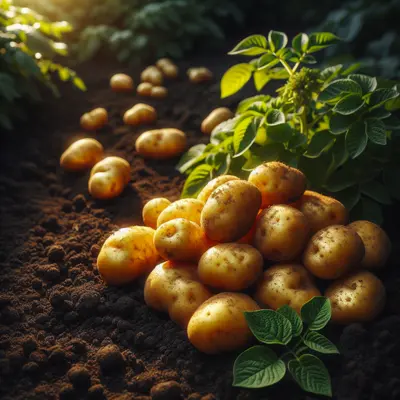
Developed in Canada, Yukon Gold has become the gold standard for home gardeners seeking a versatile, all-purpose potato with exceptional flavor. The smooth, golden skin and creamy yellow flesh make these potatoes as beautiful as they are delicious, while their waxy-starchy texture works perfectly for everything from mashing to roasting. This reliable variety produces good yields and stores well, making it a cornerstone of the home garden.
Harvest
70-90d
Days to harvest
Sun
Full sun
Zones
2–11
USDA hardiness
Height
12-24 inches
Planting Timeline
Showing dates for Yukon Gold Potato in USDA Zone 7
All Zone 7 root-vegetable →Zone Map
Click a state to update dates
Yukon Gold Potato · Zones 2–11
Growing Details
Succession Planting
Yukon Gold is an early-to-mid season variety at 70–90 days, which means zone 7 growers can fit two crops into a single year with some planning. Get the first seed potatoes in the ground in late March, once soil temperature reaches at least 45°F and the hard-freeze risk is mostly behind you — those tubers should be ready to dig by late June or early July. Pull the crop, work some compost back into the bed, and a second planting in late July can mature through the cooler fall weeks and harvest before first frost in October or November. The tricky part with the summer planting is tuber set: soil temps above 85°F will stall it, so you want the critical 6-week bulking window to land in September rather than August.
Complete Growing Guide
Light: Full sun (6 or more hours of direct sunlight a day). Soil: High Organic Matter, Sand. Soil pH: Acid (<6.0). Drainage: Good Drainage, Moist. Height: 1 ft. 0 in. - 2 ft. 0 in.. Spread: 1 ft. 0 in. - 1 ft. 6 in.. Spacing: Less than 12 inches. Maintenance: Medium. Propagation: Root Cutting, Seed. Regions: Coastal, Mountains, Piedmont.
Harvesting
Potato plants will sometimes produce a round, smooth, yellowish-green to a green berry that is 0.5 inches in diameter and is filled with many seeds. EXTREMELY TOXIC, DO NOT EAT.
Color: Gold/Yellow, Green. Type: Berry. Length: < 1 inch. Width: < 1 inch.
Harvest time: Fall, Summer
Edibility: The tubers are edible but discard sprouts and never eat tubers if they look spoiled or green below the skin. All the green parts of the plant contain a toxin known as solanine and should not be ingested. Potatoes can be stored in a cool, dry, dark place for three to four months. Potato tubers can be boiled, baked, fried, or roasted as a vegetable. They may also be processed to produce potato flour. potato chips, vodka, and schnapps.
Storage & Preservation
Store freshly harvested Yukon Golds in a cool, dark place between 45-50°F with moderate humidity, ideally in ventilated bins or burlap sacks to allow air circulation. Avoid plastic bags, which trap moisture and promote rot. Keep them away from light to prevent greening and solanine development. Properly stored tubers will keep for 2-3 months, though quality gradually declines after the first month.
For longer preservation, freezing works well if you blanch and cube them first, good for up to eight months. Roasted or mashed Yukon Golds freeze successfully with minimal texture loss due to their naturally creamy composition. Canning as whole small potatoes requires pressure canning for food safety. Dehydrating thin slices creates shelf-stable chips.
One advantage of this variety: their high sugar content means they brown beautifully when frozen and thawed, making them particularly suited to freezing for future frying or roasting applications without the grainy texture issues common in other potatoes.
History & Origin
Origin: South America
Advantages
- +Attracts: Bees
Considerations
- -Toxic (Fruits, Leaves, Roots, Stems): High severity
Companion Plants
Marigolds — French marigolds (Tagetes patula) in particular — suppress soil nematodes, but only if planted densely enough to matter, not just one or two scattered at the corners. Garlic and chives work as a perimeter planting because their sulfur compounds confuse aphids and Colorado potato beetle on approach; they also don't compete underground since potatoes run deep and alliums stay shallow. Horseradish at the bed edges has a long reputation for deterring beetles, though the mechanism isn't well-documented — it's more farmers' observation than controlled research. Keep tomatoes out of the same bed entirely: both crops are susceptible to late blight (Phytophthora infestans), and putting them side by side means a single infected plant can take out two rows of different vegetables before you catch it. Sunflowers produce allelopathic compounds that will stunt potato growth within a few feet — give them their own separate corner of the garden.
Plant Together
Marigold
Repels Colorado potato beetles and nematodes, reduces soil pests
Nasturtium
Acts as trap crop for Colorado potato beetles and aphids
Bush Beans
Fix nitrogen in soil, improve potato yield without competing for space
Cabbage
Benefits from loose soil created by potato growth, different root depths
Corn
Provides natural windbreak and shade, different nutrient requirements
Garlic
Repels Colorado potato beetles and wireworms with natural sulfur compounds
Horseradish
Planted at corners of potato patch, repels Colorado potato beetles
Chives
Repels aphids and may improve potato flavor and disease resistance
Keep Apart
Tomato
Both are nightshades, attract same pests like Colorado potato beetle and blight
Sunflower
Allelopathic effects inhibit potato growth and development
Cucumber
Increases susceptibility to blight and competes for similar soil nutrients
Nutrition Facts
Per 100g serving. % Daily Value based on 2,000 calorie diet. Source: USDA FoodData Central (FDC #170393)
Pests & Disease Resistance
Resistance
Moderate resistance to scab and good resistance to golden nematode
Common Pests
Colorado potato beetle, aphids, wireworms, flea beetles
Diseases
Late blight, early blight, scab, blackleg
Troubleshooting Yukon Gold Potato
What you'll see, why it happens, and what to do about it.
Foliage turns gray-green, then collapses and blackens rapidly — often overnight or within 48 hours — with dark, water-soaked lesions on stems and tubers
Likely Causes
- Late blight (Phytophthora infestans) — airborne spores spread fast in cool, wet weather (nights below 60°F, days in the 70s with high humidity)
- Planting infected seed potatoes
What to Do
- 1.Pull and bag affected plants immediately — don't compost them, don't leave them in the bed
- 2.Check your seed potatoes before planting; any soft, dark, or foul-smelling tubers go in the trash
- 3.Rotate out of the Solanaceae family (tomatoes, peppers, potatoes) for at least 3 seasons in that bed
Lower leaves develop dark brown bullseye spots with yellow halos, working up the plant from soil level, usually after the canopy closes
Likely Causes
- Early blight (Alternaria solani) — a soil-borne fungus that overwinters in the soil and splashes up onto leaves during rain or overhead irrigation
- Dense planting that restricts airflow between plants
What to Do
- 1.Strip affected leaves and throw them in the trash, not the compost pile
- 2.Lay 3–4 inches of straw mulch along the row to reduce soil splash
- 3.Space plants at least 12 inches apart in rows 30–36 inches apart to let air move through
Tuber skin is rough and scabby at harvest — raised, corky lesions on the surface, flesh underneath mostly fine
Likely Causes
- Common scab (Streptomyces scabies) — a bacterial-like organism that thrives in alkaline soil above pH 6.5 and in dry conditions during tuber set
- Inconsistent watering during the 6 weeks after tubers begin forming
What to Do
- 1.Test and adjust soil pH to 5.8–6.2 before planting — scab pressure drops considerably in slightly acidic soil
- 2.Keep soil consistently moist (1–2 inches per week) from tuber set through bulking; don't let it dry out during that window
- 3.Source certified disease-free seed potatoes each year rather than saving your own from a scabby crop
Stems turn black and slimy at or just below the soil line; plants wilt and collapse without recovering, often in the first few weeks after emergence
Likely Causes
- Blackleg (Pectobacterium atrosepticum) — a bacterial disease almost always introduced through infected seed potatoes
- Waterlogged soil that accelerates bacterial spread from the seed piece into the stem
What to Do
- 1.Dig up the affected plant and inspect the seed piece — if it's rotted and foul-smelling, blackleg is the likely culprit
- 2.Improve bed drainage before next season; Yukon Gold needs consistent moisture but cannot sit in saturated soil
- 3.Buy certified disease-free seed potatoes from a reputable supplier; saving tubers from a blackleg-affected crop will repeat the problem next year
Frequently Asked Questions
How long does it take Yukon Gold potatoes to grow?▼
Can you grow Yukon Gold potatoes in containers?▼
What do Yukon Gold potatoes taste like?▼
When should I plant Yukon Gold potatoes?▼
Are Yukon Gold potatoes good for beginners?▼
Yukon Gold vs Russet potatoes - what's the difference?▼
Zone-by-Zone Planting Calendar
| Zone | Indoor Start | Transplant | Direct Sow | Harvest |
|---|---|---|---|---|
| Zone 1 | — | — | June – July | August – September |
| Zone 2 | — | — | May – July | August – September |
| Zone 11 | — | — | January – February | March – December |
| Zone 12 | — | — | January – February | March – December |
| Zone 13 | — | — | January – February | March – December |
| Zone 3 | — | — | May – June | July – October |
| Zone 4 | — | — | April – June | July – October |
| Zone 5 | — | — | April – May | July – November |
| Zone 6 | — | — | April – May | June – November |
| Zone 7 | — | — | March – May | June – November |
| Zone 8 | — | — | March – April | May – December |
| Zone 9 | — | — | February – March | April – December |
| Zone 10 | — | — | January – March | April – December |
Growing Guides from Wind River Greens
Sources & References
External authority sources used in compiling this guide.
See the Methodology page for how this data is sourced, what's AI-assisted, and known limitations.