Mini Mak
Raphanus sativus var. longipinnatus
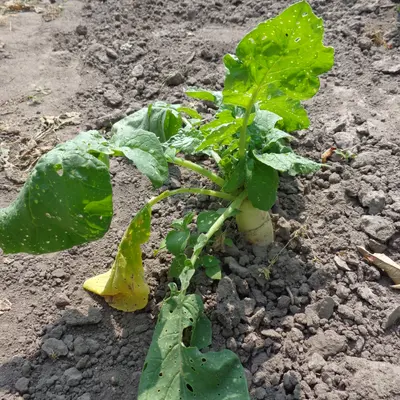
At 4-5" long x 1 1/2" wide, it is well-suited for bunching. Authentic sweet and mildly spicy flavor. Highly uniform with good bolt tolerance for spring and summer sowings. 3" in-row spacing is optimal.
Harvest
50d
Days to harvest
Sun
Full sun
Zones
2–11
USDA hardiness
Height
0 ft. 6 in. - 3 ft. 0 in.
Planting Timeline
Showing dates for Mini Mak in USDA Zone 7
All Zone 7 root-vegetable →Zone Map
Click a state to update dates
Mini Mak · Zones 2–11
Growing Details
Succession Planting
Direct sow Mini Mak every 14–18 days from March through May in zone 7, then stop once daytime highs are consistently above 85°F — heat causes the roots to turn pithy and sharp before they reach usable size at the 50-day mark. Resume in late August for a fall run through October. NC State Extension notes that insect and disease pressure tends to run higher in fall gardens due to pest population buildup from the previous spring and summer, so scout more frequently and keep that row cover handy for the second round.
Complete Growing Guide
At 4-5" long x 1 1/2" wide, it is well-suited for bunching. Authentic sweet and mildly spicy flavor. Highly uniform with good bolt tolerance for spring and summer sowings. 3" in-row spacing is optimal. According to Johnny's Selected Seeds, Mini Mak is 50 days to maturity, annual, hybrid (f1).
Soil: Loam (Silt), Sand. Soil pH: Neutral (6.0-8.0). Drainage: Good Drainage. Height: RAF-an-us raf-an-IS-trum sa-TEE-vus. Spread: RAF-an-us raf-an-IS-trum sa-TEE-vus. Growth rate: Rapid. Maintenance: Medium. Propagation: Seed. Regions: Coastal, Mountains, Piedmont.
Harvesting
Mini Mak reaches harvest at 50 days from sowing per Johnny's Selected Seeds. Expect 4-5" at peak. As an annual, harvest continues until frost ends the season.
Ready for harvest in 50 days from sowing or transplant. Harvest at peak ripeness for best flavor and storage life. Pick regularly to encourage continued production where applicable.
Storage & Preservation
Mini Mak radishes keep longest in a root cellar or refrigerator held at 32–40°F with 95% humidity; store them in perforated plastic bags or damp sand to prevent shriveling. Expect 3–4 weeks of firm, crisp texture under these conditions. For longer preservation, consider slicing and freezing blanched pieces for soups and stir-fries, though texture softens upon thawing. Quick pickling works exceptionally well—slice thinly, pack into jars with vinegar, salt, and spices, then refrigerate for up to two months of tangy crispness. Fermentation is also rewarding: layer slices with salt and let them sit at room temperature for a week or more, creating a probiotic-rich condiment. Remove any greens before storage, as they draw moisture and nutrients from the roots, shortening shelf life considerably.
History & Origin
Mini Mak is an F1 hybrid developed through controlled cross-pollination. Listed in the Johnny's Selected Seeds catalog.
Mediterranean
Advantages
- +Compact 4-5 inch size perfect for attractive market bunches
- +Authentic sweet and mildly spicy flavor profile appeals to diverse palates
- +Excellent bolt tolerance enables reliable spring and summer production
- +Highly uniform roots ensure consistent quality for commercial bunching
- +Easy cultivation makes it ideal for beginner and small-scale growers
Considerations
- -Small root size limits total yield per planting area compared to larger varieties
- -Requires precise 3-inch spacing which demands more careful seeding labor
- -Short 50-day maturity means narrow harvest window for succession planting
- -Limited storage life typical of smaller radish varieties due to surface area ratio
Companion Plants
Peas are the most useful companion here — they fix nitrogen through root bacteria, which feeds a heavy-feeding crop like daikon without competing for the same soil depth. Carrots and lettuce fit well at 3-inch spacings because they occupy different layers of the root zone, and mixing plant families this way — as NC State Extension's vegetable gardening notes explain — breaks up pest-preferred monocultures and slows Phyllotreta flea beetle damage from spreading across a whole bed. Nasturtiums work as a border draw for aphids, though don't expect miracles. Keep tomatoes and sunflowers out; both are aggressive water competitors, and sunflowers produce allelopathic compounds that can suppress germination within a few feet.
Plant Together
Carrots
Similar growing requirements and root depths complement each other without competition
Radishes
Break up compacted soil and harvest early, making room for mini turnips to expand
Lettuce
Shallow roots don't compete, provides ground cover and can be harvested before turnips mature
Spinach
Cool season companion with similar water needs and minimal root competition
Peas
Fix nitrogen in soil which benefits turnip leaf growth, and harvest before turnips need full space
Onions
Repel root maggots and other soil pests that commonly attack turnip roots
Garlic
Natural pest deterrent against aphids and root flies, strong scent confuses pests
Nasturtiums
Trap crop for flea beetles and aphids, protecting turnip leaves from damage
Keep Apart
Black Walnut Trees
Produce juglone toxin that severely stunts or kills members of the brassica family
Tomatoes
Heavy feeders that compete for nutrients and may stunt root vegetable development
Sunflowers
Allelopathic compounds inhibit growth of nearby vegetables, especially root crops
Nutrition Facts
Per 100g serving. % Daily Value based on 2,000 calorie diet. Source: USDA FoodData Central (FDC #170393)
Pests & Disease Resistance
Common Pests
Carrot rust fly, flea beetles
Diseases
Carrot root rot, alternaria leaf blight
Troubleshooting Mini Mak
What you'll see, why it happens, and what to do about it.
Seedlings collapse at soil level, stems pinched and blackened, within the first 10–14 days after germination
Likely Causes
- Damping off — a complex of soil-borne pathogens (Pythium, Rhizoctonia) triggered by cool, wet, poorly-drained soil
- Overwatering or sowing too deep in cold, compacted ground
What to Do
- 1.Pull the dead seedlings immediately and bin them — don't compost them
- 2.Let the top inch of soil dry out between waterings until survivors have their first true leaves
- 3.Next sowing, thin to 3 inches at germination so air can move between plants — crowded seedlings stay wet longer
Tiny round pits or shot-holes scattered across the leaves, most visible on plants under 4 weeks old
Likely Causes
- Flea beetles (Phyllotreta spp.) — small, jumping beetles that hit Brassica-family crops hard, including daikon types like Mini Mak
- Dry, warm spells in spring or early fall that accelerate flea beetle activity
What to Do
- 1.Cover seedlings with row cover immediately after direct sowing and bury the edges — flea beetles locate new transplants within days
- 2.Keep plants irrigated and growing fast; a slow-growing or drought-stressed plant takes far more visible damage from the same beetle load than a vigorous one
- 3.If pressure is severe, kaolin clay or spinosad can help, but row cover does the heavy lifting
Roots brown, slimy, or stunted at harvest around day 50, with yellow-brown foliage above ground
Likely Causes
- Root rot complex (Pythium and Rhizoctonia) — soil-borne pathogens that build up when daikon or other root crops occupy the same bed in back-to-back seasons
- Poorly-drained soil that stays saturated after rain
What to Do
- 1.Rotate Mini Mak out of any bed that grew root crops the previous year — NC State Extension's IPM chapter recommends keeping the same family out of a given spot for 3 to 4 years
- 2.Work compost into the top 12 inches before planting to improve drainage and loosen the soil profile
- 3.Pull roots on time — leaving them in warm, moist ground past day 55 accelerates decay fast
Frequently Asked Questions
How long does Mini Mak take to mature?▼
Is Mini Mak good for beginners?▼
Can you grow Mini Mak in containers?▼
What does Mini Mak taste like?▼
When should I plant Mini Mak?▼
What spacing do Mini Mak seeds need?▼
Zone-by-Zone Planting Calendar
| Zone | Indoor Start | Transplant | Direct Sow | Harvest |
|---|---|---|---|---|
| Zone 3 | — | — | May – June | June – October |
| Zone 4 | — | — | April – June | June – October |
| Zone 5 | — | — | April – May | June – November |
| Zone 6 | — | — | April – May | May – November |
| Zone 7 | — | — | March – May | May – November |
| Zone 8 | — | — | March – April | April – December |
| Zone 9 | — | — | February – March | March – December |
| Zone 10 | — | — | January – March | March – December |
| Zone 1 | — | — | June – July | July – September |
| Zone 2 | — | — | May – July | July – September |
| Zone 11 | — | — | January – February | February – December |
| Zone 12 | — | — | January – February | February – December |
| Zone 13 | — | — | January – February | February – December |
Growing Guides from Wind River Greens
Sources & References
External authority sources used in compiling this guide.
- BreederJohnny's Selected Seeds
- USDAUSDA FoodData Central
See the Methodology page for how this data is sourced, what's AI-assisted, and known limitations.