Red King 2
Raphanus sativus var. longipinnatus
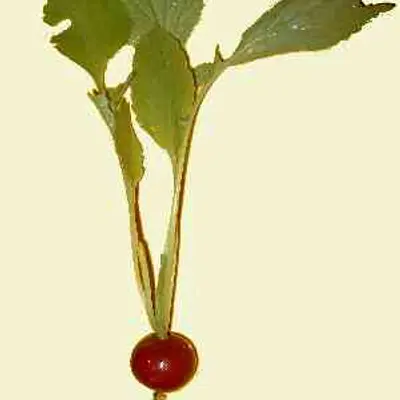
Mild, crisp, and juicy into late maturity (like KN-Bravo, but sweeter). Remarkably uniform. Tall, upright tops with red and green petioles. A beauty on display, especially when paired with purple and white daikons. Root size adaptable to plant spacing. Can produce radishes over 1 lb., 5-8" long x 2-2 1/2" wide. Slow bolting and good field-holding ability. For both spring and summer sowings.
Harvest
53d
Days to harvest
Sun
Full sun
Zones
2–11
USDA hardiness
Height
0 ft. 6 in. - 3 ft. 0 in.
Planting Timeline
Showing dates for Red King 2 in USDA Zone 7
All Zone 7 root-vegetable →Zone Map
Click a state to update dates
Red King 2 · Zones 2–11
Growing Details
Succession Planting
Red King 2 matures in about 53 days and doesn't keep producing after harvest, so succession sowing is the only way to get a continuous supply. Direct sow every 14–21 days from early March through late April for a spring run. Resume in mid-August and sow every 14 days through late September for a fall run. Stop spring sowings once daytime highs are consistently hitting 80–85°F — daikon bolts fast in heat, and the roots turn pithy and sharp-tasting before you can use them.
The fall window is often the better one. Soil temperatures below 70°F produce denser, milder roots, and flea beetle pressure typically drops after the first light frost. A late September sowing in zone 7 should be harvestable by mid-November with a layer of straw mulch over the bed.
Complete Growing Guide
Mild, crisp, and juicy into late maturity (like KN-Bravo, but sweeter). Remarkably uniform. Tall, upright tops with red and green petioles. A beauty on display, especially when paired with purple and white daikons. Root size adaptable to plant spacing. Can produce radishes over 1 lb., 5-8" long x 2-2 1/2" wide. Slow bolting and good field-holding ability. For both spring and summer sowings. According to Johnny's Selected Seeds, Red King 2 is 53 days to maturity, annual, hybrid (f1).
Soil: Loam (Silt), Sand. Soil pH: Neutral (6.0-8.0). Drainage: Good Drainage. Height: RAF-an-us raf-an-IS-trum sa-TEE-vus. Spread: RAF-an-us raf-an-IS-trum sa-TEE-vus. Growth rate: Rapid. Maintenance: Medium. Propagation: Seed. Regions: Coastal, Mountains, Piedmont.
Harvesting
Ready for harvest in 53 days from sowing or transplant. Harvest at peak ripeness for best flavor and storage life. Pick regularly to encourage continued production where applicable.
Storage & Preservation
Red King 2 radishes store best in a perforated plastic bag in the refrigerator's crisper drawer, maintaining temperatures between 32–40°F with 95% humidity. Remove any attached greens before storage to prevent moisture loss from the roots. Under these conditions, expect a fresh shelf life of 3–4 weeks. For longer preservation, fermentation works exceptionally well with this variety; slice thinly, pack with salt at 2–3% by weight, and keep submerged in brine for 2–4 weeks at room temperature. Freezing is also viable—blanch sliced radishes for 2–3 minutes, cool quickly, then freeze in airtight containers for up to 8 months, though texture softens. Pickling is another option: pack raw or lightly blanched slices into jars with vinegar, spices, and sugar. Red King 2's crisp flesh holds its texture well through these preservation methods better than many round varieties, making it particularly suited to fermented applications where crunch is desirable.
History & Origin
Red King 2 is an F1 hybrid developed through controlled cross-pollination. Listed in the Johnny's Selected Seeds catalog.
Mediterranean
Advantages
- +Easy to grow — beginner-friendly
- +Quick harvest — ready in about 53 days
- +Wide hardiness — grows in USDA zones 2-11
Companion Plants
Chives and nasturtiums are the companions worth actually planning around. Chives (Allium schoenoprasum) emit sulfur compounds that disrupt aphid host-finding — a real benefit since aphids cluster on daikon foliage through summer — and their shallow, fibrous roots don't compete with the 18-inch taproot Red King 2 puts down. Nasturtiums pull double duty as a trap crop, drawing flea beetles and aphids off the radish before either pest population builds. Once nasturtium stems are crawling with insects, pull the whole plant and drop it in a bucket of soapy water. Carrots, lettuce, and spinach share the bed without friction because they feed at different soil depths and don't shade the radish crown.
Brassicas are the plants to exclude — cabbage, broccoli, kale, and turnips all share the same pest lineup as daikon: flea beetles, cabbage root maggot (Delia radicum), and Fusarium oxysporum in the soil. Grouping them concentrates every one of those problems in one spot. Hyssop is worth avoiding too; it has shown allelopathic effects on neighboring root vegetables in close plantings, and there's no upside that offsets it.
Plant Together
Carrots
Break up soil for radish growth and utilize different soil depths
Lettuce
Quick harvest leaves space for radish development, shallow roots don't compete
Spinach
Cool-season companion with similar growing requirements and non-competing root systems
Chives
Repel root maggots and aphids that commonly attack radishes
Nasturtiums
Act as trap crop for flea beetles and aphids, protecting radish leaves
Marigolds
Deter nematodes and root pests while improving soil health
Peas
Fix nitrogen in soil and provide natural trellis without shading low-growing radishes
Cucumber
Radishes repel cucumber beetles while cucumbers provide ground cover
Keep Apart
Brassica crops
Share same pests like flea beetles and clubroot disease, increasing infestation risk
Hyssop
Strong aromatic oils can inhibit radish germination and root development
Turnips
Compete for same nutrients and space, both being root vegetables with similar needs
Nutrition Facts
Per 100g serving. % Daily Value based on 2,000 calorie diet. Source: USDA FoodData Central (FDC #170393)
Pests & Disease Resistance
Common Pests
Flea beetles, cabbage root maggots, aphids
Diseases
Bacterial leaf spot, fusarium wilt, powdery mildew
Troubleshooting Red King 2
What you'll see, why it happens, and what to do about it.
Small, ragged holes scattered across young leaves, worst on seedlings in the first 2–3 weeks after germination
Likely Causes
- Flea beetles (Phyllotreta spp.) — tiny black or bronze beetles that jump when disturbed
- Seedlings are most vulnerable before they hit 4 true leaves
What to Do
- 1.Cover the bed with floating row cover at sowing and keep it on until plants are established
- 2.If beetles are already present, dust with kaolin clay — reapply after rain
- 3.Nasturtiums planted along the bed edge act as a trap crop; check them daily and knock beetles into soapy water
Plants wilting from the crown down despite adequate soil moisture, roots showing dark or rotted tissue at the base
Likely Causes
- Cabbage root maggot (Delia radicum) — larvae tunnel into the root, opening the door to secondary rot
- Fusarium wilt (Fusarium oxysporum) — a soil-borne fungus that causes similar above-ground collapse
What to Do
- 1.Pull and discard affected plants; do not compost them
- 2.Place sticky yellow traps near the soil surface to catch adult Delia flies before they lay eggs
- 3.Rotate this bed out of all brassica-family crops for at least 2 seasons; Fusarium persists in soil and rotation is the main lever available
White powdery coating on upper leaf surfaces, appearing in warm weather as the canopy fills in
Likely Causes
- Powdery mildew — a fungal disease that thrives in dry conditions at moderate temperatures (60–80°F), not wet ones
- Dense planting below 2-inch spacing that cuts airflow between leaves
What to Do
- 1.Thin to the recommended 2–3 inch spacing early; crowded plants are the fastest path to an outbreak
- 2.Spray affected foliage with potassium bicarbonate mixed per label, or a baking soda solution (1 tablespoon per gallon of water)
- 3.NC State Extension's disease management guidance points to varietal resistance as the first line of defense — if your seed source lists a mildew-resistant label on future purchases, note it
Frequently Asked Questions
How long does Red King 2 take to grow?▼
Is Red King 2 a good radish for beginners?▼
What's the difference between Red King 2 and other long radish varieties?▼
Can you grow Red King 2 in containers?▼
What does Red King 2 taste like?▼
When should I plant Red King 2 for spring and summer crops?▼
Zone-by-Zone Planting Calendar
| Zone | Indoor Start | Transplant | Direct Sow | Harvest |
|---|---|---|---|---|
| Zone 1 | — | — | June – July | July – September |
| Zone 2 | — | — | May – July | July – September |
| Zone 11 | — | — | January – February | February – December |
| Zone 12 | — | — | January – February | February – December |
| Zone 13 | — | — | January – February | February – December |
| Zone 3 | — | — | May – June | June – October |
| Zone 4 | — | — | April – June | June – October |
| Zone 5 | — | — | April – May | June – November |
| Zone 6 | — | — | April – May | May – November |
| Zone 7 | — | — | March – May | May – November |
| Zone 8 | — | — | March – April | April – December |
| Zone 9 | — | — | February – March | March – December |
| Zone 10 | — | — | January – March | March – December |
Growing Guides from Wind River Greens
Sources & References
External authority sources used in compiling this guide.
- BreederJohnny's Selected Seeds
- USDAUSDA FoodData Central
See the Methodology page for how this data is sourced, what's AI-assisted, and known limitations.