Red Norland Potato
Solanum tuberosum 'Red Norland'
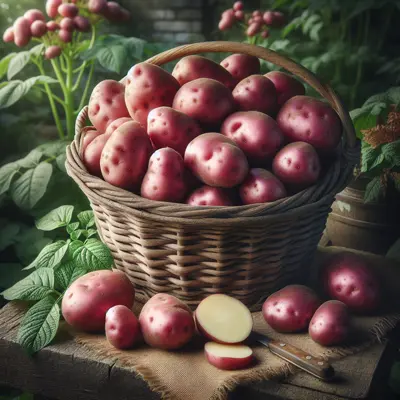
The gold standard for early-season red potatoes, beloved by home gardeners for its reliability and excellent flavor. These smooth-skinned beauties are ready to harvest as delicious new potatoes in just 60 days, or left to mature for storage. Their waxy texture and thin, edible skins make them perfect for boiling, steaming, and potato salads.
Harvest
60-80d
Days to harvest
Sun
Full sun
Zones
2–11
USDA hardiness
Height
12-24 inches
Planting Timeline
Showing dates for Red Norland Potato in USDA Zone 7
All Zone 7 root-vegetable →Zone Map
Click a state to update dates
Red Norland Potato · Zones 2–11
Growing Details
Succession Planting
Red Norland matures in 60–80 days, so in zone 7 you can get two plantings if you time it right. Put your first seed pieces in the ground in early March once soil temps reach 45°F, then drop a second planting in late March to early April. Stop by early May — tubers set poorly once daytime highs are consistently above 80°F and soil temps push past 70°F.
For a fall crop, count back 80 days from your first expected frost and plant seed pieces in late July. The ground will be warm at planting, but tubers do their best work as temperatures cool through September and October. Once the tops start dying back, cut back on water — wet soil at that stage invites bacterial soft rot (Pectobacterium carotovorum) and you'll pull up mush instead of potatoes.
Complete Growing Guide
Red Norland potatoes thrive in consistently cool soil between 60-70°F, making them ideal for spring planting in most zones—their 60-day maturity window demands you time planting to avoid summer heat that triggers premature tuber sizing and reduced yields. These cultivars prefer loose, well-draining soil rich in organic matter and perform best with consistent moisture rather than sporadic watering, which causes hollow heart defects. Early blight is the primary concern for Red Norland in humid regions; improve air circulation by spacing plants 12 inches apart and removing lower foliage once plants reach 12 inches tall. Unlike storage varieties, resist the urge to hill soil repeatedly, as this damages developing tubers near the surface—a single substantial hilling when plants are 6-8 inches tall suffices. For reliable harvests, prioritize certified seed potatoes, as Red Norland's susceptibility to late blight makes disease-free starts essential.
Light: Full sun (6 or more hours of direct sunlight a day). Soil: High Organic Matter, Sand. Soil pH: Acid (<6.0). Drainage: Good Drainage, Moist. Height: 1 ft. 0 in. - 2 ft. 0 in.. Spread: 1 ft. 0 in. - 1 ft. 6 in.. Spacing: Less than 12 inches. Maintenance: Medium. Propagation: Root Cutting, Seed. Regions: Coastal, Mountains, Piedmont.
Harvesting
Red Norlands reach peak harvest readiness when their smooth red skins develop a deeper, more uniform color and the tubers feel firm and substantial when gently squeezed beneath the soil. For new potatoes, harvest as early as 60 days when plants flower, selecting medium-sized tubers around 2 inches long while leaving smaller ones to continue maturing. For storage potatoes, wait until foliage yellows and dies back entirely, typically at 80 days, signaling skin has hardened sufficiently for long-term keeping. You can employ continuous harvesting by carefully opening the soil around plant bases to select individual tubers without disturbing the plant, allowing remaining potatoes to enlarge. A crucial timing tip: harvest Red Norlands on a dry, cool day to minimize bruising and allow skins to cure properly before storage or use.
Potato plants will sometimes produce a round, smooth, yellowish-green to a green berry that is 0.5 inches in diameter and is filled with many seeds. EXTREMELY TOXIC, DO NOT EAT.
Color: Gold/Yellow, Green. Type: Berry. Length: < 1 inch. Width: < 1 inch.
Harvest time: Fall, Summer
Edibility: The tubers are edible but discard sprouts and never eat tubers if they look spoiled or green below the skin. All the green parts of the plant contain a toxin known as solanine and should not be ingested. Potatoes can be stored in a cool, dry, dark place for three to four months. Potato tubers can be boiled, baked, fried, or roasted as a vegetable. They may also be processed to produce potato flour. potato chips, vodka, and schnapps.
Storage & Preservation
Store freshly harvested Red Norland potatoes in a cool, dark place between 45-50°F with humidity around 90 percent. Use breathable containers like burlap sacks or wooden crates to allow air circulation and prevent moisture buildup, which encourages rot. Keep them away from light to prevent greening and solanine development.
Under proper conditions, Red Norlands maintain quality for three to four months. They deteriorate faster than storage varieties due to their thin skin and waxy nature, so plan to use them within this window.
For preservation, freezing works best: cube or dice raw potatoes, blanch for three to five minutes, cool quickly, then freeze in airtight containers for up to eight months. They're less suitable for canning due to low acid content. Dehydration is possible but yields limited culinary applications.
Since these are primarily grown as new potatoes, harvest small immature tubers and use within weeks for peak flavor and texture. Their paper-thin skins are better enjoyed fresh rather than preserved.
History & Origin
Red Norland potatoes were developed in Canada during the 1950s through a breeding program at the University of Guelph and Agriculture and Agri-Food Canada (AAFC). The variety emerged from crosses involving early-maturing North American potato germplasm, designed specifically to meet the demands of northern climates with shorter growing seasons. Named for the Nordic regions where such early potatoes were particularly valued, Red Norland quickly became the standard for commercial and home gardeners seeking reliable early-season production. Its parentage reflects deliberate breeding for disease resistance and consistent performance, though detailed records of specific parent varieties remain somewhat limited in publicly available documentation.
Origin: South America
Advantages
- +Ready to harvest as new potatoes in just 60 days
- +Thin, edible skins eliminate peeling for convenient preparation
- +Waxy texture holds shape perfectly in salads and boiling
- +Reliable early-season producer beloved by experienced home gardeners
- +Mild, buttery flavor with slight sweetness appeals to most palates
Considerations
- -Highly susceptible to late blight in wet, humid growing conditions
- -Colorado potato beetles and wireworms frequently target this variety
- -Requires consistent moisture and well-draining soil to prevent scab
Companion Plants
Marigolds and nasturtiums along the bed edge are worth the space — both deter Colorado potato beetle adults to some degree, and nasturtiums tend to pull aphids off the main crop onto themselves. Horseradish planted at the corners has a long reputation for repelling the same beetle, though it spreads underground if you don't cut it back hard each fall. Beans and peas fix nitrogen at a root depth that doesn't compete with tubers sitting 4–6 inches down. Keep tomatoes out entirely — they share Phytophthora infestans with potatoes, and crowding the two together gives that pathogen a short, easy path between hosts.
Plant Together
Marigold
Repels Colorado potato beetles and nematodes, reduces pest damage
Nasturtium
Acts as trap crop for Colorado potato beetles and aphids
Horseradish
Repels Colorado potato beetles and improves disease resistance
Beans
Fix nitrogen in soil and improve potato growth without competing for space
Cabbage
Compatible growth habits and may help deter potato pests
Corn
Provides natural windbreak and doesn't compete for underground space
Chives
Repels aphids and may improve potato flavor and growth
Peas
Fix nitrogen early in season before potatoes need heavy nutrients
Keep Apart
Tomatoes
Same family (Solanaceae), compete for nutrients and share similar diseases like blight
Sunflowers
Allelopathic effects inhibit potato growth and development
Cucumber
Increases susceptibility to bacterial wilt and competes for soil nutrients
Nutrition Facts
Per 100g serving. % Daily Value based on 2,000 calorie diet. Source: USDA FoodData Central (FDC #170393)
Pests & Disease Resistance
Resistance
Good resistance to scab and moderate resistance to late blight
Common Pests
Colorado potato beetle, wireworms, potato flea beetle
Diseases
Late blight, early blight, potato scab, bacterial soft rot
Troubleshooting Red Norland Potato
What you'll see, why it happens, and what to do about it.
Large patches of foliage turning gray-green, then collapsing fast — sometimes within 48 hours — with dark, water-soaked lesions on stems
Likely Causes
- Late blight (Phytophthora infestans) — airborne spores that move fast in cool, wet weather (55–65°F nights with high humidity)
- Planting next to or near tomatoes, which share the same pathogen
What to Do
- 1.Cut and bag all affected foliage immediately — do not compost it
- 2.Remove the entire plant if more than 30% of the canopy is affected; the tubers below are likely compromised too
- 3.Keep tomatoes and potatoes out of adjacent beds — at minimum 20 feet apart — so the pathogen can't bridge between them
Rough, corky, raised or pitted patches on the skin of harvested tubers
Likely Causes
- Common scab (Streptomyces scabies) — a soil-borne bacterium that thrives when soil pH climbs above 6.0
- Dry soil conditions during the 4–6 weeks after tubers begin to set
What to Do
- 1.Test your soil pH and amend with sulfur to bring it down to 5.0–5.5 before planting — scab pressure drops sharply below 5.5
- 2.Keep soil consistently moist during tuber set; Red Norland needs 1–2 inches per week and scab worsens when that window dries out
- 3.Rotate this bed out of Solanaceae crops for at least 3 years
Frequently Asked Questions
How long does Red Norland potato take to grow?▼
Can you grow Red Norland potatoes in containers?▼
Is Red Norland good for beginners?▼
What does Red Norland potato taste like?▼
When should I plant Red Norland potatoes?▼
Red Norland vs Yukon Gold potatoes - what's the difference?▼
Zone-by-Zone Planting Calendar
| Zone | Indoor Start | Transplant | Direct Sow | Harvest |
|---|---|---|---|---|
| Zone 1 | — | — | June – July | August – September |
| Zone 2 | — | — | May – July | July – September |
| Zone 11 | — | — | January – February | February – December |
| Zone 12 | — | — | January – February | February – December |
| Zone 13 | — | — | January – February | February – December |
| Zone 3 | — | — | May – June | July – October |
| Zone 4 | — | — | April – June | July – October |
| Zone 5 | — | — | April – May | June – November |
| Zone 6 | — | — | April – May | June – November |
| Zone 7 | — | — | March – May | May – November |
| Zone 8 | — | — | March – April | May – December |
| Zone 9 | — | — | February – March | April – December |
| Zone 10 | — | — | January – March | March – December |
Growing Guides from Wind River Greens
Sources & References
External authority sources used in compiling this guide.
See the Methodology page for how this data is sourced, what's AI-assisted, and known limitations.