Red Ace Beet
Beta vulgaris
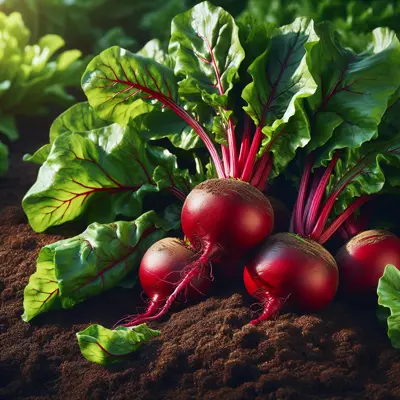
A reliable and adaptable standard red beet. Medium-tall, red-veined greens for bunching. Less uniform and not as attractive as our other red hybrids. Also available with NOP-compliant pelleting.
Harvest
50d
Days to harvest
Sun
Full sun to partial shade
Zones
2–10
USDA hardiness
Height
12-14 inches
Planting Timeline
Showing dates for Red Ace Beet in USDA Zone 7
All Zone 7 root-vegetable →Zone Map
Click a state to update dates
Red Ace Beet · Zones 2–10
Growing Details
Succession Planting
Direct sow Red Ace every 14–21 days from March through early May in zone 7, then stop once daytime highs are consistently above 80°F — roots don't die outright in summer heat, but texture suffers and you'll get more leaf than root. Resume fall sowings around August 15, every 2–3 weeks through late September. At 50 days to harvest, a September 20 sowing should finish before a hard freeze in most of zone 7, and beets handle light frost fine — it even sweetens them up a bit.
Complete Growing Guide
Start your Red Ace beet journey by selecting a sunny spot with loose, well-draining soil. While this variety tolerates heavier clay better than most beets, you'll get the roundest roots in amended loam. Work in 2-3 inches of compost or aged manure before planting, and ensure your pH sits between 6.0-7.0 for optimal nutrient uptake.
Direct sowing is your best bet with Red Ace—beets generally resent transplanting due to their taproot nature. Begin planting 2-4 weeks before your last frost date, when soil temperatures reach 50°F. Plant the wrinkled seed clusters ½ inch deep in rows spaced 12-18 inches apart. Each 'seed' is actually a fruit containing multiple seeds, so expect multiple seedlings to emerge from each planting spot.
Thinning is crucial for developing those perfectly round roots Red Ace is known for. When seedlings reach 3 inches tall, thin to 3-4 inches apart, keeping the strongest plant from each cluster. Don't waste those tender thinnings—they make excellent microgreens for salads. Water consistently during this establishment period, as irregular moisture can cause the roots to develop growth rings or become woody.
For fertilizing, Red Ace responds well to balanced nutrition early on. Apply a 10-10-10 fertilizer at planting, then side-dress with nitrogen when plants are 4-6 inches tall. Avoid excessive nitrogen later in the season, which promotes leaf growth at the expense of root development. A light phosphorus boost mid-season encourages strong root formation.
Succession plant every 2-3 weeks through early summer for continuous harvests. In zones 7-9, you can often squeeze in a fall crop by sowing 10-12 weeks before your first hard frost. The cooler weather actually intensifies Red Ace's sweet flavor and deep color.
Common mistakes include overcrowding (leading to small, deformed roots), inconsistent watering (causing cracking or toughness), and harvesting too late. Red Ace maintains quality when large, but roots over 3 inches may develop a denser texture.
Harvesting
Red Ace beets are ready for harvest 50-55 days after sowing, but you can start pulling baby beets as early as 35-40 days for tender, golf ball-sized roots. Look for shoulders (the top portion of the root) that measure 1½ to 3 inches across and show the characteristic deep burgundy-red color peeking above the soil line.
Harvest in the morning when plants are fully hydrated for the crispest texture. Gently brush away soil from around the shoulder to check size, then grasp the greens close to the root and pull straight up with a slight twisting motion. Red Ace's uniform shape means most roots in a row will be ready simultaneously, unlike some varieties that mature unevenly.
The roots should feel firm and heavy for their size. If they give slightly to pressure or feel spongy, they're past prime. Don't wait for massive size—while Red Ace maintains quality when large, the sweetest, most tender texture occurs at 2-3 inches. Immediately after harvest, twist off the greens leaving about an inch of stem to prevent bleeding during storage.
Storage & Preservation
Fresh Red Ace beets store exceptionally well when properly handled. Remove greens immediately, leaving 1-2 inches of stem, and store unwashed roots in perforated plastic bags in the refrigerator crisper drawer. They'll maintain quality for 2-3 months at 32-35°F with high humidity.
For longer preservation, Red Ace excels at pickling due to its firm texture and vibrant color retention. The deep red hue creates stunning pickled beets that hold their color beautifully. For freezing, cook roots until tender, slip off skins, then slice or dice before packaging. Frozen cooked beets maintain quality for 8-10 months.
Dehydrating works well for Red Ace—slice cooked beets thin and dehydrate until leathery for healthy chips. The concentrated sweetness makes them an excellent snack. Don't overlook the nutritious greens; they freeze beautifully when blanched for 2 minutes and are perfect for winter smoothies or sautéed dishes.
History & Origin
Red Ace was developed by Sakata Seed Company in Japan during the 1980s as part of their precision breeding program focused on creating uniform, disease-resistant vegetable varieties for commercial production. The variety emerged from crosses between European Detroit Dark Red types and Asian beet varieties known for their disease tolerance.
Sakata's breeders specifically targeted the downy mildew problems that plagued beet production in humid climates, while maintaining the deep color and sweet flavor that consumers expected. Red Ace quickly gained recognition in North American trials during the late 1980s and early 1990s, earning multiple All-America Selections (AAS) awards for its outstanding uniformity and performance across diverse growing conditions.
The variety's name reflects both its superior performance ('ace') and the deep red color that remains stable even under stress conditions. Red Ace represents the modern hybrid approach to beet breeding—combining Old World flavor with New World reliability and disease resistance, making quality beet production accessible to gardeners in challenging climates where traditional varieties often struggled.
Advantages
- +Exceptional downy mildew resistance allows successful growing in humid climates where other beets fail
- +Maintains sweet flavor and tender texture even when harvested at 3+ inches, unlike varieties that become woody
- +Uniform maturity means entire rows are ready simultaneously, perfect for efficient harvesting
- +Deep burgundy color remains vibrant through cooking and processing without fading
- +Tolerates heavier clay soils better than most beet varieties while still producing round roots
- +Dual-purpose variety with nutritious greens that stay tender longer than open-pollinated types
- +Strong bolt resistance allows spring planting without premature seed production
Considerations
- -Higher seed cost compared to open-pollinated varieties like Detroit Dark Red
- -Cannot save seeds since it's a hybrid—must purchase fresh seed annually
- -Requires consistent thinning for optimal root development, adding labor compared to some varieties
- -May develop tougher texture if allowed to experience repeated wet-dry cycles during root development
Companion Plants
Onions and garlic are the most practical companions here — their sulfur compounds are thought to deter aphids and flea beetles, both of which will chew beet foliage given the chance. Lettuce fits well because it's shallow-rooted and won't compete with a developing taproot, and both crops want about 1 inch of water per week. Keep pole beans at least a few feet away; there's a documented allelopathic conflict between Beta vulgaris and pole beans specifically — bush beans don't carry the same problem, which is why they land on the beneficial list. Mustard and field mustard are also worth siting elsewhere; they host the same flea beetle populations that hit beets hard in spring.
Plant Together
Lettuce
Shallow roots don't compete with beet taproot, provides living mulch
Onions
Repel aphids, flea beetles, and other pests that damage beet leaves
Garlic
Natural pest deterrent, protects against root maggots and aphids
Carrots
Different root depths prevent competition, both benefit from loose soil
Swiss Chard
Same family with similar growing requirements, can share garden space efficiently
Cabbage
Beets help loosen soil for shallow-rooted brassicas, mutual pest deterrence
Bush Beans
Fix nitrogen in soil which benefits beet leaf development
Dill
Attracts beneficial insects that prey on beet pests like aphids
Keep Apart
Pole Beans
Vigorous vines can shade and overwhelm beet plants, reducing root development
Mustard
Allelopathic effects can inhibit beet germination and early growth
Field Mustard
Competes aggressively for nutrients and releases growth-inhibiting compounds
Nutrition Facts
Per 100g serving. % Daily Value based on 2,000 calorie diet. Source: USDA FoodData Central (FDC #2685576)
Pests & Disease Resistance
Resistance
Excellent downy mildew resistance, good cercospora leaf spot tolerance
Common Pests
Leaf miners, flea beetles, aphids, wireworms
Diseases
Cercospora leaf spot, downy mildew, damping-off
Troubleshooting Red Ace Beet
What you'll see, why it happens, and what to do about it.
Pale, winding trails or blotches on leaves, with leaf tissue looking papery or eaten from inside
Likely Causes
- Leaf miners (Liriomyza spp.) — larvae tunnel between the upper and lower leaf surfaces
- Heavy pressure in late spring when adult flies are most active
What to Do
- 1.Pick off and trash any heavily mined leaves; don't compost them
- 2.Cover seedlings with row cover at germination to block adult flies from laying eggs
- 3.If pressure is severe, spinosad-based sprays are effective — apply in the morning before beneficial insects are active
Circular tan or gray spots with reddish-purple borders on leaves, sometimes with a faint halo, appearing mid-season
Likely Causes
- Cercospora leaf spot (Cercospora beticola) — the most common fungal foliar disease on beets, spreads fastest in warm, humid conditions above 65°F
- Overhead irrigation or rain splashing spores from soil or infected debris onto lower leaves
What to Do
- 1.Remove and trash infected leaves as soon as you spot them — do not compost
- 2.Switch to drip irrigation or water at the base to keep foliage dry
- 3.Rotate beets out of the same bed for at least 2 seasons; Cercospora beticola overwinters in soil debris
Seedlings collapse at soil level within the first 10–14 days after germination, stems pinched or water-soaked at the base
Likely Causes
- Damping-off — typically caused by Pythium or Rhizoctonia species in cold, waterlogged soil
- Sowing too early into soil below 50°F, or overwatering right after germination
What to Do
- 1.Let the soil surface dry slightly between waterings once seeds have sprouted — beets don't need constant moisture at the cotyledon stage
- 2.Direct sow into soil that has warmed to at least 50°F; in zone 7 that's reliably mid-March or later
- 3.Thin to 3–4 inches as soon as seedlings have their first true leaf — crowded stands trap humidity and feed the problem
Frequently Asked Questions
How long does Red Ace beet take to grow?▼
Can you grow Red Ace beets in containers?▼
What do Red Ace beets taste like compared to other varieties?▼
When should I plant Red Ace beets in spring?▼
Is Red Ace good for beginner gardeners?▼
Do Red Ace beet greens taste different from other beet varieties?▼
Zone-by-Zone Planting Calendar
| Zone | Indoor Start | Transplant | Direct Sow | Harvest |
|---|---|---|---|---|
| Zone 3 | — | — | May – June | June – October |
| Zone 4 | — | — | April – June | June – October |
| Zone 5 | — | — | April – May | June – November |
| Zone 6 | — | — | April – May | May – November |
| Zone 7 | — | — | March – May | May – November |
| Zone 8 | — | — | March – April | April – December |
| Zone 9 | — | — | February – March | March – December |
| Zone 10 | — | — | January – March | March – December |
| Zone 1 | — | — | June – July | July – September |
| Zone 2 | — | — | May – July | July – September |
| Zone 11 | — | — | January – February | February – December |
| Zone 12 | — | — | January – February | February – December |
| Zone 13 | — | — | January – February | February – December |
Growing Guides from Wind River Greens
Sources & References
External authority sources used in compiling this guide.
See the Methodology page for how this data is sourced, what's AI-assisted, and known limitations.