Pontiac Red Potato
Solanum tuberosum 'Pontiac'
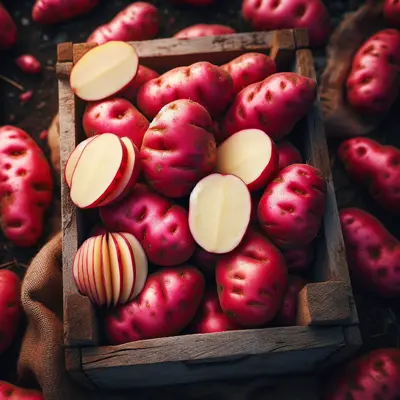
A reliable mid-season potato variety beloved for its attractive red skin and pure white flesh that holds its shape beautifully when cooked. Pontiac produces excellent yields of medium to large tubers and shows good resistance to common potato diseases. This versatile variety is perfect for boiling, baking, and making colorful potato salads.
Harvest
80-95d
Days to harvest
Sun
Full sun
Zones
2–11
USDA hardiness
Height
12-24 inches
Planting Timeline
Showing dates for Pontiac Red Potato in USDA Zone 7
All Zone 7 root-vegetable →Zone Map
Click a state to update dates
Pontiac Red Potato · Zones 2–11
Growing Details
Succession Planting
Pontiac is a determinate crop — plant it, it sets tubers, you dig it. No succession planting in the classic sense. What you can do is run two separate plantings: one in late February to early March for a June harvest, and a second in mid-to-late July for a fall harvest around October-November. The fall planting sidesteps the worst of late blight pressure in most years and tends to produce cleaner-skinned tubers. Put it in a different bed than the spring planting.
Stop watering both plantings about 2 weeks before you intend to dig — dry soil at harvest toughens the skin and cuts down on storage rot significantly. In zone 7, the window for that second direct sow closes around late July; push past early August and the tubers will still be sizing up when the first hard frost arrives in October.
Complete Growing Guide
Plant Pontiac Red Potatoes 2–3 weeks before your last spring frost, as they thrive in cool soil and reach harvest in 80–95 days, making them ideal for early summer production in most climates. These tubers prefer well-draining, slightly acidic soil (pH 5.0–6.8) with consistent moisture, though they're more drought-tolerant than other red varieties once established. Watch for late blight and early blight, diseases that favor the humid conditions around their 12–24 inch foliage; ensure good air circulation by spacing plants 10–12 inches apart and avoiding overhead watering. Colorado potato beetles show particular attraction to Pontiac's foliage, so monitor closely starting at emergence. One essential practice specific to this cultivar: hill soil around plants every 2–3 weeks to prevent greening of exposed tubers, which develop just below the surface and are prone to light exposure. Harvest when foliage yellows, typically mid-summer, for firm, flavorful potatoes that store reliably.
Light: Full sun (6 or more hours of direct sunlight a day). Soil: High Organic Matter, Sand. Soil pH: Acid (<6.0). Drainage: Good Drainage, Moist. Height: 1 ft. 0 in. - 2 ft. 0 in.. Spread: 1 ft. 0 in. - 1 ft. 6 in.. Spacing: Less than 12 inches. Maintenance: Medium. Propagation: Root Cutting, Seed. Regions: Coastal, Mountains, Piedmont.
Harvesting
Pontiac Red potatoes reach harvest readiness when their distinctive deep red skin has fully developed color and tubers feel firm to gentle pressure, typically 80-95 days after planting. Watch for the plant foliage to yellow and die back naturally, signaling peak maturity and skin set. While you can dig small "new potatoes" continuously throughout the season for immediate use, waiting until complete vine senescence allows maximum tuber size and storability. A key timing tip: harvest on a dry day when soil moisture is moderate rather than waterlogged, as this prevents bruising and reduces disease risk during storage. Most gardeners achieve best results with a single main harvest once plants have fully matured, yielding the medium to large tubers this variety is known for.
Potato plants will sometimes produce a round, smooth, yellowish-green to a green berry that is 0.5 inches in diameter and is filled with many seeds. EXTREMELY TOXIC, DO NOT EAT.
Color: Gold/Yellow, Green. Type: Berry. Length: < 1 inch. Width: < 1 inch.
Harvest time: Fall, Summer
Edibility: The tubers are edible but discard sprouts and never eat tubers if they look spoiled or green below the skin. All the green parts of the plant contain a toxin known as solanine and should not be ingested. Potatoes can be stored in a cool, dry, dark place for three to four months. Potato tubers can be boiled, baked, fried, or roasted as a vegetable. They may also be processed to produce potato flour. potato chips, vodka, and schnapps.
Storage & Preservation
Store freshly harvested Pontiac potatoes in a cool, dark location between 45-50°F with moderate humidity (around 90%) to minimize sprouting and decay. A ventilated wooden crate or paper bag in an unheated basement, root cellar, or garage works well. Under these conditions, they'll keep for 2-3 months without significant quality loss. Avoid plastic bags, which trap moisture and encourage rot.
For longer preservation, freeze diced or shredded potatoes after blanching for 5 minutes, then cool and pack in freezer bags—they retain good texture for up to 8 months. Alternatively, can cubed potatoes using a pressure canner at 10 pounds pressure for 35 minutes (pints). Dehydrating thin slices in a food dehydrator at 125°F yields shelf-stable chips useful for soups and stews.
Because Pontiac reds hold their shape exceptionally well when cooked, they're ideal candidates for freezing in prepared dishes like potato salads or stews, where their firm texture won't turn mushy after thawing.
History & Origin
The Pontiac Red Potato emerged from the USDA potato breeding program in the mid-20th century, though specific documentation of its original breeder and exact year of introduction remains limited in readily available historical records. The variety belongs to the broader lineage of red-skinned potatoes developed during the post-World War II era when American agricultural research intensified efforts to create disease-resistant, high-yielding cultivars for commercial and home gardeners. Pontiac's development reflects the systematic breeding practices of that period, combining traits for reliable performance and market appeal. While comprehensive breeding records exist within USDA archives, the variety has since become a standard offering across seed catalogs and remains widely cultivated for its consistent performance and attractive appearance.
Origin: South America
Advantages
- +Pontiac's white flesh holds shape excellently when boiled or baked
- +Attractive red skin makes colorful, visually appealing potato salads
- +Reliable mid-season variety produces consistently excellent yields of medium-large tubers
- +Disease-resistant strain shows good tolerance to common potato pathogens
- +Easy to grow variety suitable for beginner and experienced gardeners
Considerations
- -Vulnerable to late blight in wet, humid growing conditions
- -Colorado potato beetles and flea beetles frequently target Pontiac plants
- -Requires consistent pest management to prevent significant crop damage
Companion Plants
Marigolds — French types like 'Petite Gold' work well — planted around the perimeter of a potato bed do two real things: they confuse flea beetles with scent, and their roots produce alpha-terthienyl, which suppresses soil nematode populations over a full season. Nasturtiums pull double duty as a trap crop for aphids — the aphids colonize the nasturtiums preferentially, which keeps them off your potato foliage and concentrates them somewhere easy to blast with water. Chives and garlic at the row ends are worth including; the sulfur compounds they release have some evidence behind them as a deterrent for Colorado potato beetle (Leptinotarsa decemlineata), though you shouldn't rely on them as your main defense.
Bush beans are the companion that actually does something agronomically. They fix atmospheric nitrogen at a shallow root depth that doesn't compete with potato tubers, and some small-farm growers report reduced beetle pressure when beans are interplanted in alternating rows — the mixed canopy seems to disrupt host-finding. Cabbage and lettuce work as good spatial fill-ins too, mostly because they occupy the top 4-6 inches of soil and don't fight the deeper tubers for water or light.
Tomatoes are the companion to actively avoid. They share both late blight (Phytophthora infestans) and early blight (Alternaria solani) with potatoes, and planting them within 20-25 feet of each other is a reliable way to shuttle disease between the two crops all season. Walnut trees are a different kind of problem — black walnut (Juglans nigra) roots release juglone, which is phytotoxic to Solanums; Pontiac planted within about 50 feet of a mature tree will show wilting and stunting that no amount of watering fixes.
Plant Together
Marigold
Repels Colorado potato beetles, aphids, and nematodes while attracting beneficial insects
Nasturtium
Acts as trap crop for Colorado potato beetles and aphids, deters cucumber beetles
Chives
Repels aphids and may improve potato flavor and growth
Garlic
Deters Colorado potato beetles, aphids, and fungal diseases
Bush Beans
Fix nitrogen in soil and don't compete for space with potato tubers
Cabbage
Benefits from potato's pest-repelling properties while not competing for nutrients
Parsley
Attracts beneficial insects that prey on potato pests
Lettuce
Uses different soil nutrients and harvests before potatoes need full space
Keep Apart
Tomato
Both are nightshades susceptible to same diseases like blight and attract Colorado potato beetles
Sunflower
Allelopathic effects inhibit potato growth and competes heavily for nutrients
Walnut Tree
Produces juglone which is toxic to potatoes and inhibits their growth
Nutrition Facts
Per 100g serving. % Daily Value based on 2,000 calorie diet. Source: USDA FoodData Central (FDC #170393)
Pests & Disease Resistance
Resistance
Good resistance to scab and some virus strains
Common Pests
Colorado potato beetle, aphids, wireworms, flea beetles
Diseases
Late blight, early blight, potato scab, blackleg
Troubleshooting Pontiac Red Potato
What you'll see, why it happens, and what to do about it.
Foliage turning gray-green and collapsing rapidly — large patches of the plant withering within 48-72 hours, sometimes with dark water-soaked lesions on stems
Likely Causes
- Late blight (Phytophthora infestans) — spreads fast in cool, wet conditions around 60-70°F; NC State Extension flags this as one of the most destructive diseases in the potato garden
- Prolonged leaf wetness from overhead irrigation or dense planting that traps moisture
What to Do
- 1.Remove and bag affected plant material immediately — do not compost it
- 2.Apply a copper-based fungicide (copper hydroxide or copper sulfate) to remaining plants; reapply every 7-10 days if wet weather continues
- 3.Keep tomatoes completely out of beds where late blight has appeared — Phytophthora infestans hits both crops and they'll pass it back and forth
Yellow-orange egg clusters on leaf undersides, followed by chewed, ragged foliage and orange-and-black striped larvae feeding in the open
Likely Causes
- Colorado potato beetle (Leptinotarsa decemlineata) — overwinters in soil and emerges when soil hits about 50°F
- Lack of crop rotation allowing overwintering adults to emerge directly under the new planting
What to Do
- 1.Hand-pick egg masses (bright orange, on leaf undersides) and larvae daily when populations are small — drop them in soapy water
- 2.Spray Spinosad on larvae; it works well and is OMRI-listed if you're growing organically
- 3.Rotate potatoes at least 150 feet from last year's bed — adult beetles walk, but distance slows colonization considerably
Rough, corky, tan or brown raised patches on the skin of harvested tubers — flesh underneath is usually fine
Likely Causes
- Common scab (Streptomyces scabies) — a soil-borne bacterium that thrives when soil pH climbs above 5.5 and moisture is low during tuber set
- Dry spells between weeks 4 and 8 after planting, when tubers are sizing up
What to Do
- 1.Test soil pH and keep it between 5.0 and 5.2 for Pontiac — scab pressure drops sharply at the lower end of that range
- 2.Water consistently (1-2 inches per week) from tuber initiation through mid-bulking; scab gets worse when the top 6 inches of soil dry out repeatedly
- 3.Avoid adding wood ash or fresh limestone to potato beds — both push pH up toward scab-friendly territory
Frequently Asked Questions
How long does Pontiac Red potato take to grow?▼
Can you grow Pontiac Red potatoes in containers?▼
What does Pontiac Red potato taste like?▼
Are Pontiac Red potatoes good for beginners?▼
When should I plant Pontiac Red potatoes?▼
Pontiac vs Red Norland potatoes – what's the difference?▼
Zone-by-Zone Planting Calendar
| Zone | Indoor Start | Transplant | Direct Sow | Harvest |
|---|---|---|---|---|
| Zone 1 | — | — | June – July | August – September |
| Zone 2 | — | — | May – July | August – September |
| Zone 11 | — | — | January – February | March – December |
| Zone 12 | — | — | January – February | March – December |
| Zone 13 | — | — | January – February | March – December |
| Zone 3 | — | — | May – June | July – October |
| Zone 4 | — | — | April – June | July – October |
| Zone 5 | — | — | April – May | July – November |
| Zone 6 | — | — | April – May | June – November |
| Zone 7 | — | — | March – May | June – November |
| Zone 8 | — | — | March – April | May – December |
| Zone 9 | — | — | February – March | April – December |
| Zone 10 | — | — | January – March | April – December |
Growing Guides from Wind River Greens
Sources & References
External authority sources used in compiling this guide.
- ExtensionNC State Extension
- USDAUSDA FoodData Central
See the Methodology page for how this data is sourced, what's AI-assisted, and known limitations.