King Richard Leek
Allium ampeloprasum var. porrum 'King Richard'
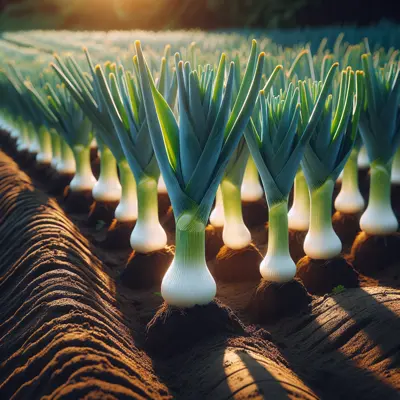
An exceptional early leek variety that produces long, slender white shanks in just 75 days from transplant. Known for its tender texture and mild onion flavor, King Richard is perfect for gardeners wanting quick results without sacrificing quality. This variety excels in both spring and fall plantings.
Harvest
75-85d
Days to harvest
Sun
Full sun
Zones
5–10
USDA hardiness
Height
3-4 feet
Planting Timeline
Showing dates for King Richard Leek in USDA Zone 7
All Zone 7 root-vegetable →Zone Map
Click a state to update dates
King Richard Leek · Zones 5–10
Growing Details
Succession Planting
King Richard doesn't keep producing the way a pepper does — each plant is a one-time harvest — so staggering your sowings matters. Direct sow every 3 weeks from March through early May for a summer and early-fall pull. Then make a second round with a late-summer sowing in mid-July to early August; at 75–85 days to maturity, plants started in late July will be ready by October or November, well before hard freezes end the season.
Stop new sowings once daytime highs are consistently above 80°F — germination drops off sharply and seedlings struggle to size up in the heat. If you want the full harvest window running June through November, you need both a spring and a late-summer sowing. One round alone leaves a big gap.
Complete Growing Guide
King Richard's exceptional speed to maturity demands transplant timing rather than direct seeding, making late spring and late summer plantings ideal for avoiding bolting triggered by excessive summer heat. This cultivar thrives in rich, well-draining soil with consistent moisture and full sun, but its slender shanks are particularly susceptible to rust and fusarium wilt if drainage remains poor. Unlike slower leek varieties, King Richard develops its prized tender white sections quickly but requires adequate blanching through earthing-up or trenching to maximize the valuable shank length before harvest. Watch for spider mites in dry conditions and provide afternoon shade in hot climates to prevent premature flowering. Plant seedlings 6 inches apart in deeply worked beds, spacing wide enough to allow soil to hill around developing stems every 2–3 weeks, which simultaneously blanches the shanks and suppresses competitive weeds.
Light: Full sun (6 or more hours of direct sunlight a day). Soil: High Organic Matter, Loam (Silt). Drainage: Good Drainage, Moist. Height: 3 ft. 0 in. - 4 ft. 0 in.. Spread: 1 ft. 0 in. - 2 ft. 0 in.. Spacing: Less than 12 inches, 12 inches-3 feet. Growth rate: Medium. Maintenance: Medium. Regions: Coastal, Mountains, Piedmont.
Harvesting
King Richard leeks reach peak harvest readiness when the white shanks measure approximately one to one and a half inches in diameter and display a firm, smooth texture when gently squeezed. The distinction between white and green sections should be clearly visible, with minimal yellowing of the upper leaves. This variety supports continuous harvesting by removing outer stalks from mature plants while leaving the center to develop further, or you can pull entire plants once they achieve desired size. For optimal tenderness, harvest King Richard in the early morning when the plant tissues are fully hydrated, as this ensures maximum crispness and flavor compared to afternoon harvesting.
Type: Capsule.
Edibility: The leaves and bulbs can be eaten raw or cooked in small quantities.
Storage & Preservation
Fresh King Richard leeks store best in the refrigerator, wrapped loosely in plastic bags with a few holes for air circulation. Remove any damaged outer leaves and trim roots to about 1 inch before storing. Under these conditions, they'll maintain quality for 2-3 weeks in the crisper drawer.
For longer preservation, clean and slice leeks into rounds, then freeze them on baking sheets before transferring to freezer bags — this prevents clumping and allows you to use portions as needed. Frozen leeks work perfectly in soups and stews but lose their crisp texture. You can also dehydrate cleaned, sliced leeks at 125°F for 8-12 hours to create leek flakes for seasoning. Fermentation is another excellent option: slice leeks and ferment them with 2% salt by weight for 3-5 days to create a tangy condiment that pairs beautifully with roasted meats and vegetables.
History & Origin
The King Richard leek represents a modern cultivar within the European leek breeding tradition, though its specific breeder and introduction year remain poorly documented in readily available horticultural records. The variety likely emerged from twentieth-century European seed companies, particularly those focused on early-maturing leek selections. King Richard belongs to the broader group of slender, quick-maturing leek cultivars developed to meet commercial and home gardener demands for faster harvest cycles. Its parentage traces to the general Allium ampeloprasum var. porrum germplasm that European breeders have selected from for centuries, emphasizing early maturity and tender white shanks. Without definitive archival evidence, King Richard's precise origins remain part of the undocumented history common to many vegetable cultivars introduced during the latter twentieth century.
Origin: Macronesia, Mediterranean, Asia
Advantages
- +Exceptionally fast maturity at just 75 days from transplant saves time.
- +Produces impressively long, slender white shanks with mild, sweet flavor.
- +Tender texture makes King Richard ideal for refined culinary applications.
- +Versatile for both spring and fall plantings in most climates.
- +Early harvest reduces exposure to late-season pest and disease pressure.
Considerations
- -Vulnerable to white rot, a serious soil-borne fungal disease.
- -Susceptible to leek moth larvae, requiring vigilant monitoring and management.
- -Purple blotch disease can reduce visual appeal and marketability significantly.
- -Requires consistent moisture and well-draining soil for optimal performance.
Companion Plants
Carrots and leeks are a well-documented pairing, and it holds up in practice. The two crops root at different depths — leeks stay relatively shallow while carrots go down 10–12 inches — so direct competition for water and nutrients stays low. The more practical benefit is pest confusion: the volatile sulfur compounds leeks emit are thought to deter carrot fly (Psila rosae), and carrot tops may similarly confuse onion fly. Celery fits for similar reasons and shares King Richard's cool-season timing. Cabbage and other brassicas make decent neighbors too — they don't share major pest or disease pressures with alliums and tolerate the same 6.0–7.0 pH range.
Keep beans and peas well away. Both fix nitrogen, which sounds useful in theory, but alliums and legumes have documented allelopathic tension — leeks can suppress legume germination, and beans in particular appear to inhibit allium growth when planted close. Asparagus is a long-term perennial that competes for bed space and nutrients across multiple seasons, and crowding it with alliums creates problems for both crops regardless of how carefully you space them.
Plant Together
Carrots
Complementary root depths and carrot rust fly is repelled by leek scent
Tomatoes
Leeks repel aphids and whiteflies that commonly attack tomatoes
Cabbage
Leeks deter cabbage worms and root maggots from brassicas
Lettuce
Shallow roots complement deep leek roots, efficient space usage
Celery
Both prefer cool, moist conditions and have compatible growing requirements
Onions
Similar allium family benefits, both repel many common garden pests
Parsley
Attracts beneficial insects and doesn't compete for nutrients
Spinach
Cool season crop with shallow roots that complement leek growth pattern
Keep Apart
Beans
Nitrogen fixation can cause excessive leaf growth at expense of bulb development
Peas
Heavy nitrogen production leads to weak, overly leafy leek growth
Asparagus
Competes for similar soil nutrients and both are heavy feeders
Nutrition Facts
Per 100g serving. % Daily Value based on 2,000 calorie diet. Source: USDA FoodData Central (FDC #169246)
Pests & Disease Resistance
Resistance
Good resistance to rust and downy mildew
Common Pests
Onion maggot, thrips, leek moth
Diseases
White rot, downy mildew, purple blotch
Troubleshooting King Richard Leek
What you'll see, why it happens, and what to do about it.
White, fluffy fungal growth at the base of the stalk, with outer leaves collapsing and a rotten, water-soaked smell at the soil line
Likely Causes
- White rot (Sclerotium cepivorum) — a soil-borne fungus that can persist in the soil for 20+ years
- Planting in the same bed as alliums (onions, garlic, leeks) for multiple consecutive seasons
What to Do
- 1.Pull and bag affected plants immediately — do not compost them
- 2.Rotate this bed out of all allium crops for at least 4 seasons; Sclerotium cepivorum sclerotia survive indefinitely without a host
- 3.Avoid overhead irrigation — water at the base to keep the soil surface drier
Gray-purple fuzzy coating on the outer leaves, with yellow patches on the upper leaf surface directly above the fuzzy growth
Likely Causes
- Downy mildew (Peronospora destructor) — thrives in cool, wet weather with overnight temps between 45–55°F and high humidity
- Dense planting closer than 4 inches that traps moisture between stalks
What to Do
- 1.Strip and discard heavily infected leaves; thin any plants crowded below the 4-inch spacing minimum
- 2.Apply a copper-based fungicide on a 7–10 day schedule if conditions stay wet — start before symptoms spread to new growth
- 3.Clear dense companion plantings right up against the leeks to open up air movement
Thin, silvery streaking or stippling on leaves, sometimes with leaf tip dieback; distorted new growth on younger plants
Likely Causes
- Thrips (Thrips tabaci) — NC State Extension lists these as a primary leek pest; they rasp leaf tissue and feed inside the tight leaf sheaths where sprays miss them
- Hot, dry spells that stress the plant and knock back natural predator populations
What to Do
- 1.Peel back the leaf sheath at the first sign of stippling — that's where thrips congregate
- 2.Spray with spinosad or insecticidal soap directed into the leaf folds; repeat every 5–7 days for at least 3 applications
- 3.Hold soil moisture at 1–1.5 inches per week — drought-stressed leeks are more vulnerable and take longer to bounce back
Frequently Asked Questions
How long does King Richard leek take to grow from seed?▼
Can you grow King Richard leeks in containers?▼
Is King Richard leek good for beginners?▼
What does King Richard leek taste like compared to onions?▼
When should I plant King Richard leek seeds?▼
King Richard vs American Flag leek — what's the difference?▼
Zone-by-Zone Planting Calendar
| Zone | Indoor Start | Transplant | Direct Sow | Harvest |
|---|---|---|---|---|
| Zone 1 | — | — | June – July | August – September |
| Zone 2 | — | — | May – July | August – September |
| Zone 11 | — | — | January – February | March – December |
| Zone 12 | — | — | January – February | March – December |
| Zone 13 | — | — | January – February | March – December |
| Zone 3 | — | — | May – June | July – October |
| Zone 4 | — | — | April – June | July – October |
| Zone 5 | — | — | April – May | July – November |
| Zone 6 | — | — | April – May | June – November |
| Zone 7 | — | — | March – May | June – November |
| Zone 8 | — | — | March – April | May – December |
| Zone 9 | — | — | February – March | April – December |
| Zone 10 | — | — | January – March | April – December |
Growing Guides from Wind River Greens
Sources & References
External authority sources used in compiling this guide.
See the Methodology page for how this data is sourced, what's AI-assisted, and known limitations.