Kennebec Potato
Solanum tuberosum 'Kennebec'
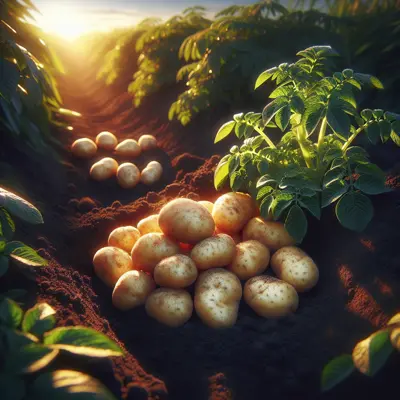
The ultimate all-purpose potato that excels at everything from fluffy baked potatoes to crispy French fries, making it a favorite among home gardeners and commercial growers alike. This reliable variety produces excellent yields of smooth, white-skinned potatoes with outstanding storage qualities. Known for its disease resistance and adaptability, Kennebec is perfect for gardeners seeking a dependable, versatile potato variety.
Harvest
80-100d
Days to harvest
Sun
Full sun
Zones
2–11
USDA hardiness
Height
12-24 inches
Planting Timeline
Showing dates for Kennebec Potato in USDA Zone 7
All Zone 7 root-vegetable →Zone Map
Click a state to update dates
Kennebec Potato · Zones 2–11
Growing Details
Succession Planting
Kennebec goes in once per season, not in repeated successions — you set seed pieces, hill them as they grow, and dig the whole crop. You can stagger two plantings to spread out the harvest, though: an early batch in late March (zone 7) will be ready to dig around late June, and a second batch in mid-April gives you tubers in late July. Don't push a third planting much past early May in warm climates; tubers set poorly once soil temps exceed 80°F, and sustained air temps above 90°F will stall the plants outright.
For a fall crop, plant small certified seed potatoes in late July, targeting harvest before first frost. Kennebec's 80-100 day maturity window is tight for a late-summer planting in zone 7 — count back from your average first frost date and that puts the latest safe planting around July 10-20. Keep in mind that tubers sizing up through September heat will need consistent moisture, 1-2 inches per week, to avoid the erratic watering that triggers common scab.
Complete Growing Guide
Plant Kennebec seed potatoes as soon as soil reaches 45°F in spring, as this variety matures reliably within 80-100 days and benefits from consistent cool-season conditions. Unlike slower-maturing varieties, Kennebec demands consistent moisture and well-draining, slightly acidic soil (pH 5.0-6.8) to prevent the common issue of misshapen tubers that plague this cultivar in compacted or waterlogged beds. While generally disease-resistant, Kennebec shows moderate susceptibility to late blight in humid conditions, so ensure adequate spacing for air circulation and avoid overhead watering. This cultivar tends toward shallow tubing if hilled insufficiently, so mound soil aggressively around plants at mid-season to encourage proper depth development and maximize your yield of those signature smooth, white potatoes. For best results, plant certified seed potatoes rather than grocery store potatoes, which may harbor disease or lack vigor.
Light: Full sun (6 or more hours of direct sunlight a day). Soil: High Organic Matter, Sand. Soil pH: Acid (<6.0). Drainage: Good Drainage, Moist. Height: 1 ft. 0 in. - 2 ft. 0 in.. Spread: 1 ft. 0 in. - 1 ft. 6 in.. Spacing: Less than 12 inches. Maintenance: Medium. Propagation: Root Cutting, Seed. Regions: Coastal, Mountains, Piedmont.
Harvesting
Kennebec potatoes are ready for harvest when vines yellow and die back completely, typically around 80-100 days after planting, and the skin has set firmly enough to resist rubbing off by hand. Dig carefully around plants to check for mature tubers of at least 2-3 inches diameter with smooth, unblemished white skin. For new potatoes, harvest earlier when plants still have green foliage and tubers are smaller and more tender. Most gardeners perform a single main harvest after full vine senescence, carefully lifting entire plants to gather all tubers at once, though you can make selective early harvests of larger potatoes while leaving smaller ones to continue growing. Timing your harvest on a dry day improves handling and reduces rot risk during storage.
Potato plants will sometimes produce a round, smooth, yellowish-green to a green berry that is 0.5 inches in diameter and is filled with many seeds. EXTREMELY TOXIC, DO NOT EAT.
Color: Gold/Yellow, Green. Type: Berry. Length: < 1 inch. Width: < 1 inch.
Harvest time: Fall, Summer
Edibility: The tubers are edible but discard sprouts and never eat tubers if they look spoiled or green below the skin. All the green parts of the plant contain a toxin known as solanine and should not be ingested. Potatoes can be stored in a cool, dry, dark place for three to four months. Potato tubers can be boiled, baked, fried, or roasted as a vegetable. They may also be processed to produce potato flour. potato chips, vodka, and schnapps.
Storage & Preservation
Store freshly harvested Kennebec potatoes in a cool, dark location between 45-50°F with moderate humidity around 85-90%. A ventilated wooden crate or burlap sack works well; avoid plastic bags that trap moisture and encourage rot. Keep them away from light to prevent greening and solanine development.
Under proper conditions, Kennebecs maintain good quality for 3-4 months, though they're best used within 2-3 months for optimal texture and flavor. Check stored potatoes periodically and remove any sprouting or damaged tubers.
For preservation, freezing works exceptionally well with this variety—blanch cut pieces for 3-5 minutes, cool, and freeze in airtight containers for up to 8 months. Their low moisture content also makes them excellent candidates for dehydration; slice thin, dry at 130-140°F until brittle, then store in sealed jars. Canning is possible using tested pressure-canning recipes, though it alters texture.
A useful note: Kennebecs are notably resistant to bruising during harvest and storage compared to other processing varieties, making them more forgiving for less-than-perfect handling.
History & Origin
Developed at the University of Maine in 1941, the Kennebec potato emerged from a cross between the Katahdin and unknown pollen parent, though detailed breeding records remain incomplete. The variety was released publicly in 1945 and quickly became established as a standard commercial cultivar throughout North America. Named after the Kennebec River in Maine, this potato gained prominence for its reliable performance across diverse growing conditions and its suitability for both fresh market and processing applications. The University of Maine's breeding program prioritized disease resistance and yield consistency, qualities that secured Kennebec's enduring reputation as a foundational American potato variety throughout the latter twentieth century.
Origin: South America
Advantages
- +Exceptional versatility for baking, frying, and mashing applications
- +Outstanding storage quality keeps potatoes fresh for months
- +Reliable high yields with disease resistance and adaptability
- +Smooth white skin makes preparation and presentation easy
- +Moderate 80-100 day maturity suits most growing seasons
Considerations
- -Susceptible to early blight in humid or wet conditions
- -Colorado potato beetles target this variety aggressively
- -Prone to common scab in acidic or rocky soils
Companion Plants
French marigolds and nasturtiums are the two worth planting close. Marigolds deter Colorado potato beetle adults to some degree and suppress soil nematodes near the root zone. Nasturtiums work as a trap crop rather than a repellent — aphids will colonize them before they hit your potato foliage, so plant them at the bed's edge and check them every few days. Horseradish at the corners of a potato bed has a long reputation for confusing beetles; the evidence is mostly observational, but it takes up almost no space. Beans are useful for a different reason: the nitrogen-fixing bacteria in legume roots feed the soil without competing with potatoes for the same nutrients, and their root depth doesn't crowd out the shallow tubers.
Tomatoes, eggplants, and peppers all belong to Solanaceae and share early blight (Alternaria solani) and several other pathogens with potatoes — planting them together just concentrates disease pressure in one spot. NC State Extension's rotation guidance recommends keeping all nightshades out of the same bed for 3-4 years for exactly this reason. Fennel produces allelopathic root secretions that stunt most vegetable neighbors; give it a corner of its own, well away from the potato rows.
Plant Together
Marigolds
Repel Colorado potato beetles and nematodes, reduce soil pests
Nasturtiums
Trap crop for Colorado potato beetles and aphids, repel squash bugs
Horseradish
Repels Colorado potato beetles and improves disease resistance
Beans
Fix nitrogen in soil, improving potato growth and yield
Corn
Provides windbreak and shade, compatible root systems
Cabbage
Different nutrient needs, helps maximize garden space efficiency
Chives
Repel aphids and may improve potato flavor and growth
Parsley
Attracts beneficial insects and doesn't compete for nutrients
Keep Apart
Tomatoes
Same family as potatoes, share diseases like blight and attract same pests
Sunflowers
Allelopathic compounds inhibit potato growth and development
Fennel
Strong allelopathic effects that stunt potato growth and development
Nutrition Facts
Per 100g serving. % Daily Value based on 2,000 calorie diet. Source: USDA FoodData Central (FDC #170393)
Pests & Disease Resistance
Resistance
Excellent resistance to late blight, good scab resistance, moderate virus resistance
Common Pests
Colorado potato beetle, aphids, wireworms, flea beetles
Diseases
Early blight, blackleg, common scab (mild)
Troubleshooting Kennebec Potato
What you'll see, why it happens, and what to do about it.
Stems turning black and shrunken at the soil line, leaves yellowing; plants collapse within a day or two
Likely Causes
- Blackleg (Pectobacterium atrosepticum) — a bacterial rot that enters through seed pieces or wounds and travels up the stem
- Planting in waterlogged or poorly drained soil, which accelerates bacterial spread
What to Do
- 1.Pull and bag the affected plants immediately — don't compost them
- 2.Improve drainage before replanting; raised beds or hilled rows help considerably
- 3.Start clean next season: use certified disease-free seed potatoes and don't replant nightshades in that spot for at least 3 years, per NC State Extension's IPM rotation guidance
Lower leaves developing dark brown bullseye spots with yellow halos, spreading upward through the canopy around days 50-70
Likely Causes
- Early blight (Alternaria solani) — a soil-borne fungus that overwinters in the soil and splashes up onto foliage during rain or irrigation, as noted by NC State Extension
- Dense canopy with poor airflow, or overhead watering late in the day
What to Do
- 1.Strip affected lower leaves and throw them in the trash, not the compost
- 2.Lay 3-4 inches of straw mulch around the base of each plant to stop soil splash
- 3.Rotate potatoes and all other nightshades (tomatoes, eggplant, peppers) out of that bed for at least 3-4 seasons — they share this pathogen
Tubers at harvest show rough, corky, raised or pitted patches on the skin — flesh underneath is fine
Likely Causes
- Common scab (Streptomyces scabies) — a soil-borne bacterium that thrives when soil pH climbs above 6.0 and soil moisture is low during tuber initiation
- Inconsistent watering in the 4-6 weeks after plants flower, when tubers are sizing up
What to Do
- 1.Keep soil pH between 5.0 and 5.5 for potatoes specifically — lower than you'd run most vegetables
- 2.Water consistently through tuber initiation (roughly 6 weeks post-flowering); don't let the soil dry out more than an inch deep during that window
- 3.Skip fresh manure or lime applications the season before planting — both raise pH and create conditions where scab takes hold
Frequently Asked Questions
How long does Kennebec potato take to grow?▼
Is Kennebec potato good for beginners?▼
Can you grow Kennebec potatoes in containers?▼
What does Kennebec potato taste like?▼
When should I plant Kennebec potatoes?▼
Kennebec vs Yukon Gold potatoes - what's the difference?▼
Zone-by-Zone Planting Calendar
| Zone | Indoor Start | Transplant | Direct Sow | Harvest |
|---|---|---|---|---|
| Zone 1 | — | — | June – July | September – September |
| Zone 2 | — | — | May – July | August – September |
| Zone 11 | — | — | January – February | March – December |
| Zone 12 | — | — | January – February | March – December |
| Zone 13 | — | — | January – February | March – December |
| Zone 3 | — | — | May – June | August – October |
| Zone 4 | — | — | April – June | July – October |
| Zone 5 | — | — | April – May | July – November |
| Zone 6 | — | — | April – May | July – November |
| Zone 7 | — | — | March – May | June – November |
| Zone 8 | — | — | March – April | June – December |
| Zone 9 | — | — | February – March | May – December |
| Zone 10 | — | — | January – March | April – December |
Growing Guides from Wind River Greens
Sources & References
External authority sources used in compiling this guide.
See the Methodology page for how this data is sourced, what's AI-assisted, and known limitations.