Zoysia Grass
Zoysia japonica
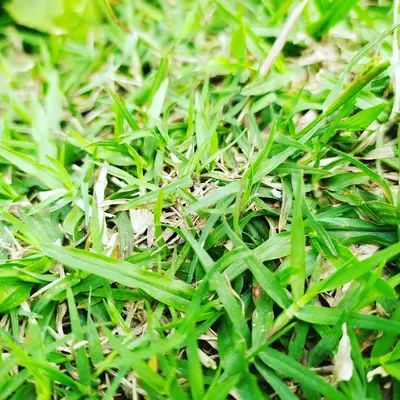
An elegant warm-season grass that creates one of the most beautiful and low-maintenance lawns possible, with a dense, carpet-like texture that crowds out weeds naturally. Once established, this slow-growing grass requires minimal watering and fertilizing while providing excellent heat and drought tolerance. Its fine texture and rich green color make it a premium choice for homeowners wanting a gorgeous lawn with less work.
Sun
Full sun
Zones
5–11
USDA hardiness
Height
5 inches
Planting Timeline
Showing dates for Zoysia Grass in USDA Zone 7
All Zone 7 grass →Zone Map
Click a state to update dates
Zoysia Grass · Zones 5–11
Growing Details
Complete Growing Guide
Light: Full sun (6 or more hours of direct sunlight a day). Soil: Loam (Silt), Sand. Drainage: Good Drainage, Moist. Growth rate: Slow. Maintenance: High. Regions: Coastal, Mountains, Piedmont.
Harvesting
seedhead a spikelet, with seeds alternating along the head
Type: Caryopsis. Length: < 1 inch. Width: < 1 inch.
Harvest time: Summer
Storage & Preservation
Zoysia grass is a living landscape, not harvested for storage. However, if you're propagating zoysia vegetatively, sprigs and plugs should be planted immediately after harvest for best results. If temporary storage is necessary before planting, keep dormant plugs or sprigs in a cool, moist environment (50-60°F) for no more than 1-2 weeks. Store in breathable containers with moist (not waterlogged) soil or media to prevent desiccation and root rot. For long-term propagation storage, plugs can be refrigerated for short periods, but viability declines rapidly — prompt planting is strongly recommended. If establishing from sod, lay immediately upon delivery, as sod quality deteriorates within 24-48 hours if unrolled and exposed to heat. Keep sod moist during installation and for 2-3 weeks after to ensure good soil contact and rooting.
History & Origin
Origin: Asia
Advantages
- +Dense carpet-like texture naturally crowds out weeds without herbicides
- +Excellent heat and drought tolerance requires minimal watering once established
- +Low maintenance needs reduce fertilizing, mowing, and overall lawn care
- +Rich green color and fine texture create premium aesthetic appeal
- +Slow growth rate means less frequent mowing throughout the season
Considerations
- -Slow establishment period requires patience before lawn looks mature
- -Vulnerable to grub and chinch bug infestations requiring pest management
- -Dormant and brown during winter months in cooler climates
- -Sensitive to shade; performs poorly under trees or building shadows
Companion Plants
The most useful companions for Zoysia aren't ones that help the grass directly — they're plants that fill the edges, borders, and thin spots where Zoysia either won't grow or fills in slowly. Liriope and Mondo Grass are the workhorses here: both tolerate the same pH range (6.0–7.0), handle drought similarly, and don't spread aggressively enough to fight Zoysia's stolons for space. Ajuga works well along shaded borders where Zoysia thins out below about 4 hours of direct sun. Sedums and Native Wildflowers are solid for dry rocky margins where you're not trying to grow turf at all.
White Clover gets recommended often as a lawn companion, and there's a real mechanism behind it — it fixes atmospheric nitrogen and releases some into the soil as it decomposes. In a low-input situation that's a genuine benefit. The caveat with Zoysia is visual: clover's broad leaf texture reads as patchy against fine-bladed Zoysia, so it fits informal areas better than anything you're trying to keep tidy.
The harmful companions are straightforward competition problems. Tall Fescue and Annual Ryegrass stay green through winter while Zoysia is dormant and tan, which means they'll hold territory the Zoysia can't reclaim until soil temps climb back above 65°F in spring. Bermuda Grass is a different problem — it spreads by both stolons and rhizomes and will fight Zoysia directly for the same horizontal space. Getting Bermuda out of an established Zoysia stand typically requires a non-selective herbicide and a full renovation. Keep them separated from day one.
Plant Together
White Clover
Fixes nitrogen in soil, low-growing, complements grass growth without competing
Wild Strawberry
Low groundcover that thrives in similar conditions, attracts beneficial insects
Ajuga
Shade-tolerant groundcover that fills gaps where zoysia struggles in low light
Liriope
Similar water and soil requirements, provides border definition and texture contrast
Mondo Grass
Complementary ornamental grass with similar cultural needs and growth habits
Sedums
Drought-tolerant succulents that thrive in similar sunny, well-drained conditions
Native Wildflowers
Support beneficial insects and pollinators while tolerating zoysia's growing conditions
Ornamental Onions
Deter grubs and other lawn pests that damage zoysia roots
Keep Apart
Tall Fescue
Aggressive cool-season grass that competes heavily and creates patchy appearance
Bermuda Grass
Invasive warm-season grass that outcompetes and overtakes zoysia through runners
Annual Ryegrass
Fast-growing temporary grass that weakens zoysia by competing for resources during establishment
Pests & Disease Resistance
Resistance
Excellent disease resistance, very few problems
Common Pests
Grubs, chinch bugs, occasionally billbugs
Diseases
Brown patch in extreme conditions, generally disease-free
Troubleshooting Zoysia Grass
What you'll see, why it happens, and what to do about it.
Irregular brown or straw-colored patches, 6–24 inches across, appearing in mid-to-late summer
Likely Causes
- White grubs (larvae of Japanese beetles or masked chafers) feeding on roots 2–4 inches below the surface
- Chinch bugs (Blissus insularis) sucking plant sap at the thatch layer — look for the bugs themselves in a coffee-can float test
What to Do
- 1.Do the float test first: press an open-ended can into the turf edge of the damaged area, fill with water, wait 5 minutes — chinch bugs will float to the surface if they're present
- 2.For grubs, peel back a patch of turf and count; more than 5–6 grubs per square foot warrants a targeted insecticide (imidacloprid or chlorantraniliprole applied in late June to July before larvae go deep)
- 3.For chinch bugs, bifenthrin applied to the damaged zone and a 5-foot buffer is the standard fix — water it in lightly after application
Large circular tan or brown patches, 1–3 feet wide, with a dark 'smoke ring' at the edge, appearing after hot humid nights above 70°F
Likely Causes
- Brown patch (Rhizoctonia solani) — uncommon in Zoysia but possible when nighttime temps stay high and leaf blades stay wet for 8+ hours
- Evening irrigation or overwatering that keeps the turf surface wet overnight
What to Do
- 1.Switch any irrigation to early morning so blades dry before noon
- 2.Back off nitrogen fertilization — excess N in summer pushes the lush, soft growth Rhizoctonia thrives on
- 3.A single application of azoxystrobin or propiconazole fungicide at label rate will stop active spread; don't expect it to green up the dead center
Turf stays tan well past the point when neighboring warm-season lawns have broken dormancy in spring
Likely Causes
- Zoysia needs soil temps at the 2-inch depth to hit 65°F consistently before it breaks dormancy — in the cooler parts of its range, that can mean late April or early May
- Thatch over ½ inch thick insulating the crowns from soil warmth
- Late frost damage to surface stolons
What to Do
- 1.Check soil temperature with a probe thermometer at 2 inches before assuming something is wrong — slow green-up is normal for this species
- 2.If thatch exceeds ½ inch, run a power rake in early spring before green-up and bag the debris
- 3.Hold off on fertilizing until the turf is at least 50% green — nitrogen applied to dormant Zoysia feeds the weeds, not the grass
Frequently Asked Questions
How long does zoysia grass take to establish and fill in completely?▼
Is zoysia grass good for beginners?▼
When should you plant zoysia grass?▼
How much water does zoysia grass need?▼
Can you grow zoysia grass in containers or shade?▼
What's the difference between zoysia and bermuda grass?▼
Zone-by-Zone Planting Calendar
Growing Guides from Wind River Greens
Sources & References
External authority sources used in compiling this guide.
- ExtensionNC State Extension
See the Methodology page for how this data is sourced, what's AI-assisted, and known limitations.