Winterbor Kale
Brassica oleracea
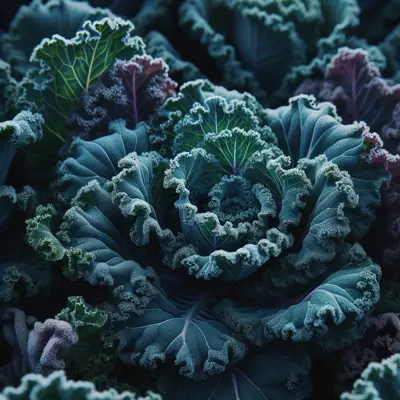
Plants are tall, with excellent yield and good cold hardiness. The ruffled blue-green leaves have an attractive curl. Vigorous, productive plants.
Harvest
60d
Days to harvest
Sun
Full sun to partial shade
Zones
6–9
USDA hardiness
Height
10-24 inches
Planting Timeline
Showing dates for Winterbor Kale in USDA Zone 7
All Zone 7 brassica →Zone Map
Click a state to update dates
Winterbor Kale · Zones 6–9
Growing Details
Succession Planting
Direct sow or transplant Winterbor starting in early March (once overnight lows hold above 25°F) through mid-May for a spring run. Then stop — kale turns bitter and growth stalls once daytime highs push past 85°F consistently, which in zone 7 means roughly late June through July. Start a second round of transplants indoors in early August, following UGA Extension's guidance to start brassica transplants in a half-shaded area for setting out in September. That fall planting carries through November easily, and Winterbor's flavor genuinely improves after the first hard frost, so don't be in a hurry to pull it once temperatures drop.
Complete Growing Guide
This tall cultivar thrives when planted in late summer for fall and winter harvest, taking advantage of its superior cold hardiness to produce sweet leaves well into freezing temperatures. Unlike shorter kale varieties, Winterbor's 10-24 inch height requires sturdy staking in windy locations to prevent toppling under snow load. Plant in full sun with well-draining, fertile soil rich in organic matter, spacing plants 18-24 inches apart to accommodate vigorous growth. While generally pest-resistant, monitor for cabbage moths and flea beetles, particularly in warmer months before autumn temperatures provide natural pest suppression. This variety rarely bolts prematurely when grown as a cool-season crop, but avoid spring planting in mild climates where heat triggers flowering. A practical strategy: harvest outer leaves progressively once plants reach 8-10 inches tall, allowing the central rosette to continue producing throughout winter and extending your harvest window significantly beyond the standard 60-day maturity.
Light: Full sun (6 or more hours of direct sunlight a day), Partial Shade (Direct sunlight only part of the day, 2-6 hours). Soil: Clay, Loam (Silt), Sand. Soil pH: Acid (<6.0), Neutral (6.0-8.0). Drainage: Good Drainage, Moist. Height: 0 ft. 10 in. - 2 ft. 0 in.. Spread: 1 ft. 0 in. - 2 ft. 0 in.. Spacing: 12 inches-3 feet. Growth rate: Medium. Maintenance: Medium. Propagation: Seed, Stem Cutting. Regions: Coastal, Mountains, Piedmont.
Harvesting
Winterbor Kale reaches peak harvest readiness when the deeply ruffled, blue-green leaves develop their characteristic curl and measure 8-12 inches in length with a tender yet firm texture. The leaves should feel crisp to the touch and display a vibrant blue-green hue rather than a dull appearance. For optimal productivity, employ continuous harvesting by removing outer leaves from the base of the plant while allowing the central growing crown to remain undisturbed, encouraging prolonged yields throughout the season. A key timing advantage specific to Winterbor is harvesting after the first frost, which converts the plant's starches into sugars and significantly enhances the sweet, mild flavor profile this cultivar is known for. This post-frost harvest window extends the plant's usefulness well into winter months.
The fruits dry and split when ripe.
Color: Brown/Copper, Green. Type: Siliqua. Length: > 3 inches.
Garden value: Edible
Harvest time: Fall, Summer
Edibility: The foliage is edible raw or cooked but when cooked can emit an unpleasant odor.
Storage & Preservation
Fresh Winterbor kale stores best when harvested dry and immediately refrigerated. Remove any damaged leaves, then store unwashed in perforated plastic bags in your refrigerator's crisper drawer. Properly stored, it maintains quality for 7-10 days.
For longer preservation, blanch clean leaves in boiling water for 2 minutes, shock in ice water, drain thoroughly, and freeze in portions suitable for your cooking needs. Frozen kale works excellently in smoothies, soups, and cooked dishes for up to 12 months.
Dehydrating is another excellent option — massage clean leaves with a small amount of salt, then dehydrate at 125°F until crispy for homemade kale chips that store for months in airtight containers. The post-frost sweetness of Winterbor makes it particularly well-suited for dehydrating, as the natural sugars concentrate during the drying process.
History & Origin
Winterbor Kale was developed by the Dutch seed company Nunhems in the 1970s as part of their breeding efforts to create cold-hardy kale varieties suited to northern European climates. The variety belongs to the larger lineage of winter kale cultivars that were traditionally grown throughout Scandinavia and the Netherlands for their enhanced sweetness after frost exposure. While detailed documentation of the specific cross or parent varieties used in Winterbor's development remains limited in readily available sources, the cultivar represents the commercial refinement of centuries-old kale-growing traditions adapted for modern agriculture. Its introduction marked a significant contribution to cold-season vegetable gardening in temperate regions.
Origin: W. Europe
Advantages
- +Tall plants produce excellent yields of nutrient-dense leaves
- +Ruffled blue-green leaves are visually attractive in gardens
- +Sweet, mild flavor improves noticeably after exposure to frost
- +Vigorous growth and easy cultivation make it beginner-friendly
- +Outstanding cold hardiness allows winter harvesting in cold climates
Considerations
- -Susceptible to cabbage worms, aphids, and destructive flea beetles
- -Vulnerable to black rot, clubroot, and downy mildew infections
- -Requires vigilant pest management to prevent crop damage
Companion Plants
Nasturtiums pull aphid pressure off the kale by acting as a trap crop — aphids colonize the nasturtiums first, which gives you a concentrated target to knock back with a soap spray rather than hunting them across the whole planting. French marigolds are worth tucking in along the border too; NC State Extension recommends solid plantings of them to suppress nematode populations in affected beds, and that benefit carries over here. Onions and garlic planted at 12-inch intervals nearby disrupt cabbage moth egg-laying through scent. Keep tomatoes out of the picture entirely — in our zone 7 Georgia garden, fall kale and late tomatoes compete directly for the same beds and the same water, and tomatoes host aphid populations that will migrate straight over once the fruit stops being interesting to them. Pole beans are a subtler problem: the nitrogen they fix encourages the kind of soft, fast leaf growth that makes kale more attractive to caterpillars, not less.
Plant Together
Nasturtiums
Trap crop for aphids and flea beetles, deters cabbage worms
Marigolds
Repel cabbage moths and other brassica pests with strong scent
Onions
Deter cabbage loopers and aphids, help mask kale scent from pests
Garlic
Repels cabbage worms, aphids, and flea beetles
Dill
Attracts beneficial wasps that parasitize cabbage worms
Carrots
Deep roots don't compete, help break up soil for kale roots
Lettuce
Shallow roots complement kale, provides living mulch
Spinach
Compatible growth habits, efficient use of garden space
Keep Apart
Tomatoes
Heavy feeders that compete for nutrients, may stunt kale growth
Strawberries
Different soil pH preferences and may harbor similar pests
Pole Beans
Can shade kale and compete for nutrients during peak growth
Nutrition Facts
Per 100g serving. % Daily Value based on 2,000 calorie diet. Source: USDA FoodData Central (FDC #168421)
Pests & Disease Resistance
Resistance
Excellent cold tolerance, resistant to bolting
Common Pests
Cabbage worms, aphids, flea beetles
Diseases
Black rot, clubroot, downy mildew
Troubleshooting Winterbor Kale
What you'll see, why it happens, and what to do about it.
Leaves covered in small, irregular holes — seedlings look like they've been hit with buckshot
Likely Causes
- Flea beetles (Phyllotreta spp.) — tiny, jumping beetles that feed aggressively on young brassica leaves
- Transplants set out when soil is still warm in late summer, which is peak flea beetle pressure
What to Do
- 1.Cover transplants immediately with row cover (Agribon-15 or similar) and seal the edges — flea beetles will find any gap
- 2.Hold off transplanting until soil temps drop below 80°F if you can afford to wait; beetles thin out considerably after that
- 3.Plants past 6 inches tall usually outgrow the damage on their own, so put your energy into protecting seedlings
V-shaped yellow lesions at leaf edges, dark veins visible underneath — lesions moving inward from the margin
Likely Causes
- Black rot (Xanthomonas campestris pv. campestris) — a bacterial disease that enters through leaf margins and natural water pores
- Overhead irrigation or heavy rain splashing contaminated soil onto foliage
- Infected transplants — black rot can arrive on starts before symptoms are visible
What to Do
- 1.Pull and bag affected leaves immediately; don't compost them — the bacterium persists in plant debris
- 2.Switch to drip irrigation or water at the base; the disease spreads fast once the canopy stays wet
- 3.Rotate out of all brassicas (kale, cabbage, broccoli, collards) for at least 2 seasons in that bed — NC State Extension IPM guidance lists rotation as the primary management tool for this pathogen
Frequently Asked Questions
How long does Winterbor kale take to grow?▼
Can you grow Winterbor kale in containers?▼
When should I plant Winterbor kale for winter harvest?▼
What does Winterbor kale taste like after frost?▼
Is Winterbor kale good for beginners?▼
Winterbor vs regular curly kale — what's the difference?▼
Zone-by-Zone Planting Calendar
| Zone | Indoor Start | Transplant | Direct Sow | Harvest |
|---|---|---|---|---|
| Zone 1 | April – May | June – July | June – July | August – September |
| Zone 2 | April – May | June – July | May – July | July – September |
| Zone 11 | January – January | January – February | January – February | February – December |
| Zone 12 | January – January | January – February | January – February | February – December |
| Zone 13 | January – January | January – February | January – February | February – December |
| Zone 3 | March – April | May – June | May – June | July – October |
| Zone 4 | March – April | May – June | April – June | June – October |
| Zone 5 | February – March | April – May | April – May | June – November |
| Zone 6 | February – March | April – May | April – May | June – November |
| Zone 7 | February – March | April – May | March – May | May – November |
| Zone 8 | January – February | March – April | March – April | May – December |
| Zone 9 | January – January | February – March | February – March | April – December |
| Zone 10 | January – January | February – March | January – March | March – December |
Growing Guides from Wind River Greens
Sources & References
External authority sources used in compiling this guide.
See the Methodology page for how this data is sourced, what's AI-assisted, and known limitations.