White Hot Cauliflower
Brassica oleracea var. botrytis 'White Hot'
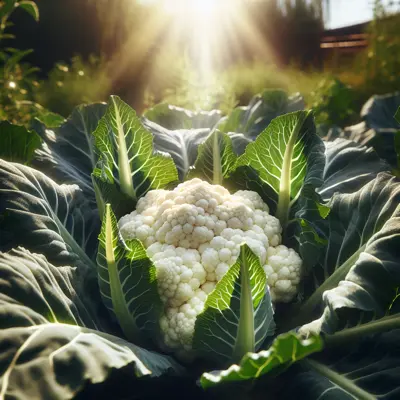
A heat-tolerant F1 hybrid that produces pure white, dense heads even in challenging summer conditions where other cauliflowers fail. This variety is perfect for gardeners in warmer climates or those wanting extended harvest seasons. The self-blanching heads stay white without tying, making it both beautiful and low-maintenance.
Harvest
68-75d
Days to harvest
Sun
Full sun to partial shade
Zones
6–9
USDA hardiness
Height
10-24 inches
Planting Timeline
Showing dates for White Hot Cauliflower in USDA Zone 7
All Zone 7 brassica →Zone Map
Click a state to update dates
White Hot Cauliflower · Zones 6–9
Growing Details
Succession Planting
Start seeds indoors 4-6 weeks before your last frost — in zone 7, that's a late February to early March indoor sow, with transplants going out in April. For a fall crop (often the cleaner one, since cauliflower heads up more reliably in cooling weather), count back 75 days from your first fall frost and start transplants indoors in late July, getting them in the ground by mid-August. Don't push another spring succession once daytime highs are consistently above 80°F — bolting accelerates fast at that point, and you'll end up with loose, bitter curds that aren't worth the bed space.
Complete Growing Guide
White Hot Cauliflower's heat tolerance allows planting in late spring for summer harvest, unlike traditional varieties that struggle with bolting in warm weather—time sowings 10-12 weeks before your first fall frost to capitalize on this advantage. This cultivar requires consistent soil moisture and afternoon shade in zones 8+, as even heat-tolerant varieties can produce loose curds if stressed by drought or extreme temperatures above 85°F. The self-blanching trait eliminates leaf-tying, but monitor closely for cabbage worms and diamondback moths, which intensify in summer crops; use floating row covers until flowering begins. Watch for stretching or premature bolting if temperatures spike suddenly, and provide mulch to maintain even soil moisture and moderate root zone temperature. A practical tip: harvest heads at 6-8 inches diameter rather than waiting for maximum size, as this cultivar maintains better texture and doesn't deteriorate as quickly in heat.
Light: Full sun (6 or more hours of direct sunlight a day), Partial Shade (Direct sunlight only part of the day, 2-6 hours). Soil: Clay, Loam (Silt), Sand. Soil pH: Acid (<6.0), Neutral (6.0-8.0). Drainage: Good Drainage, Moist. Height: 0 ft. 10 in. - 2 ft. 0 in.. Spread: 1 ft. 0 in. - 2 ft. 0 in.. Spacing: 12 inches-3 feet. Growth rate: Medium. Maintenance: Medium. Propagation: Seed, Stem Cutting. Regions: Coastal, Mountains, Piedmont.
Harvesting
Harvest White Hot Cauliflower when heads reach 6 to 8 inches in diameter and feel firm and compact to the touch, with curds still tightly clustered and the characteristic pure white color fully developed. Cut the main head at the base with a sharp knife when the curd surface appears smooth and dense rather than loose or ricey. This variety typically produces a single large head rather than side shoots, so plan for one main harvest per plant, though leaving the stem intact may occasionally yield smaller secondary florets. For extended seasons in warm climates, time successive plantings two to three weeks apart rather than relying on repeat harvests from individual plants, since the self-blanching trait and heat tolerance allow you to maintain continuous production throughout challenging summer months when other varieties bolt or discolor.
The fruits dry and split when ripe.
Color: Brown/Copper, Green. Type: Siliqua. Length: > 3 inches.
Garden value: Edible
Harvest time: Fall, Summer
Edibility: The foliage is edible raw or cooked but when cooked can emit an unpleasant odor.
Storage & Preservation
Fresh White Hot Cauliflower keeps best when stored unwashed in the refrigerator crisper drawer, wrapped loosely in perforated plastic bags. Properly stored heads maintain quality for 7-10 days, though they're best used within the first week for optimal flavor and texture.
For longer preservation, blanch florets in boiling water for 3 minutes, then plunge into ice water before freezing in airtight containers for up to 8 months. White Hot's dense, fine-grained texture makes it excellent for pickling – the heads hold their shape well in quick pickle brines or traditional lacto-fermentation.
Dehydrating works well for making cauliflower powder – slice heads thin and dry at 125°F until completely crisp. The resulting powder adds subtle nutty flavor to soups and can substitute for some flour in low-carb baking applications.
History & Origin
White Hot Cauliflower is a modern F1 hybrid developed within the broader tradition of heat-tolerant cauliflower breeding that gained momentum in the late 20th century as seed companies responded to climate challenges and demand for extended growing seasons. While specific breeder attribution and release year for this particular cultivar remain undocumented in widely accessible sources, it represents the culmination of decades of selection work focused on self-blanching traits and thermal tolerance in Brassica oleracea var. botrytis. The variety likely emerged from commercial breeding programs prioritizing performance in warm climates, where heat stress typically compromises head quality and whiteness in conventional varieties.
Origin: W. Europe
Advantages
- +Thrives in hot summers where standard cauliflowers bolt or fail completely
- +Self-blanching white heads eliminate labor-intensive tying and wrapping chores
- +Moderate 68-75 day maturity enables succession planting for extended harvests
- +Mild, sweet, nutty flavor makes it excellent for fresh eating and cooking
Considerations
- -Moderate-to-challenging difficulty means it demands consistent moisture and careful pest management
- -Highly susceptible to clubroot, black rot, and downy mildew in poor conditions
- -Dense curds attract cabbage worms, aphids, and flea beetles requiring vigilant monitoring
- -F1 hybrid status means seeds cannot be saved for next season's planting
Companion Plants
Onions and garlic planted at 6-inch intervals around cauliflower help mask the brassica's scent, which slows cabbage worms and aphids from homing in — NC State Extension notes this diluting effect on pest-attractive odors, though they're candid that garlic's repellant credentials are not well-supported by research. Nasturtiums pull double duty as a trap crop for aphids, drawing them off the developing curd. Dill brings in parasitic wasps that prey on imported cabbageworm (Pieris rapae). Tomatoes and pole beans need to stay on the other side of the garden — both compete hard for the same nutrients, and tomatoes can introduce soilborne pressure that brassicas don't handle well. Strawberries are similarly poor company, their allelopathic root chemistry capable of stunting cauliflower before you notice anything wrong above ground.
Plant Together
Dill
Attracts beneficial insects like parasitic wasps that control cabbage worms
Onions
Repel cabbage maggots, aphids, and other brassica pests with their strong scent
Marigolds
Deter aphids, whiteflies, and other harmful insects while attracting beneficial predators
Nasturtiums
Act as trap crop for aphids and flea beetles, drawing pests away from cauliflower
Celery
Repels cabbage worms and white cabbage butterfly with its strong aroma
Spinach
Provides ground cover and has different nutrient needs, reducing competition
Garlic
Natural fungicide properties help prevent clubroot and other soil-borne diseases
Chamomile
Improves soil health and may enhance cauliflower flavor while attracting beneficial insects
Keep Apart
Strawberries
Compete for similar nutrients and may harbor pests that also attack brassicas
Tomatoes
Both are heavy feeders competing for nutrients, and tomatoes may inhibit brassica growth
Pole Beans
Can shade cauliflower and compete for space, while beans may stunt brassica development
Nutrition Facts
Per 100g serving. % Daily Value based on 2,000 calorie diet. Source: USDA FoodData Central (FDC #2685573)
Pests & Disease Resistance
Resistance
Good heat tolerance and resistance to downy mildew
Common Pests
Cabbage worms, aphids, flea beetles, cabbage root fly
Diseases
Black rot, clubroot, bacterial soft rot, downy mildew
Troubleshooting White Hot Cauliflower
What you'll see, why it happens, and what to do about it.
Head forms but stays small — golf ball to tennis ball size — and stops developing (buttoning)
Likely Causes
- Transplant shock from oversized starts (more than 4-6 leaves at transplant time)
- Drought stress or inconsistent watering in the first 2-3 weeks after transplanting
- Cold snap below 45°F shortly after transplant
What to Do
- 1.Source transplants with no more than 4-6 true leaves — NC State Extension specifically flags large transplants as the primary buttoning culprit
- 2.Keep soil consistently moist (1.5 inches per week); use a rain gauge so you're not guessing
- 3.If a late frost is coming, cover with row fabric to prevent temperature shock before the head sets
White curd turning green or yellow in the days before harvest
Likely Causes
- Sun exposure — the curd is photosynthesizing because leaves aren't covering it
- Delayed harvest on a warm stretch
What to Do
- 1.Once the head reaches about 3 inches across, pull the outer leaves up over the curd and tie them together with a rubber band or twine — this is blanching, and it keeps the head white
- 2.Check the head every 2-3 days once blanched; if it starts to separate or elongate, cut it immediately regardless of size
- 3.If you skipped blanching and the curd has already gone green, harvest now — it's still edible, just not what you were growing it for
V-shaped yellow-to-brown lesions at leaf margins, sometimes with darkened veins, spreading across older leaves
Likely Causes
- Black rot (Xanthomonas campestris) — a bacterial disease with high destructive potential, per NC State Extension; spreads through water splash and contaminated seed
- Overhead irrigation wetting foliage repeatedly
What to Do
- 1.Remove and bag affected leaves immediately — do not compost them
- 2.Switch to drip irrigation or water at the base; Xanthomonas campestris moves fast through wet foliage
- 3.Rotate this bed out of all brassicas — cabbage, collards, broccoli — for at least 2 seasons, since the pathogen persists in crop debris
Frequently Asked Questions
How long does White Hot cauliflower take to grow from seed?▼
Can you grow White Hot cauliflower in containers?▼
What does White Hot cauliflower taste like compared to regular cauliflower?▼
When should I plant White Hot cauliflower for fall harvest?▼
Is White Hot cauliflower good for beginners?▼
Why are my White Hot cauliflower heads turning yellow?▼
Zone-by-Zone Planting Calendar
| Zone | Indoor Start | Transplant | Direct Sow | Harvest |
|---|---|---|---|---|
| Zone 1 | April – May | June – July | June – July | August – September |
| Zone 2 | April – May | June – July | May – July | July – September |
| Zone 11 | January – January | January – February | January – February | February – December |
| Zone 12 | January – January | January – February | January – February | February – December |
| Zone 13 | January – January | January – February | January – February | February – December |
| Zone 3 | March – April | May – June | May – June | July – October |
| Zone 4 | March – April | May – June | April – June | July – October |
| Zone 5 | February – March | April – May | April – May | June – November |
| Zone 6 | February – March | April – May | April – May | June – November |
| Zone 7 | February – March | April – May | March – May | May – November |
| Zone 8 | January – February | March – April | March – April | May – December |
| Zone 9 | January – January | February – March | February – March | April – December |
| Zone 10 | January – January | February – March | January – March | March – December |
Growing Guides from Wind River Greens
Sources & References
External authority sources used in compiling this guide.
See the Methodology page for how this data is sourced, what's AI-assisted, and known limitations.