Minuet
Brassica rapa var. pekinensis
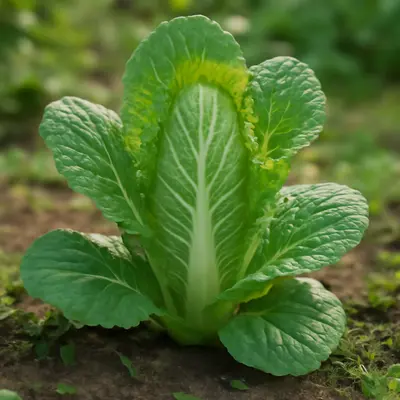
9" tall heads with dark green outer leaves and an attractive yellow interior. Light, sweet taste. Space 12" apart for high yields of upright, dense heads. Slow to bolt. Tolerant to bottom rot and black speck.
Harvest
48d
Days to harvest
Sun
Full sun to part shade
Zones
5–9
USDA hardiness
Height
3 feet
Planting Timeline
Showing dates for Minuet in USDA Zone 7
All Zone 7 brassica →Zone Map
Click a state to update dates
Minuet · Zones 5–9
Growing Details
Succession Planting
Direct sow or transplant Minuet on a 3-week cadence starting in late March and running through early May for a spring run. At 48 days to harvest, a March 15 sowing gets you to the table by early May; a May 1 sowing gets you to late June before summer heat becomes a real problem — napa-type brassicas stall and bolt once daytime highs are consistently above 85°F. Pick up again in late July or early August for fall, targeting harvest well ahead of a hard frost.
Don't sow more than you can eat in a 10-day stretch. Minuet heads up and holds reasonably well in the field, but once it's ready it moves fast. Three or four heads per sowing is plenty for a household; scale up if you're selling at market.
Complete Growing Guide
9" tall heads with dark green outer leaves and an attractive yellow interior. Light, sweet taste. Space 12" apart for high yields of upright, dense heads. Slow to bolt. Tolerant to bottom rot and black speck. According to Johnny's Selected Seeds, Minuet is 48 days to maturity, annual, hybrid (f1). Disease resistance includes Downy Mildew. Notable features: Easy Choice.
Light: Full sun (6 or more hours of direct sunlight a day), Partial Shade (Direct sunlight only part of the day, 2-6 hours). Soil: Clay, Loam (Silt), Sand. Soil pH: Acid (<6.0), Neutral (6.0-8.0). Drainage: Good Drainage, Moist. Height: 0 ft. 10 in. - 2 ft. 0 in.. Spread: 1 ft. 0 in. - 2 ft. 0 in.. Spacing: 12 inches-3 feet. Growth rate: Medium. Maintenance: Medium. Propagation: Seed, Stem Cutting. Regions: Coastal, Mountains, Piedmont.
Harvesting
Minuet reaches harvest at 48 days from sowing per Johnny's Selected Seeds. Expect 9" at peak. As an annual, harvest continues until frost ends the season.
The fruits dry and split when ripe.
Color: Brown/Copper, Green. Type: Siliqua. Length: > 3 inches.
Garden value: Edible
Harvest time: Fall, Summer
Bloom time: Spring, Summer
Edibility: The foliage is edible raw or cooked but when cooked can emit an unpleasant odor.
Storage & Preservation
Minuet heads should be harvested when firm and refrigerated immediately at 32–40°F in a perforated plastic bag, maintaining 95% humidity. Under these conditions, expect 3–4 weeks of fresh storage before quality declines. For longer preservation, blanch whole heads or chopped leaves for 3 minutes, then freeze in airtight containers for up to 10 months. Fermentation works well with Minuet's tender leaves—pack shredded cabbage with 2% salt by weight and let sit 1–3 weeks at room temperature for a tangy preserve. Dehydration is also viable; slice thinly and dry at 140°F until brittle. Because of its compact head size and thin leaves, Minuet ferments faster than larger varieties, typically reaching peak flavor in just 10–14 days rather than the standard three weeks.
History & Origin
Minuet is an F1 hybrid developed through controlled cross-pollination. Listed in the Johnny's Selected Seeds catalog.
Brassica is a genus of plants in the cabbage and mustard family (Brassicaceae). The members of the genus are informally known as cruciferous vegetables, cabbages, mustard plants, or simply brassicas. Crops from this genus are sometimes called cole crops—derived from the Latin caulis, denoting the stem or stalk of a plant.
Advantages
- +Quick 48-day maturity fits well into succession planting schedules
- +Compact 9-inch heads perfect for small spaces and containers
- +Disease-resistant to bottom rot and black speck reduces fungicide sprays
- +Sweet, light flavor appeals to fresh eating and salad uses
- +Slow bolting trait extends harvest window during warm seasons
Considerations
- -Requires consistent 12-inch spacing reducing plants per bed area
- -Yellow interior may discolor if exposed to excessive direct sunlight
- -Prefers cool conditions; heat stress can trigger early bolting
- -Relatively small heads limit yield compared to standard Napa cabbage
Companion Plants
Nasturtiums and marigolds are the two companions most worth planting near Minuet, and the reasoning is practical. NC State Extension's IPM chapter notes that interplanting unrelated species dilutes the scent signals that pest insects — imported cabbageworm moths, in particular — use to locate a preferred host. It doesn't eliminate damage, but it slows the spread and buys you time to respond. Marigolds also suppress soil nematodes through thiophene compounds in their roots, which is useful if brassicas have struggled in that bed before. Tuck them at the row edges, 12 inches apart, same spacing as the Minuet.
Dill and thyme pull different weight: they attract parasitic wasps (Braconidae and Ichneumonidae) that parasitize cabbageworm larvae. Let dill go slightly leggy rather than harvesting it hard — the flat flower heads are what the wasps actually need. Onions and celery round out the picture by occupying different vertical space and breaking up the monoculture effect that lets pest pressure build fast across a whole bed.
Keep tomatoes well away. They're heavy nitrogen feeders and their canopy competes directly for the airflow Minuet needs to stay clean — crowded plantings increase humidity, which is exactly the condition that invites foliar problems. Fennel is a different kind of problem: its root exudates are allelopathic to a wide range of vegetables, and it has no business near anything in a tight growing space.
Plant Together
Nasturtiums
Act as trap crops for aphids and flea beetles, protecting brassicas
Marigolds
Repel cabbage worms, aphids, and other brassica pests with strong scent
Dill
Attracts beneficial wasps that parasitize cabbage worms and loopers
Onions
Repel cabbage maggots and aphids with sulfur compounds
Lettuce
Provides ground cover and efficient space use without competing for nutrients
Celery
Repels cabbage white butterflies and improves growth of brassicas
Carrots
Different root depths prevent competition while carrots benefit from brassica soil conditioning
Thyme
Repels cabbage worms and flea beetles with aromatic oils
Keep Apart
Tomatoes
Compete for similar nutrients and may stunt brassica growth
Strawberries
Inhibit brassica growth and attract slugs that damage both crops
Fennel
Releases allelopathic compounds that inhibit brassica germination and growth
Nutrition Facts
Per 100g serving. % Daily Value based on 2,000 calorie diet. Source: USDA FoodData Central (FDC #747447)
Pests & Disease Resistance
Resistance
Downy Mildew (High)
Common Pests
Imported cabbageworm, cabbage moths, flea beetles
Diseases
Downy mildew (resistant), bottom rot (resistant), black speck (resistant)
Troubleshooting Minuet
What you'll see, why it happens, and what to do about it.
Tiny, irregular holes punched through leaves on young seedlings, especially in warm, dry spells
Likely Causes
- Flea beetles (Phyllotreta spp.) — adults overwinter in soil and leaf litter, emerging when temperatures climb above 50°F
- Seedlings under heat or drought stress, which makes leaf tissue more attractive to feeding
What to Do
- 1.Cover transplants immediately with row cover (Agribon AG-19 or similar) and seal the edges — flea beetles are fast and will find any gap
- 2.Keep soil consistently moist; stressed plants get hit harder and recover slower
- 3.For heavy infestations, spinosad-based sprays are effective and lower-impact than broad-spectrum insecticides
Ragged holes chewed through outer leaves, sometimes down to the midrib, with green frass visible on or around the plant
Likely Causes
- Imported cabbageworm (Pieris rapae) — the pale green caterpillar of the white butterfly you'll see fluttering around the bed
- Cabbage looper (Trichoplusia ni), which moves with a distinctive inchworm hump and feeds similarly
What to Do
- 1.Spray Bt (Bacillus thuringiensis var. kurstaki) every 5–7 days while caterpillars are small — it stops working once they're large, so don't wait
- 2.Hand-pick any caterpillars you spot, especially on the undersides of leaves where eggs are laid
- 3.Breaking up a solid block of brassicas with dill or nasturtiums slows how fast moths zero in on the planting — NC State Extension's IPM chapter notes that mixing unrelated families dilutes the attractive odor of the preferred crop
Frequently Asked Questions
How long does Minuet cabbage take to grow?▼
Can you grow Minuet cabbage in containers?▼
What does Minuet cabbage taste like?▼
Is Minuet cabbage good for beginners?▼
How much space does Minuet cabbage need?▼
Can you succession plant Minuet cabbage?▼
Zone-by-Zone Planting Calendar
| Zone | Indoor Start | Transplant | Direct Sow | Harvest |
|---|---|---|---|---|
| Zone 3 | March – April | May – June | May – June | June – October |
| Zone 4 | March – April | May – June | April – June | June – October |
| Zone 5 | February – March | April – May | April – May | June – November |
| Zone 6 | February – March | April – May | April – May | May – November |
| Zone 7 | February – March | April – May | March – May | May – November |
| Zone 8 | January – February | March – April | March – April | April – December |
| Zone 9 | January – January | February – March | February – March | March – December |
| Zone 10 | January – January | February – March | January – March | March – December |
| Zone 1 | April – May | June – July | June – July | July – September |
| Zone 2 | April – May | June – July | May – July | July – September |
| Zone 11 | January – January | January – February | January – February | February – December |
| Zone 12 | January – January | January – February | January – February | February – December |
| Zone 13 | January – January | January – February | January – February | February – December |
Growing Guides from Wind River Greens
Sources & References
External authority sources used in compiling this guide.
- BreederJohnny's Selected Seeds
- USDAUSDA FoodData Central
See the Methodology page for how this data is sourced, what's AI-assisted, and known limitations.